
Introduction
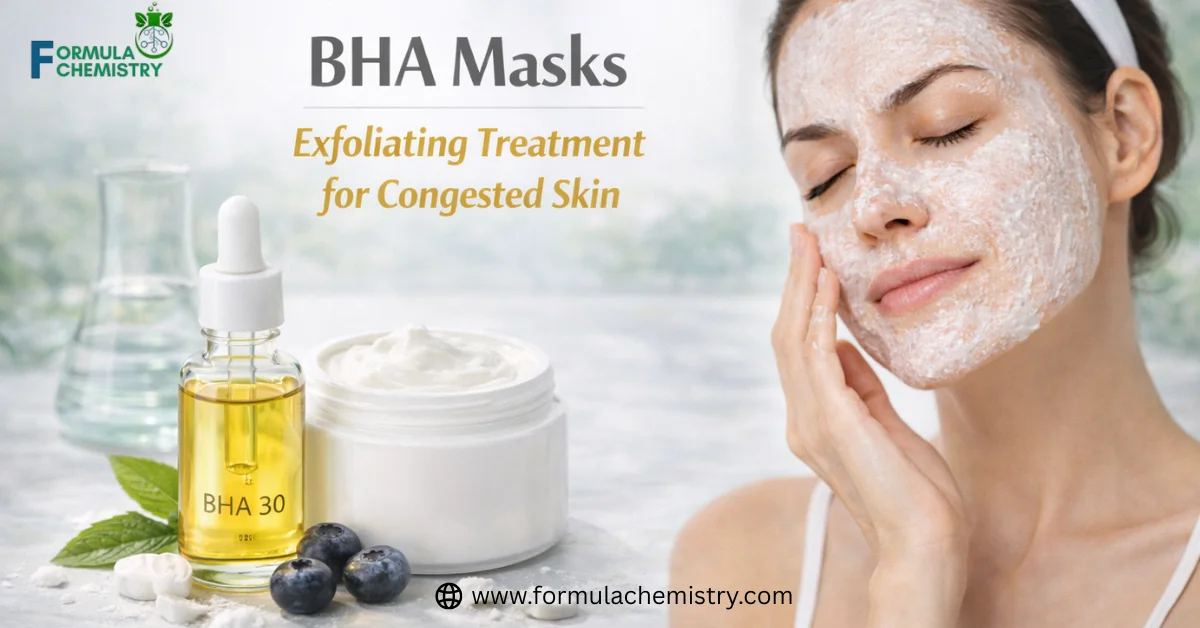
Congested skin is often the result of a biological traffic jam within your pores, where oil and dead cells refuse to clear out. A BHA mask is a specialized deep-cleaning agent that dissolves these blockages at their source.
By utilizing the unique properties of Salicylic Acid, these solutions deliver a scientific solution to blackheads and bumps without physical scrubbing. We believe that understanding the chemical formula behind this acid is the key to clear, smooth skin.
This guide examines the molecular mechanics of Beta Hydroxy Acids, helping you understand how to use, choose, or even create a mask that safely transforms your complexion.
What is a BHA Mask and Why is it Unique?
A BHA mask is a rinse-off treatment containing Beta Hydroxy Acid, specifically designed to penetrate oil-filled follicles and exfoliate from within.
The Lipophilic Advantage
Unlike water-soluble acids (AHAs) that only work on the surface, BHA (Salicylic Acid) is lipophilic, meaning it loves oil.
Its chemical formula allows it to penetrate sebum sitting in your pores. Once inside, it breaks down cellular debris that clogs pores, making it the most effective ingredient for treating acne and blackheads.
Desmolytic Action
BHA works by dissolving the “glue” (desmosomes) that holds dead skin cells together.
In Formula Chemistry skincare, we value this desmolytic action because it normalizes the shedding process. Instead of trapping bacteria, the pore opens up, releasing the impaction while also preventing further breakouts.
The Chemistry Formula of Salicylic Acid
Understanding the molecular structure of Salicylic Acid reveals why it acts as both an exfoliant and an anti-inflammatory agent.
Structure and Function
Salicylic Acid is a monohydroxybenzoic acid. Its structure allows it to penetrate the skin’s lipid layers deeply.
This penetration is vital for formula chemistry. It ensures the active ingredient reaches the site of inflammation, calming the redness and swelling associated with cystic acne while simultaneously clearing the blockage.
The Importance of pKa
For a BHA mask to be effective, the pH of the formulation must correspond to the acid’s pKa (dissociation constant).
If the pH is too high, the acid neutralizes into a salt and loses its exfoliating power. A professionally formulated mask typically sits at a pH of 3.5 to 4.0 to ensure the free acid is available to work on your skin.
Identifying Congested Skin and the Need for BHAs
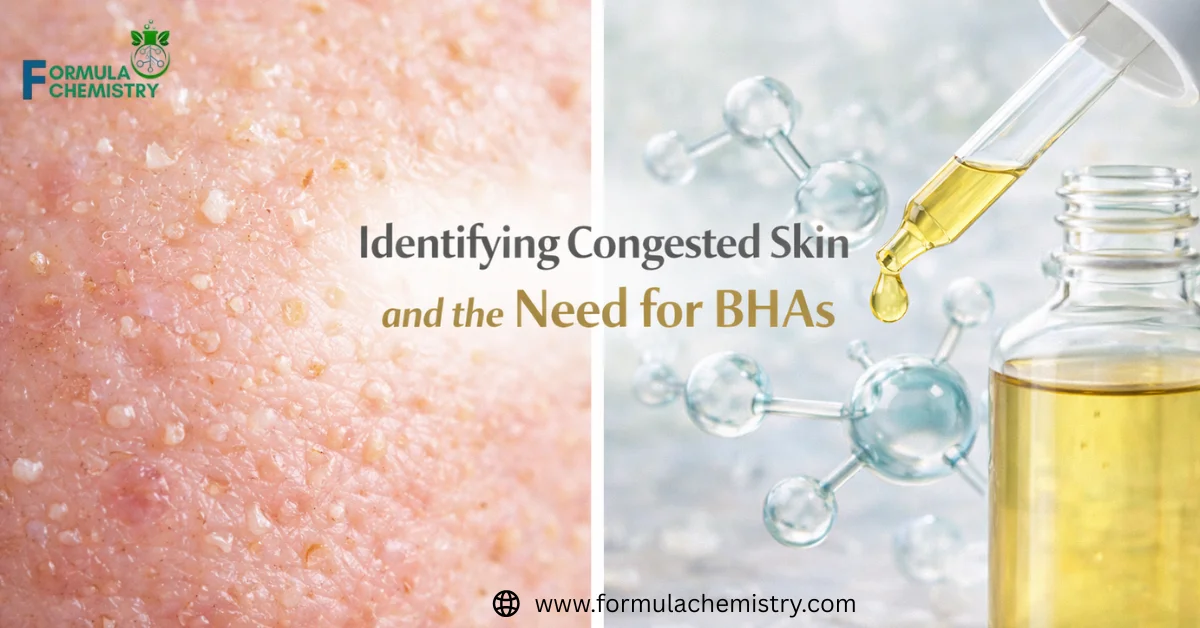
Congestion manifests in various ways, all of which signal a need for the deep-cleaning properties of a Beta Hydroxy Acid mask.
Signs of Congestion
- Blackheads: Open comedones where oxidized oil has turned dark.
- Whiteheads: Closed comedones trapping bacteria and sebum.
- Rough Texture: Bumps that aren’t red but make the skin feel like sandpaper.
Sebum Regulation
Excess oil production feeds acne bacteria. BHA has a mild drying effect that helps regulate sebum levels.
Regular use of a BHA mask alters the pore environment. By keeping the follicle clear of fuel (oil), you starve the bacteria, leading to a long-term reduction in acne severity.
Key Ingredients to Pair with BHA in a Mask
A great mask relies on a synergy of ingredients; the BHA exfoliates while other components absorb toxins or soothe the skin.
Absorbent Clays
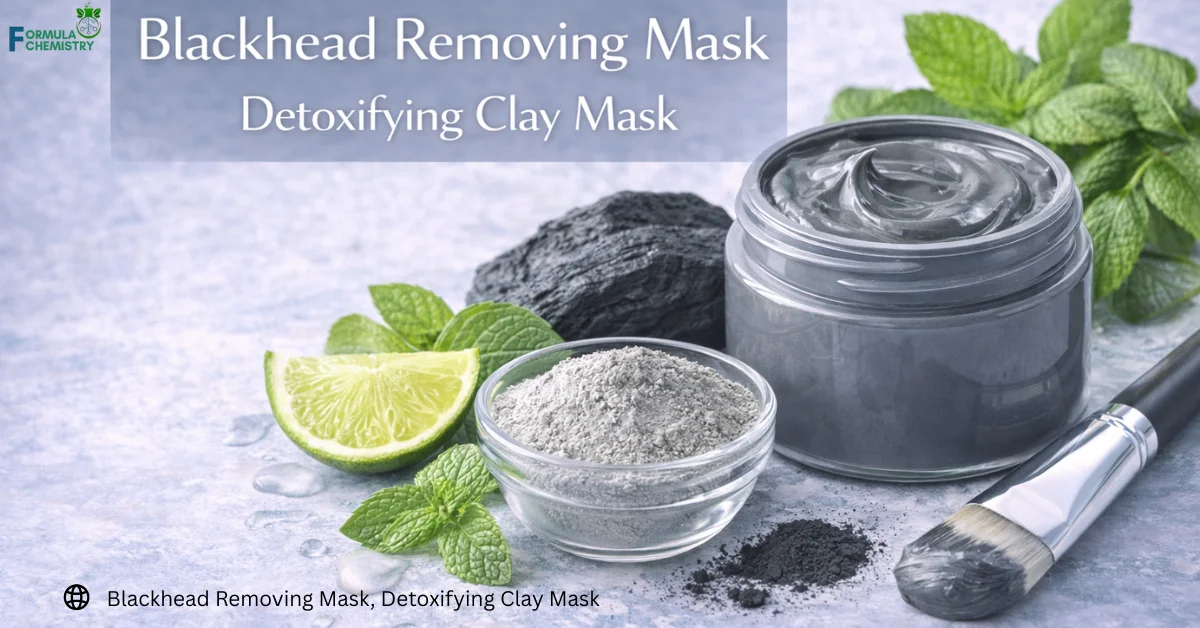
Kaolin and Bentonite clays are often the base of BHA masks.
They act as a sponge. While the acid dissolves the glue, the clay physically pulls the loosened oil and debris to the surface, enhancing the purifying effect of the chemical formula.
Activated Charcoal
Charcoal is known for its high surface area and adsorption capacity.
It binds to environmental toxins and surface dirt. In Formula Chemistry skincare, pairing charcoal with BHA creates a “detox” effect that leaves the skin looking visibly brighter and cleaner immediately after rinsing.
Soothing Agents
Because BHA can be drying, adding anti-irritants is important for balance.
Ingredients like Bisabolol, Allantoin, or Green Tea extract are added to the formula chemistry. They mitigate stinging and reduce the risk of contact dermatitis, making the mask tolerable for sensitive skin types.
Formula Chemistry DIY: Crafting Your Own BHA Mask
Making a BHA mask at home demands accuracy and safety precautions, as Salicylic Acid is a potent drug active in many regions.
Solubility Challenges
Salicylic Acid powder is difficult to dissolve in water; it requires a solvent like Propanediol or alcohol.
In Formula Chemistry DIY, beginners frequently have difficulty with crystallization. If the acid recrystallizes in the jar, it becomes ineffective and can feel similar to sharp glass shards on the skin.
A Simple Clay-BHA Recipe
For a safer approach, use a pre-solubilized BHA liquid or Willow Bark Extract (a natural precursor).
- Base: 60% Kaolin Clay (Gentle absorption).
- Liquid Phase: 30% Distilled Water + 5% Glycerin.
- Active: 2% Willow Bark Extract or Salicylic Acid Solution.
- Preservative: 1% Broad Spectrum Preservative.
Checking the pH
You must use pH strips to ensure your mask is acidic enough to work but not so acidic that it burns.
Aim for a pH between 3.5 and 4.0. Adjusting this chemistry formula using a solution of Citric Acid or L-Arginine is a critical step in the manufacturing process to guarantee safety and effectiveness.
How to Incorporate a BHA Mask into Your Routine
Timing and frequency are everything; overusing a BHA mask can destroy your moisture barrier and worsen acne.
Frequency Guidelines
Unlike a gentle toner, a mask is a concentrated treatment.
Use it 1 to 2 times a week, at most. Using it daily will strip your skin of essential lipids, leading to dehydration and a rebound effect in which the skin produces even more oil to compensate.
Placement in Routine
Apply the mask to clean, dry skin after cleansing.
Leave it on for the directed time (usually 10-15 minutes). Rinse thoroughly. Follow immediately with a hydrating toner and a barrier-repairing moisturizer to replenish the water content removed by the clay and acid.
Potential Side Effects and Safety Precautions
While highly effective, Salicylic Acid is not suitable for everyone and needs attentive monitoring of skin reactions.
The “Purging” Phase
It is common to see a temporary increase in breakouts when starting BHA.
This is because the acid speeds up the pore’s lifecycle. Micro-comedones that were weeks away from surfacing appear all at once. This purge typically lasts 2-4 weeks and indicates the formula chemistry is effectively clearing deep congestion.
Aspirin Allergies
Salicylic Acid is chemically related to Aspirin (Acetylsalicylic Acid).
If you are allergic to aspirin, you should avoid BHA products. The transdermal absorption can trigger an allergic reaction. Always patch test new products behind the ear before facial application.
Comparing BHA Masks vs. Leave-On Exfoliants
Deciding between a mask and a daily liquid exfoliant depends on your skin type and personal choices.
Intensity vs. Duration
A mask usually contains a higher concentration of absorbent ingredients, but is left on for a short time.
This makes it ideal for an “intensive clean” once a week. Leave-on toners have lower concentrations but work slowly over 24 hours. Formula Chemistry skincare suggests using masks for targeted deep cleaning and toners for maintenance.
Targeted Application
Masks allow for “multi-masking.”
You can apply the BHA mask only to your oily T-zone while using a hydrating mask on your dry cheeks. This customization prevents over-drying areas of the face that do not suffer from congestion.
Expert Tips for Maximizing Results
To get the most out of your BHA treatment, specific techniques can enhance the acid’s penetration and performance.
The Warm Compress Trick
Before applying the mask, hold a warm, damp cloth over your face for 30 seconds.
This softens the hardened sebum plugs and relaxes the pore openings. It creates a more receptive canvas for the chemical formula, allowing the Salicylic Acid to penetrate faster and deeper.
Oil Cleansing First
Always remove makeup and sunscreen with an oil cleanser before masking.
If the mask has to fight through a layer of foundation, it won’t reach the pores. A double cleanse ensures the active ingredients have direct contact with the stratum corneum.
Conclusion
A BHA mask is an effective method in the fight against congestion, supplying a scientifically proven method to clear pores and smooth texture.
By respecting the formula chemistry of Salicylic Acid,its solubility, pH requirements, and concentration, you can achieve professional results at home.
Whether you opt for a store-bought clinical treatment or experiment with Formula Chemistry DIY, the key is consistent, careful application to reveal the clear, healthy skin underneath.
| Ingredient | Function | Weight % | Amount (ml/g) |
|---|
⚠ Professional Lab Verification Required
- Water Percentage (q.s.): Distilled water is listed as a starting estimate. In a real laboratory batch, water is added q.s. (quantity sufficient) after all other ingredients are accurately weighed to bring the total to exactly 100%.
- pH Adjustment: Sodium hydroxide and citric acid percentages are formulation starting points only. Every real batch must be verified and corrected using a calibrated pH meter to hit the target pH range precisely.
- Preservation Efficacy: Preservative performance must be validated through Challenge Testing (PET) as per ISO 11930 before any commercial or consumer use of this formulation.
- Stability Testing: This formula requires accelerated stability testing at 4°C, 25°C, and 40°C over a minimum of 12 weeks to confirm physical, chemical, and microbiological stability before market release.
FAQ’s about BHA Mask , Exfoliating Treatment for Congested Skin
How often should I use a BHA mask?
For most skin types, using a BHA mask once or twice a week is sufficient. If you have very oily or resilient skin, you might tolerate it up to three times, but watch for signs of dryness or irritation. Over-exfoliation can compromise the barrier.
Can I use a BHA mask if I have dry skin?
Yes, but be cautious. Look for masks that contain hydrating ingredients like glycerin or oils alongside the BHA to buffer the drying effect. Focus the application on congested areas, such as the nose or chin, rather than the whole face.
Will a BHA mask shrink my pores?
Technically, pore size is genetic and cannot be permanently changed. However, a BHA mask clears out the debris, stretching the pore open. Once the blockage is removed, the pore appears visually smaller and tighter.
Can I use Vitamin C after a BHA mask?
It is generally recommended to avoid strong actives, such as Vitamin C, immediately after a BHA mask to prevent irritation. Since the mask has already exfoliated the skin, follow up with soothing, hydrating ingredients like Hyaluronic Acid or Niacinamide instead.
Is it normal to feel tingling?
A slight tingling sensation is normal with BHA products due to the low pH required for the chemistry formula to work. However, if it burns, stings, or causes immediate redness, wash it off immediately, as this indicates a compromised barrier or an allergy.
Can I use a BHA mask while pregnant?
Doctors generally advise avoiding high concentrations of Salicylic Acid during pregnancy. While topical absorption is low, it is safer to switch to Alpha Hydroxy Acids (like Glycolic or Lactic Acid) or consult your physician before continuing use.
Does BHA cause sun sensitivity?
While BHA is less photosensitizing than AHA, exfoliating the dead skin layer always leaves the fresh skin underneath more vulnerable to UV damage. You must apply a broad-spectrum sunscreen every morning when using exfoliating masks.
What is the difference between Willow Bark and Salicylic Acid?
Willow Bark contains Salicin, which converts to Salicylic Acid on the skin. It is generally much gentler and less irritating than synthetic Salicylic Acid, making it a common option in natural Formula Chemistry skincare, though it acts more slowly.