
Introduction
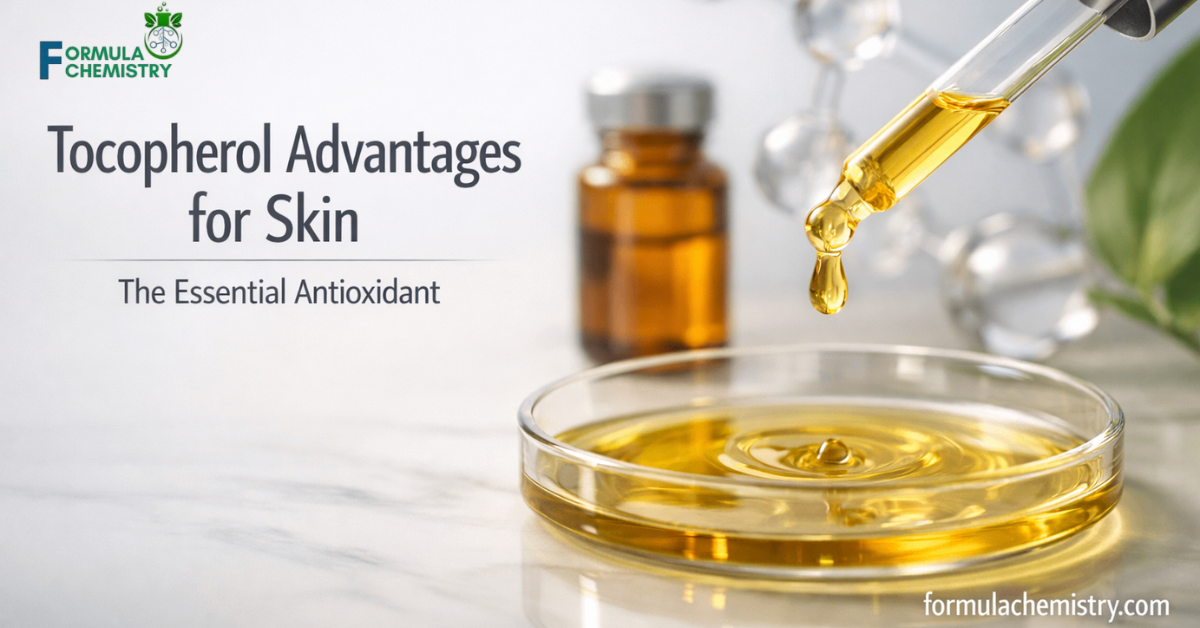
Vitamin E is not a single molecule but a group of eight fat-soluble compounds, with Tocopherol being the most biologically active form in skincare. In cosmetic chemistry, it is prized as a non-enzymatic antioxidant that protects the lipid structures of the skin and hair from oxidative stress.
While many consumers view it as a simple moisturizer, its true power lies in its ability to quench free radicals generated by UV exposure and pollution.
At Formula Chemistry, we provide practical formulation education and safety-forward guidance to help you master these potent ingredients.
Understanding the distinction between Tocopherol (the antioxidant) and Tocopheryl Acetate (the stable ester) is the first step in creating high-performance products that actually deliver a “glow.”
Quick Facts
- What it is: A lipid-soluble antioxidant available in natural (d-alpha) and synthetic (dl-alpha) forms.
- Who it’s for: Ideal for dry, mature, and sun-damaged skin; also beneficial for damaged hair cuticles.
- How to use: Incorporate into the oil phase of emulsions or anhydrous balms.
- Usage Range: Typically 0.1% to 0.5% for product stabilization and 1% to 5% for active skin benefits.
- Solubility: Fully oil-soluble; insoluble in water.
- Compatibility: Highly synergistic with Vitamin C (Ascorbic Acid) and Ferulic Acid.
- Common Mistake: Using it as a broad-spectrum preservative (it is an antioxidant, not an antimicrobial).
- Safety Note: Always perform a patch test, as high concentrations can cause contact dermatitis in sensitive individuals.
What are the Benefits of Vitamin E for Skin and Hair?
The primary function of Vitamin E is lipid peroxidation inhibition. This means it prevents the oils on your skin and the fatty acids in your hair from “going bad” or oxidizing when exposed to the environment.
When sebum oxidizes, it can become comedogenic and inflammatory, leading to breakouts and dullness. By preventing this process, Vitamin E maintains a healthy skin barrier and a clear complexion.
Photoprotection and Skin Repair
Vitamin E acts as a secondary line of defense against UV-induced photoaging. While it is not a sunscreen, it absorbs energy from UV light and prevents the inflammatory cascade that leads to redness and DNA damage.
When formulated at active levels, it helps soothe the skin and accelerates the recovery of the stratum corneum after environmental insults.
Hair Shaft Strength and Scalp Health
For hair care, Vitamin E targets the lipid layer of the cuticle. Excessive heat styling and chemical treatments strip the hair of its natural oils, leading to brittleness.
Vitamin E helps to re-lipidize the hair shaft, increasing elasticity and shine. On the scalp, its antioxidant properties reduce oxidative stress that can contribute to hair follicle aging and thinning.
Technical Guidelines for Formulating with Vitamin E
From a formulation perspective, Vitamin E is versatile but requires specific handling to remain effective. It is sensitive to high heat and prolonged oxygen exposure.
In emulsions, it should be added during the cool-down phase (below 40°C) to prevent degradation. Furthermore, its pH stability is broad, but it performs best in formulas with a pH between 4.5 and 7.0.
Choosing Between Tocopherol and Tocopheryl Acetate
Formulators must choose the right “flavor” of Vitamin E. Mixed Tocopherols are excellent for preventing oils in your formula from going rancid.
However, Tocopheryl Acetate is often preferred for shelf-stable retail products because it is less prone to oxidation in the bottle.
Once it penetrates the skin, enzymes convert the acetate form back into active Tocopherol.
Ingredient Comparison and Usage Rates
| dl-Alpha Tocopherol | Active skin benefits / Antioxidant | 1.0% – 5.0% | Moderate |
| Mixed Tocopherols | Formula stabilization (anti-rancidity) | 0.1% – 0.5% | Low (Oxidizes quickly) |
| Tocopheryl Acetate | Stable active ingredient | 0.5% – 3.0% | High |
| Tocotrienols | High-potency antioxidant | 0.1% – 1.0% | Moderate |
Common Problems and Formulation Fixes
Even experienced formulators encounter issues when working with fat-soluble vitamins. Because Vitamin E is a thick, viscous oil, it can significantly alter the aesthetics of a finished product if not handled correctly.
Problem: Product Turning Yellow/Brown. This is a sign of oxidation.
Fix: Ensure you are using Tocopheryl Acetate for better shelf life, or add 0.1% Chelating Agents (like Disodium EDTA) to the water phase to tie up metal ions that trigger oxidation.
Problem: Formulation Feels Too Heavy or Greasy. * Fix: Reduce the usage rate to 1% or swap heavy base oils (like Olive oil) for lighter esters like Isopropyl Myristate or Caprylic/Capric Triglycerides to improve absorption.
Problem: Vitamin E Droplets Separating in Water-Based Serums.
Fix: Vitamin E is lipophilic. You must use a solubilizer (like Polysorbate 20) or create a proper emulsion with an emulsifying wax to keep it suspended.
Synergistic Combinations
To maximize the “glow” factor, Vitamin E should rarely work alone. The C+E+Ferulic combination is the gold standard in SEO-optimized skincare for a reason.
Vitamin C regenerates spent Vitamin E, allowing it to continue fighting free radicals for a longer duration. This synergy increases the photoprotective effect by up to eightfold.
Safety, Preservation, and Usage Considerations
While Vitamin E is generally recognized as safe, “more” is not always “better.” High concentrations (above 5%) can act as a pro-oxidant in certain environments or cause localized skin irritation. Always prioritize the integrity of the skin barrier over high active percentages.
Preservation in Water-Based Systems
If you are adding Vitamin E to a DIY cream or a water-based lotion, you must use a broad-spectrum preservative.
Vitamin E is an antioxidant, which prevents chemical spoilage (oxidation), but it does not prevent biological spoilage (mold, bacteria, yeast). Using a system like Phenoxyethanol and Ethylhexylglycerin is essential for safety.
Who Should Avoid Vitamin E?
Individuals with very oily or acne-prone skin should use high concentrations of Vitamin E with caution. While it is not inherently comedogenic, the heavy oil base it often requires can clog pores in some skin types.
Furthermore, those with a history of dermatitis should perform a 24-hour patch test on the inner
FAQs about Vitamin E: Unlock the Secret to Glowing Skin and Nourished Hair
Is Vitamin E a preservative?
No. Vitamin E is an antioxidant that prevents oils from oxidizing. It does not protect against microbial growth. You still need a proper preservative for any formula containing water
Can I apply Vitamin E oil directly to my face?
It is generally better to use it diluted in a carrier oil or cream. Pure Vitamin E is very thick and can be irritating or comedogenic for some users if used at 100% concentration.
What is the best pH for Vitamin E products?
Vitamin E is stable across a wide range, but for best skin absorption and formula stability, aim for a pH of 4.5 to 6.0, especially if combining it with Vitamin C.
Does Vitamin E help with scars?
While popular in folklore, clinical evidence is mixed. Its primary benefit is moisturization and skin barrier support, which can improve the appearance of scars, but it is not a “cure.”
How do I know if my Vitamin E has gone bad?
If the oil has a strong, rancid smell or has darkened significantly to a deep brown, it has oxidized and should be discarded, as it can cause oxidative stress on the skin.
Can I use Vitamin E during the day?
Yes! In fact, it is highly recommended for daytime use because it boosts the efficacy of your sunscreen by neutralizing free radicals from UV rays.
Is natural Vitamin E better than synthetic?
The skin prefers d-alpha-tocopherol (natural) over the synthetic version, as it has higher bioavailability. Check the label: “dl” indicates synthetic, while “d” indicates natural.
How should I store my Vitamin E raw materials?
Store in a cool, dark place in an airtight, amber glass container. Exposure to light and air will quickly reduce its potency.