
Introduction
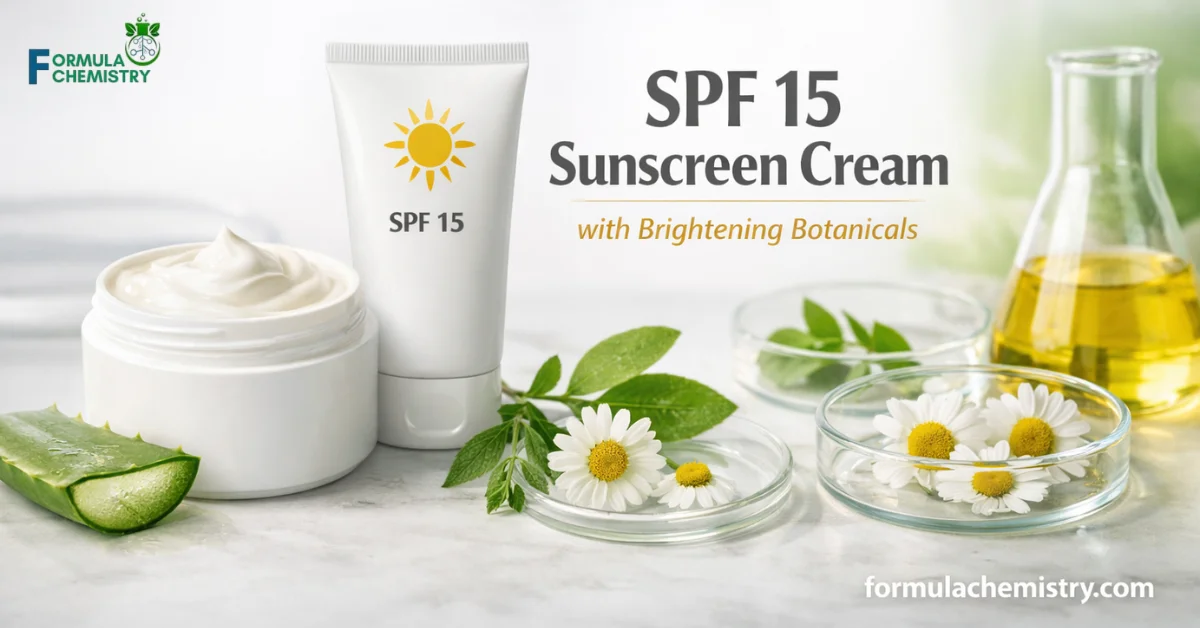
SPF 15 Cream Sun protection is the foundation of any effective anti-aging regimen, but modern sunscreen cream formulations have advanced past simple barrier protection to include active skin improvement.
A scientifically balanced SPF 15 cream provides a distinctive proposition: sufficient protection for incidental daily exposure combined with the therapeutic benefits of brightening agents.
By understanding the chemical formula behind this dual product, we can appreciate how it protects against UV rays while simultaneously correcting pigmentation for a luminous complexion.
What Defines a Multi-Functional SPF 15 Cream?
A multi-functional sunscreen does more than just block rays; it is a sophisticated emulsion designed to treat the skin while protecting it.
The Balance of Protection and Treatment
Standard sunscreens focus solely on the chemical formula of UV filters. A brightening SPF cream integrates tyrosinase inhibitors directly into the lipid phase.
This creates a product that prevents future damage while actively fading existing dark spots. In the world of Formula Chemistry skincare, this is known as a “hybrid” formulation, maximizing efficacy without layering multiple heavy products.
Understanding the SPF 15 Rating
Many consumers mistakenly believe SPF 15 is weak. In reality, SPF 15 blocks approximately 93% of UVB rays.
For daily office wear or short commutes, this provides adequate defense without the heavy, greasy occlusives often required for SPF 50+. This lighter texture allows for better absorption of the brightening botanicals.
The Chemistry Formula of UV Filtration
To create a sunscreen, formulators must choose specific molecules that interact with ultraviolet radiation to dissipate its energy harmlessly.
Physical Blockers: Zinc Oxide
Inorganic filters like Zinc Oxide work by sitting on top of the skin and reflecting or scattering UV photons.
Modern micronized zinc is a favorite in Formula Chemistry DIY because it offers broad-spectrum protection. It creates a physical shield that also helps to calm inflammation, which is a primary trigger for hyperpigmentation.
Chemical Absorbers: The Organic Filters
Organic filters, such as Octinoxate or Avobenzone, absorb UV radiation.
Their chemical formula contains double bonds that absorb the energy from UV photons, converting it into heat. This heat is then released from the skin, preventing the radiation from damaging the DNA within your cell nuclei.
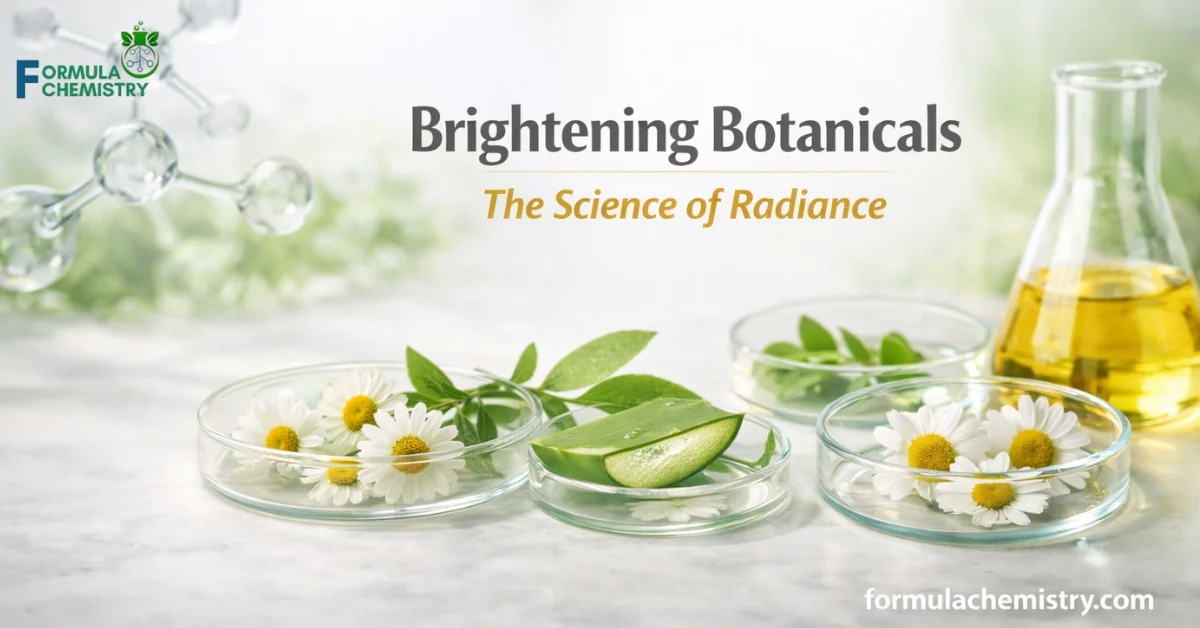
Brightening Botanicals: The Science of Radiance
Integrating botanical extracts requires understanding their active compounds and how they interrupt the melanogenesis (pigment creation) pathway.
Licorice Root Extract (Glabridin)
Licorice root contains Glabridin, a powerful molecule that inhibits tyrosinase activity.
Tyrosinase is the enzyme responsible for producing melanin. By blocking this enzyme, Licorice Root prevents the formation of dark spots induced by sun exposure, making it a perfect partner for SPF.
Niacinamide (Vitamin B3)
Niacinamide does not stop pigment production; instead, it stops the transfer of pigment.
It blocks the melanosomes (pigment packages) from moving into the visible skin cells. Including this in a sunscreen formulation creates a barrier that prevents the tanning response at a cellular level.
Formula Chemistry Skincare: Antioxidant Synergy
UV rays generate free radicals even when sunscreen is worn; antioxidants are the second line of defense in a robust formulation.
Vitamin C (L-Ascorbic Acid)
Vitamin C is the gold standard for brightening, but it is also a potent photoprotectant.
It donates electrons to neutralize free radicals generated by UVA rays. When formulated with SPF, it boosts the overall efficacy of the product, preventing the oxidative stress that leads to collagen breakdown.
Green Tea Polyphenols
Green tea is rich in Epigallocatechin Gallate (EGCG).
This antioxidant scavenges reactive oxygen species (ROS). Adding it to the formula chemistry of a sunscreen reduces the redness and inflammation associated with UV exposure, keeping the skin calm and even-toned.
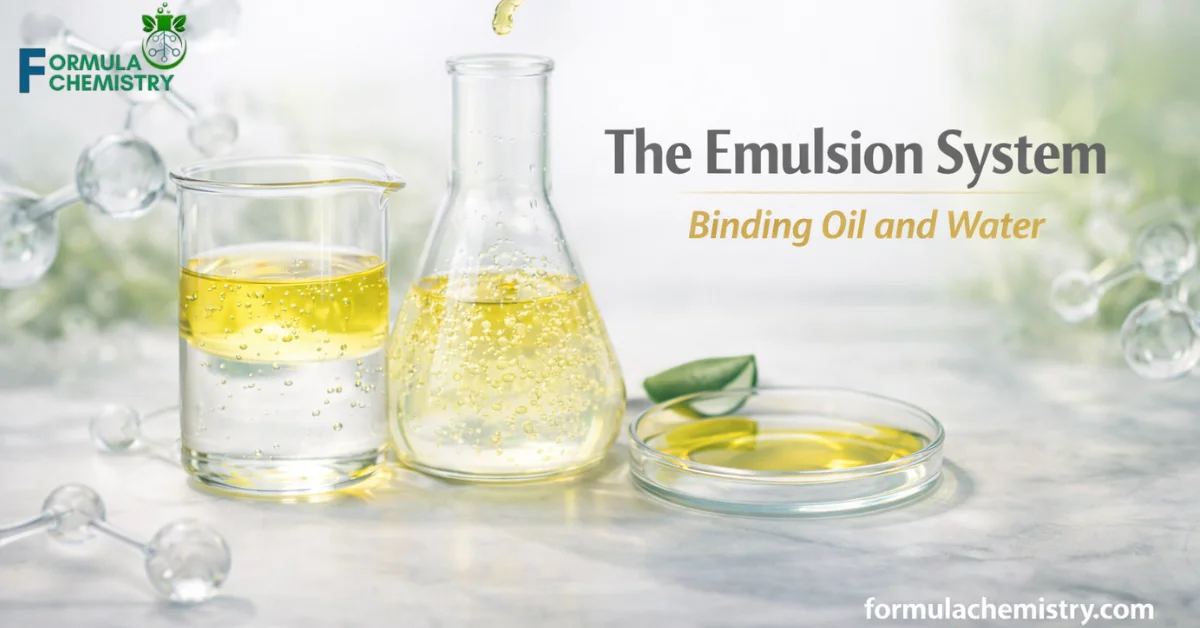
The Emulsion System: Binding Oil and Water
Sunscreen actives are often oily, while brightening extracts are usually water-soluble; the emulsifier is the bridge that holds them together.
Liquid Crystal Emulsifiers
High-end SPF creams often use liquid crystal emulsifiers derived from olives.
These ingredients form a lamellar structure that mimics the skin’s own lipid barrier. This structure holds the UV filters in a uniform layer across the skin, ensuring there are no “gaps” in protection.
Solubility and Dispersion
Ensuring the UV filters are evenly dispersed is critical for safety.
If the chemical formula of the emulsion is unstable, the sunscreen actives can clump together. This results in patchy protection and potential burns, drawing attention to the value of high-shear mixing in production.
Formula Chemistry DIY: Recognizing the Dangers
While making your own lotions is rewarding, formulating sunscreen at home carries considerable risks that every hobbyist must respect.
The SPF Testing Dilemma
You cannot calculate SPF on paper; it must be tested in vivo on human skin in a lab.
In Formula Chemistry DIY, simply adding 20% Zinc Oxide to a base does not guarantee SPF 20. The film thickness and dispersion determine the actual protection, which is impossible to verify at home.
Safe Additions to Base Creams
Instead of making SPF from scratch, we recommend adding brightening oils to a pre-made, tested sunscreen base.
- Safe Additive: Mix a drop of Raspberry Seed Oil (antioxidant) with your store-bought cream.
- Avoid: Mixing Zinc powder into your moisturizer, as it will clump and provide zero reliable protection.
Application Techniques for Efficacy
The best chemistry formula in the world fails if it is not applied with the correct density and frequency.
The 2mg/cm² Rule
To get the SPF 15 labeled on the bottle, you must apply 2 milligrams of product per square centimeter of skin.
This translates to roughly 1/4 teaspoon for the face. Most people apply half this amount, effectively reducing the protection to the square root of the SPF (around SPF 4).
Layering Order
Apply your brightening SPF cream as the final step of your morning skincare routine.
It should go over your serums and moisturizer, but under makeup. Give it 3-5 minutes to form a film before applying foundation to ensure the protective barrier is set.
Who Should Use SPF 15 Brightening Cream?
Not everyone needs SPF 50 every day; understanding your lifestyle helps you choose the right level of protection.
The Indoor Professional
If you work in an office and see limited sun, SPF 15 is sufficient.
It protects against UV rays coming through windows without the heavy, sticky feel of high-SPF sport sunscreens. This encourages daily compliance, which is the most important factor in anti-aging.
Darker Skin Tones
Those with more melanin have some natural protection against burning (UVB) but still need protection against pigmentation (UVA).
A brightening SPF 15 is often preferred because it tends to leave less of a white cast than high-percentage mineral blocks, merging smoothly while treating hyperpigmentation.
Preserving the Chemical Formula
Active botanicals and UV filters can degrade if not stored and handled correctly, rendering the cream useless.
Oxidation Risks
Brightening agents like Vitamin C oxidize rapidly when exposed to air.
Look for airless pump packaging. This protects the formula chemistry from oxygen, ensuring the cream remains potent and effective until the last drop.
Heat Stability
Never leave your sunscreen cream in a hot car.
High temperatures can break the emulsion and degrade chemical filters like Avobenzone. Store your products in a cool, dry place to maintain the integrity of the SPF capabilities.
Conclusion
An SPF 15 Cream with Brightening Botanicals is a smart, scientifically sound addition to a daily routine for individuals looking for radiance and moderate protection.
By combining the physics of UV filtration with the biology of tyrosinase inhibitors, this hybrid product offers a simplified strategy for Formula Chemistry skincare.
Whether you are formulating concepts or curating your shelf, understanding the fine equilibrium of this chemical formula guarantees you achieve healthy, glowing, and protected skin.
FAQ’s about SPF 15 Cream, Sunscreen Cream with Brightening Botanicals
Is SPF 15 enough to prevent dark spots?
For incidental exposure (walking to the car, sitting by a window), SPF 15 blocks 93% of UVB rays, which is significant. However, if you are actively trying to fade dark spots, dermatologists often recommend higher protection (SPF 30+) to block a higher percentage of the UVA rays that trigger pigmentation.
Can I create my own sunscreen using zinc oxide powder?
We strongly advise against this. In Formula Chemistry DIY, you lack the high-shear mixers needed to disperse zinc oxide perfectly. Clumped zinc leaves microscopic gaps on the skin, leading to sunburns and unprotected areas despite the cream looking white.
What botanicals act as natural sunscreens?
Oils like Red Raspberry Seed and Carrot Seed have minor UV-absorbing properties, but their SPF is low and variable (often SPF 2-4). They should be used as antioxidant boosters in a chemistry formula, never as the primary sunscreen agent.
Does SPF 15 allow you to tan?
Yes, because it blocks 93% of UVB rays, 7% still reach your skin. Over time, this exposure can stimulate melanin production and lead to tanning. If your goal is zero tanning, you need a higher SPF and physical barriers like hats.
Why do some brightening sunscreens sting?
Brightening agents like Vitamin C or certain plant acids can have a low pH. If your skin barrier is compromised or if the chemical formula relies on chemical filters that generate heat, you may experience a stinging sensation upon application.
How often should I reapply SPF 15 cream?
Just like high-SPF products, SPF 15 degrades with sebum and time. You should reapply every two hours if you are continuously exposed to the sun. If you are indoors, a single morning application is usually sufficient for the workday.
Can I layer SPF 15 over a Vitamin C serum?
Yes, this is an excellent combination. The Vitamin C serum neutralizes free radicals that penetrate the sunscreen shield. Layering them provides a dual-defense mechanism that is highly effective in a Formula Chemistry skincare regimen.
Is mineral or chemical SPF better for brightening?
Mineral SPF (Zinc/Titanium) is often better for brightening because it keeps the skin cool. Chemical filters convert UV rays into heat, and for conditions like Melasma, heat alone can trigger more pigment production.