

Introduction
Hyaluronic Acid (HA) is ubiquitous in modern skincare, but not all forms of this molecule are created equal. While standard Hyaluronic Acid sits on the skin’s surface to prevent moisture loss, Low Molecular Weight (LMW) Hyaluronic Acid is designed to go deeper.
For cosmetic formulators, working with LMW HA requires a nuanced understanding of molecular weight, measured in Daltons. The size of the molecule dictates its biological activity and where it resides within the skin layers.
Formula Chemistry provides practical formulation education and safety-forward guidance to help you work through the complexities of raw materials like LMW HA.
Quick Facts
- INCI Name: Hydrolyzed Hyaluronic Acid or Sodium Hyaluronate (Low Molecular Weight)
- Molecular Weight: Typically <50 kDa (Kilodaltons) or <50,000 Daltons.
- Function: Deep hydration, anti-aging signaling, skin repair, carrier for other actives.
- Typical Usage Rate: 0.1% – 1.0% (Often used in combination with HMW HA).
- Solubility: Water-soluble; dissolves faster than High Molecular Weight HA.
- pH Stability: Stable across a wide range, typically pH 4.0 – 8.0.
- Appearance: Fine white powder; forms a watery, low-viscosity solution.
- Safety Note: LMW HA is potent; patch testing is vital as deep penetration can occasionally trigger irritation in hypersensitive skin.
What Defines Low-Molecular-Weight Hyaluronic Acid?
The primary distinction between standard Hyaluronic Acid and LMW HA is the chain length of the polymer. Standard or “High Molecular Weight” (HMW) HA usually ranges from 1,000 kDa to 1,500 kDa.
These large molecules are too big to penetrate the skin barrier, so they remain on top, forming a breathable film that traps moisture. Low Molecular Weight HA, often produced through enzymatic hydrolysis, is chopped into much smaller fragments, ranging from 3 kDa to 50 kDa.
Because of this reduced size, it bypasses the surface barrier and travels into the epidermis. This allows it to hydrate the skin from within, plumping fine lines and improving elasticity in ways that surface hydration cannot.
The Science of Dalton Size and Penetration
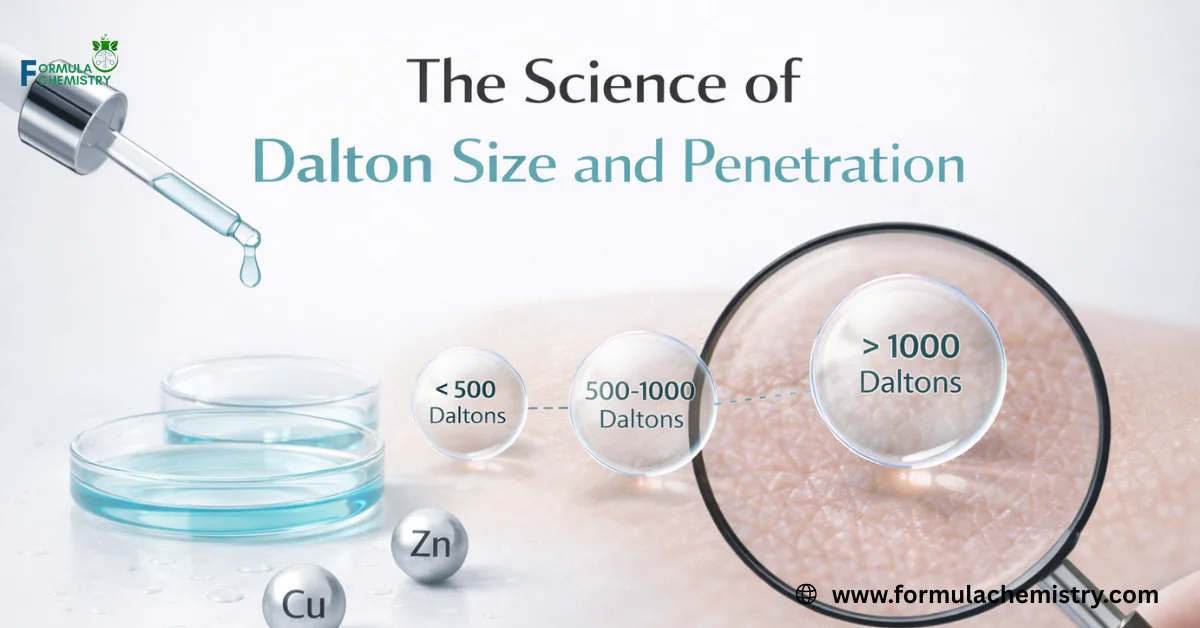
The “500 Dalton Rule” generally suggests that molecules larger than 500 Daltons cannot penetrate healthy skin. However, LMW HA challenges this boundary through unique transport techniques and formulation enhancers.
While it doesn’t reach the dermis like an injectable filler, it saturates the intercellular matrix of the epidermis effectively. Different weights serve different purposes. Ultra-Low Molecular Weight (ULMW) variants (under 5 kDa) are so small that they can act as biological signaling molecules.
They mimic pieces of naturally broken-down HA in the body, which can trick the skin into a “repair mode,” stimulating the production of natural collagen and antimicrobial peptides.
Biological Activity vs. Surface Hydration
Standard HA is a passive moisturizer; it holds water on the surface. LMW HA is biologically active. By penetrating deeper, it assists in maintaining the extracellular matrix, which is the scaffolding that keeps skin firm.
It also acts as a humectant reservoir in deeper layers, making sure that hydration is retained even after the surface film washes away. However, this activity comes with a trade-off. Because LMW HA does not form a gel network on the surface, it lacks the immediate “smoothing” feel of HMW HA.
It feels like water, not a serum. This is why expert formulators rarely use LMW HA alone; they combine it with larger molecules to provide both instant sensory gratification and long-term biological benefits.
Learn how Butylene Glycol benefits your routine in Butylene Glycol: Why Everyone’s Talking About It in Skincare.
Formulating High-Performance Serums and Creams
When designing a product with LMW HA, the order of addition and hydration technique differs from standard thickeners. Because the molecule chains are short, LMW HA dissolves much faster than HMW HA and is less prone to forming stubborn clumps or “fish eyes.”
It can often be added directly to the water phase with moderate agitation. Despite its ease of use, stability is key. LMW HA is sensitive to extreme pH shifts and high shear during the final emulsification stages.
To maximize its efficacy, it is best incorporated into the water phase before heating or added during the cool-down phase if the formula allows. It is highly compatible with other water-soluble actives like Niacinamide and Panthenol.
Synergistic Ingredients for Maximum Efficacy
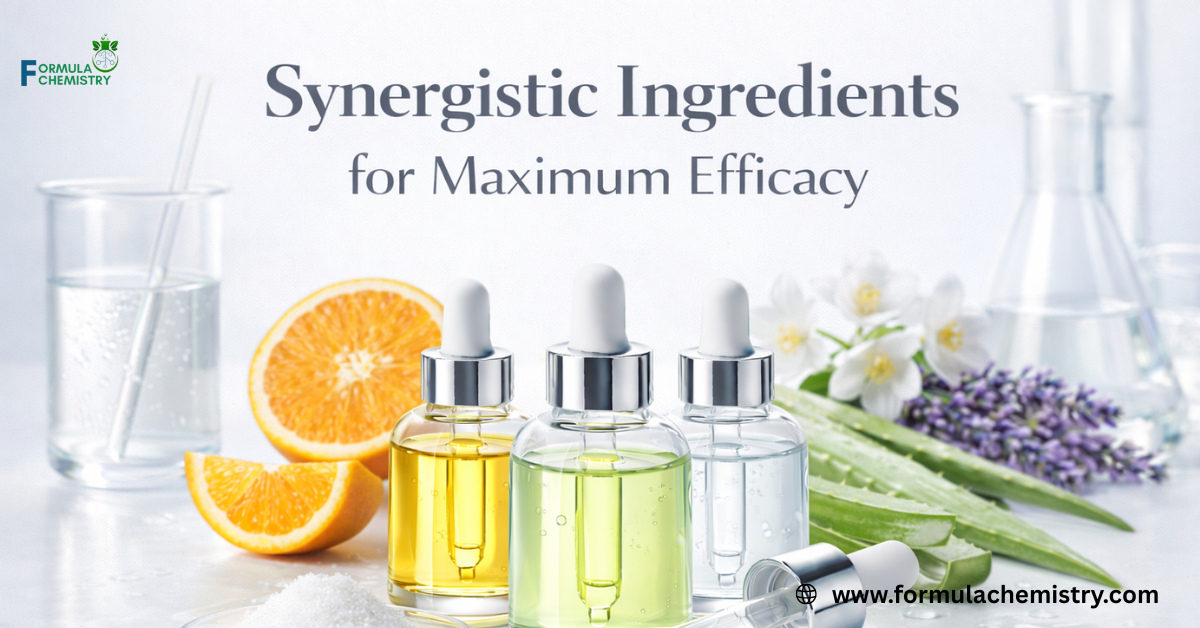
To build a truly “powerhouse” serum, LMW HA should be paired with humectants that work at different humidity levels. Glycerin and Betaine are excellent partners that stabilize the water content around the HA molecule. Additionally, pairing LMW HA with High Molecular Weight HA creates a “multi-depth” hydration system treating the surface and the inner layers simultaneously.
Peptides are another ideal pairing. Since LMW HA can help facilitate the penetration of other small molecules, it can boost the efficacy of anti-aging peptides like Matrixyl 3000 or Copper Peptides.
By hydrating the pathways between skin cells, LMW HA creates a more beneficial environment for these expensive actives to reach their target sites.
Common Problems and Fixes
Even with a high-quality ingredient, issues can arise during the formulation process. Below are common challenges when working with LMW HA.
- Problem: The serum feels too watery or “thin.”
- Fix: LMW HA does not thicken water. You must add a gelling agent like Xanthan Gum, Hydroxyethylcellulose, or HMW HA to build viscosity.
- Problem: The product causes flushing or stinging upon application.
- Fix: Very low molecular weights (<5 kDa) can be pro-inflammatory for some. Increase the molecular weight slightly (to 20-50 kDa) or reduce the percentage to 0.1%.
- Problem: The powder turns into a sticky glue at the bottom of the beaker.
- Fix: While it dissolves fast, it still needs dispersion. Premix with Glycerin (slurry method) before adding water to ensure instant, even dissolution.
- Problem: Incompatibility with cationic ingredients (conditioners).
- Fix: HA is anionic. Avoid mixing high concentrations of LMW HA with strong cationic emulsifiers or preservatives, as they may precipitate.
Table: Hyaluronic Acid Molecular Weight Comparison
| Type | Molecular Weight | Primary Benefit | Viscosity Contribution | Penetration Level |
| High (HMW) | > 1,000 kDa | Surface Film / Occlusion | High (Thick Gel) | None (Surface only) |
| Medium (MMW) | 500 – 1,000 kDa | Barrier Repair | Moderate | Stratum Corneum |
| Low (LMW) | 10 – 500 kDa | Deep Hydration / Plumping | Low (Watery) | Epidermis |
| Ultra-Low (ULMW) | < 5 kDa | Signaling / Repair | None | Deep Epidermis |
Safety, Sensitivity, and the “Inflammation” Debate
A critical topic in advanced formulation remains the safety profile of LMW HA regarding inflammation. While HMW HA is universally soothing, fragments of Hyaluronic Acid (which LMW HA essentially mimics) can biologically signal “tissue damage” to the body. In nature, HA breaks down when skin is wounded, triggering an immune response to heal the area.
Consequently, applying high concentrations of Ultra-Low Molecular Weight HA (<5 kDa) to compromised or highly sensitive skin can theoretically trigger an inflammatory response or “cytokine storm.” This is why formulating with a combination of molecular weights is safer and more effective than depending solely on the smallest particles.
Who Should Avoid LMW Hyaluronic Acid?
Individuals with Rosacea, severe eczema, or extremely reactive skin should approach LMW HA with caution. For these skin types, the deep penetration can sometimes result in stinging or increased redness.
In these cases, sticking to High Molecular Weight HA is often the better strategy, as it offers hydration without the biological signaling intensity. If you are formulating for a “Sensitive Skin” line, consider capping LMW HA at 0.1% or using a medium-weight variant (around 500 kDa).
This provides a balance of better hydration than HMW without the irritation risks associated with the tiniest nano-molecules. Always label products clearly to inform consumers about the potency of the hydration system.
Stability and Preservation Requirements
Like all water-soluble organic compounds, LMW HA is susceptible to microbial contamination. A strong, broad-spectrum preservative system is mandatory. Common preservatives like Phenoxyethanol, Sodium Benzoate, and Ethylhexylglycerin work well.
Ensure your final formula pH falls within the active range of your chosen preservative. LMW HA is generally heat stable, but prolonged exposure to high temperatures (>80°C) can cause further hydrolysis.
Add it during the cool-down phase or to the water phase before heating, provided the heating duration is short.
FAQ’s about Low Molecular Hyaluronic Acid Power in Skincare
What is the best molecular weight for anti-aging?
A weight between 50 kDa and 130 kDa is often cited as the “sweet spot” for anti-aging. This range is small enough to penetrate the epidermis and plump the skin, but large enough to avoid the pro-inflammatory risks associated with ultra-low weights.
Can I use LMW HA at 100% concentration?
No. Hyaluronic Acid is a solid powder. “100% Hyaluronic Acid” on a label usually refers to a 1% solution. A true 100% concentration would be a dry powder. In a formula, usage rates rarely exceed 1.0% total HA, as it can draw too much moisture from the skin in dry climates.
Does LMW HA dry out the skin?
It can be used incorrectly. Because it is a powerful humectant, if there is no moisture in the air (low humidity), it may draw water from the deeper layers of the skin to the surface. It must always be sealed with an occlusive moisturizer (oil or cream) to prevent trans-epidermal water loss.
Why is my HA serum sticky?
Stickiness usually comes from High Molecular Weight HA or using too much total HA (>1.0%). LMW HA is generally much less sticky than HMW. If your formula is tacky, try reducing the HMW portion or adding a distinct slip agent like Propanediol.
Can I mix LMW HA with Vitamin C?
Yes, LMW HA pairs excellently with Vitamin C (Ascorbic Acid). The hydration aids buffer the possible irritation of the acid. However, ensure the pH of the final product is suitable for the Vitamin C (usually pH < 3.5) if you want the Vitamin C to remain active.
Is LMW HA vegan?
Yes, almost all modern Hyaluronic Acid is produced via bacterial fermentation (using Streptococcus zooepidemicus or Bacillus subtilis) on plant-based substrates. It is rarely derived from rooster combs (animal source) anymore, but consistently verified with your supplier.
How do I prevent LMW HA from clumping?
While it clumps less than HMW, it is still best to pre-mix it with a humectant like Glycerin or Pentylene Glycol before adding water. This “slurry” method assures that the particles are separated and hydrated instantly without forming lumps.
Does LMW HA thicken a cosmetic formula?
No, or very minimally. Unlike HMW HA, which creates a thick, jelly-like texture, LMW HA produces a water-thin solution. If you want a thick serum, you must add a thickener like Xanthan Gum, Carbomer, or a portion of HMW HA.