

Introduction
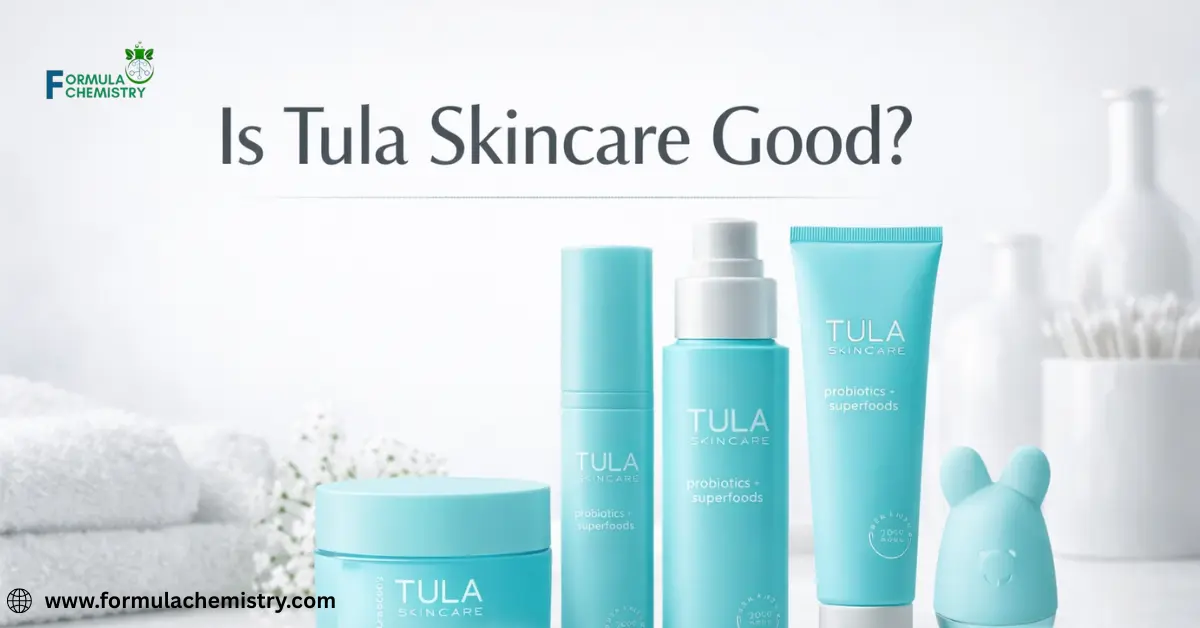
Tula Skincare has established itself as an important player in the prestige beauty market by focusing on the intersection of gastroenterology and dermatology.
Founded by Dr. Roshini Raj, the brand centers its formulations on the skin microbiome, particularly utilizing probiotic extracts to support the skin’s natural barrier.
At FormulaChemistry, we evaluate such brands through a technical lens to determine if the ingredient synergy conforms to dermatological standards and formulation stability.
Quick Answer
- What it is: A probiotic-extract-powered skincare line focused on skin microbiome balance.
- Who it’s for: Primarily those with balanced, dry, or combination skin; recently expanded with fragrance-free options for sensitive types.
- Key Ingredients: Lactococcus Ferment Lysate, Bifida Ferment Lysate, turmeric, and prebiotics (inulin).
- Typical Usage: Daily AM/PM routines, with specific treatments like the 10% Glycolic Toner used 2–3 times weekly.
- pH Notes: Most leave-on products are formulated between pH 4.5 and 5.5 to support the acid mantle.
- Compatibility: Generally compatible with most actives, though caution is advised when layering their glycolic acid products with high-strength retinoids.
- Common Mistakes: Over-exfoliating with the “So Polished” scrub and glycolic toner in the same routine, which is capable of compromising the barrier.
- Safety Note: Always perform a patch test when transitioning to probiotic-based products to monitor for individual microbial sensitivities.
Science-Backed Formulation Philosophy
The brand’s primary differentiator is the use of non-living probiotic extracts. From a formulation perspective at FormulaChemistry, these extracts (lysates) are preferred over live cultures because they are easier to stabilize and do not require refrigeration.
They function as signaling molecules that can help improve the skin’s natural renewal process and barrier function.
What Ingredients Define Tula Skincare?
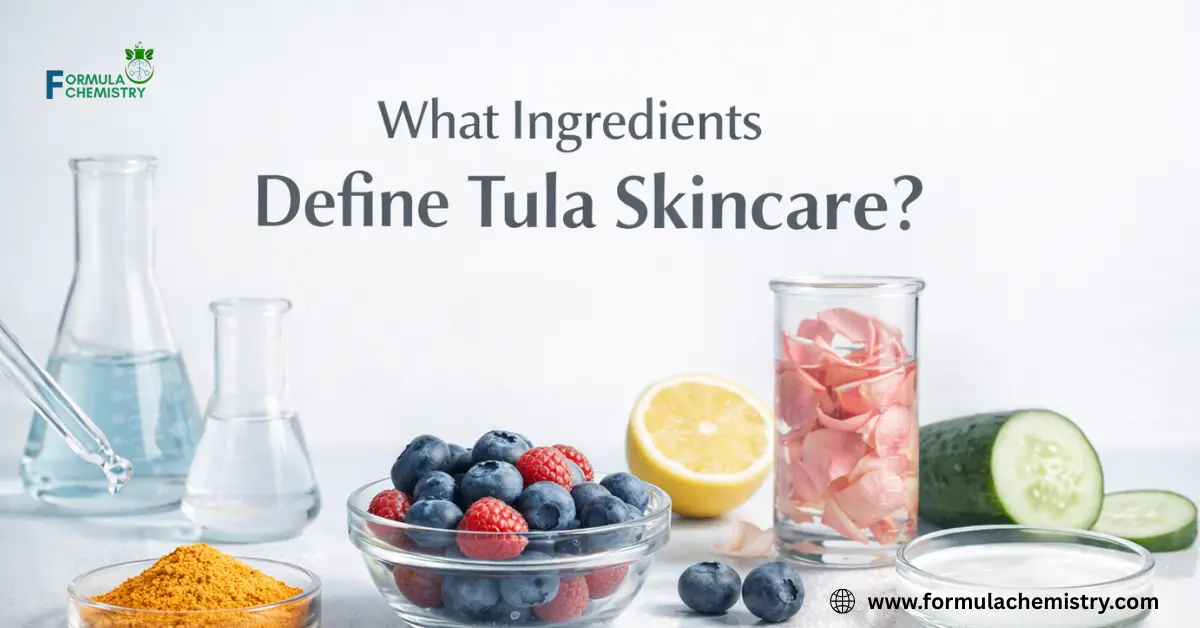
The core of Tula’s identity resides in its “S6Pro Complex,” a proprietary blend designed to improve skin smoothness and maintain balance.
This complex combines six different prebiotics and probiotic extracts, including Lactobacillus and Bifida Ferment Lysate.
These ingredients are humectant in nature, meaning they draw moisture into the stratum corneum while supporting the skin’s defense against environmental stressors.
FormulaChemistry states that while these extracts are beneficial, they are often paired with “superfoods” like turmeric and blueberry.
Turmeric provides antioxidant benefits via curcuminoids, while blueberry extract offers anthocyanins to counteract oxidative stress. However, users should be aware that many original formulations contain synthetic fragrance, which can be a primary trigger for contact dermatitis.
Probiotic Extracts vs. Live Cultures
It is a common misconception that Tula products contain “live” bacteria. In cosmetic chemistry, using live bacteria would impose a significant preservation challenge and safety risk.
Instead, Tula uses ferments and lysates broken-down components of beneficial bacteria.
These are stable in water-based formulas and interact with the skin’s surface without the risk of uncontrolled microbial growth.
Technical Ingredient Analysis
Beyond the marketing-led superfoods, Tula utilizes high-performance synthetic actives. You will find 2% Salicylic Acid in their acne line and 10% Glycolic Acid in their resurfacing toners.
Their moisturizers frequently utilize Squalane and Ceramides, which play a crucial role in lipid barrier repair.
How Does Tula Perform for Different Skin Concerns?
Tula is generally considered “good” for people seeking a glow-focused, hydrating routine. The brand is skilled in creating “cosmetically elegant” formulas products that feel lightweight, absorb quickly, and sit well under makeup.
This makes them highly effective for individuals with dullness or mild dehydration who want a simplified regimen.
However, for people with specific conditions like fungal acne (Malassezia Folliculitis) or severe rosacea, the complexity of the ingredient lists can be a drawback. Some products contain esters and oils that may worsen certain conditions.
FormulaChemistry provides practical formulation education to help users identify these nuances before purchase.
Efficacy for Acne and Sensitivity
For acne-prone individuals, Tula offers the “Breakout Star” line, which is oil-free and utilizes FDA-approved levels of Salicylic Acid.
Even though effective for comedonal acne, those with deep cystic acne may find these formulas too mild. Regarding sensitivity, the brand’s recent move to launch fragrance-free versions of their “Cult Classic” cleanser and “24-7 Moisture” cream is a vital improvement for those with reactive skin.
- Common Problems and Fixes:
- Problem: Redness or stinging after using the resurfacing toner.
- Fix: Reduce usage to twice a week and verify it is applied to completely dry skin to slow penetration.
- Problem: Breakouts after using the “24-7 Moisture” cream.
- Fix: Switch to the “24-7 Weightless Gel Cream,” which avoids heavier emollients that may be comedogenic for some.
- Problem: Pilling when layering sunscreens.
- Fix: Wait 60 seconds after moisturizing before applying the “Protect + Glow” SPF to allow the film-formers to set.
Usage and Compatibility Comparison
| Product Category | Best For | Usage Range | pH Notes |
| Purifying Cleanser | All Skin Types | 2x Daily | pH 5.0–6.0 |
| Resurfacing Toner | Texture/Pores | 2–3x Weekly | pH 3.5–4.5 |
| 24-7 Moisture | Dry/Normal | 2x Daily | pH 5.0–5.5 |
| Breakout Star | Acne-Prone | 1–2x Daily | pH 4.0–5.0 |
Get the real take in Is Skincare Essentials Legit?
Are Tula Products Safe for Long-Term Use?
From a safety and regulatory standpoint, Tula formulations are dermatologist-tested and adhere to strict “clean” standards, excluding over 1,600 questionable ingredients. They avoid parabens, sulfates, and phthalates.
For long-term use, the focus on the microbiome is generally safe and may even help prevent the “over-processed” look often caused by excessive use of harsh retinoids and acids.
Safety-forward guidance at FormulaChemistry suggests that the most significant risk with Tula is not the probiotics, but the possibility for irritation from botanical extracts or fragrance in specific products.
For example, the “Glow + Get It” eye balm contains citrus extracts, which, while brightening, can be sensitizing for the delicate ocular area in some users.
Preservation and Stability
Because Tula products are water-based and contain botanical ferments, robust preservation is mandatory.
They typically use Phenoxyethanol and Ethylhexylglycerin to ensure the products remain free of harmful mold and bacteria throughout their shelf life. Users should respect the “Period After Opening” (PAO) symbol on the packaging, usually 6–12 months.
Who Should Exercise Caution?
While the brand is inclusive, certain populations should be mindful.
Who should avoid certain Tula products:
- Individuals with a known allergy to dairy or soy (some ferments are derived from these sources).
- Those with highly reactive, fragrance-sensitive skin should avoid the classic scented versions.
- When not to use: Avoid applying the 10% Glycolic toner on broken or recently waxed skin.
Is the Price Point Justified by the Formula?
Tula sits in the mid-to-high price range ($30–$60). For many, the “good” in Tula is found in the user experience the refreshing feeling of the eye balms and the non-greasy finish of the moisturizers.
From a chemistry perspective, you are paying for the stabilization of the probiotic complex and the clinical testing the brand performs on its finished goods.
FormulaChemistry views Tula as a strong option for those who value brand honesty and “clean” marketing without sacrificing the feel of luxury skincare.
While you can find individual active ingredients (like glycolic acid) for less, the combination of the probiotic extracts with skin-soothing botanicals offers an equilibrated approach that is difficult to replicate with single-ingredient drugstore serums.
Comparison with Traditional Clinical Brands
In contrast to traditional clinical brands that focus on high-percentage “stripping” actives, Tula focuses on “feeding” the skin.
This makes it a better long-term friend for those who have a damaged barrier or those living in high-pollution metropolitan environments.
Editorial Responsibility and Final Verdict
Ultimately, whether Tula is “good” depends on your skin’s specific needs. If you seek a routine that unites active exfoliation with microbiome support, Tula provides an integrated system.
However, consumers should always value their own skin’s feedback over marketing claims. FormulaChemistry is committed to providing neutral, safety-first information to help you navigate these choices.
FAQs about Is Tula Skincare Good?
Is Tula Skincare safe for pregnancy?
Most Tula products are considered safe; however, products containing Salicylic Acid (BHA) should be discussed with a physician. Always look for the presence of retinoids, though Tula is largely retinol-free.
Does Tula help with aging?
Yes, ingredients like peptides and Bifida Ferment Lysate in their “24-7 Moisture” and “Beauty Sleep” lines help improve elasticity and the appearance of fine lines.
Is Tula Skincare cruelty-free?
Yes, Tula is certified cruelty-free and does not test its finished products or ingredients on animals.
Can I use Tula if I have oily skin?
Yes. Tula offers several oil-free and gel-based options, such as the “24-7 Weightless Gel Cream,” specifically formulated for oily and combination types.
Why does my Tula cleanser smell like medicine?
The “Cult Classic” cleanser has a distinct botanical scent. If you find it overpowering, the brand now offers a dedicated fragrance-free version.
Does Tula contain live probiotics?
No, Tula uses probiotic extracts and ferments (lysates). These are non-living and more stable for topical application.
How long does it take to see results with Tula?
Hydration benefits are usually immediate. For enhancements in skin texture and pore appearance, consistent use over 4–6 weeks is typically required.
Can I layer Tula with Vitamin C?
Generally, yes. Many Tula products actually contain Vitamin C derivatives like Tetrahexyldecyl Ascorbate, which are stable and pair well with their probiotic complexes.