

Introduction
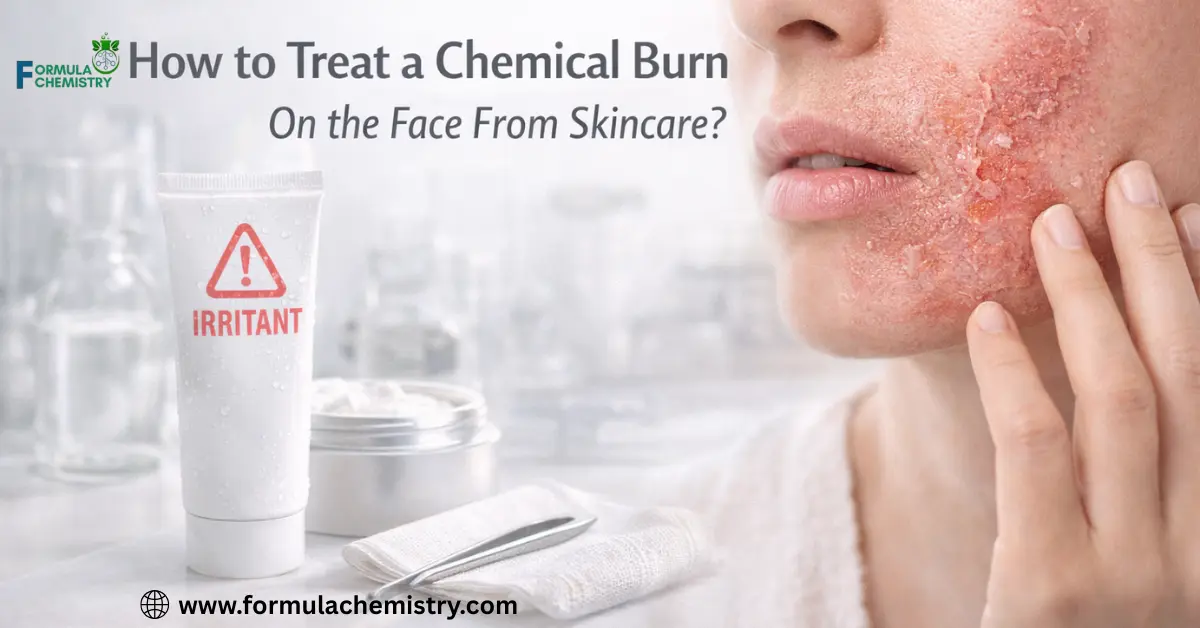
Treating a chemical burn on the face requires immediate action and a specialized approach to skin barrier repair.
While skincare is designed to improve the complexion, over-application or incorrect layering of active ingredients such as Glycolic Acid, Salicylic Acid, or high-strength Retinoids can result in unintended tissue damage.
A chemical burn occurs when a substance causes an adverse reaction that destroys skin cells, producing symptoms ranging from mild redness to severe blistering.
Understanding the difference between simple irritation and a true chemical burn is key for effective treatment.
At Formula Chemistry, we provide practical formulation education and safety-forward guidance to help you navigate the demands of cosmetic chemistry and skin health.
When a burn occurs, the primary goal shifts from aesthetic improvement to sustaining skin integrity and preventing long-term scarring or Post-Inflammatory Hyperpigmentation (PIH).
Quick Facts
- What it is: A chemical burn on the face is skin damage caused by excessive exposure to acidic or alkaline skincare actives.
- Who it’s for: Individuals experiencing intense stinging, persistent redness, peeling, or blistering after using exfoliating acids or retinoids.
- Initial Action: Immediately flush the area with cool (not cold) water for at least 15–20 minutes to neutralize the substance.
- Healing Ingredients: Focus on Ceramides, Panthenol (Pro-Vitamin B5), and Colloidal Oatmeal to support barrier repair.
- pH Management: Maintain a skin-neutral pH of 4.5–5.5 during recovery to assist the acid mantle.
- Common Mistake: Applying ice directly to the burn, which can additionally damage compromised tissue and restrict blood flow.
- Usage Range: Avoid all actives (AHAs, BHAs, Vitamin C) for 14 to 28 days, permitting a full skin cell turnover cycle.
- Safety Note: Seek immediate medical attention if the burn covers a large area, involves the eyes, or shows signs of infection like yellow discharge.
Learn how to care for irritated skin in Why Is My Skin Peeling After Using Skincare Products?
What Are the Signs of a Chemical Burn from Skincare?
Identifying a chemical burn quickly can prevent the damage from progressing into deeper layers of the dermis. Unlike a typical “purge” or mild tingling, a burn feels as a steady heat or throbbing sensation.
Recognizing Physical Symptoms
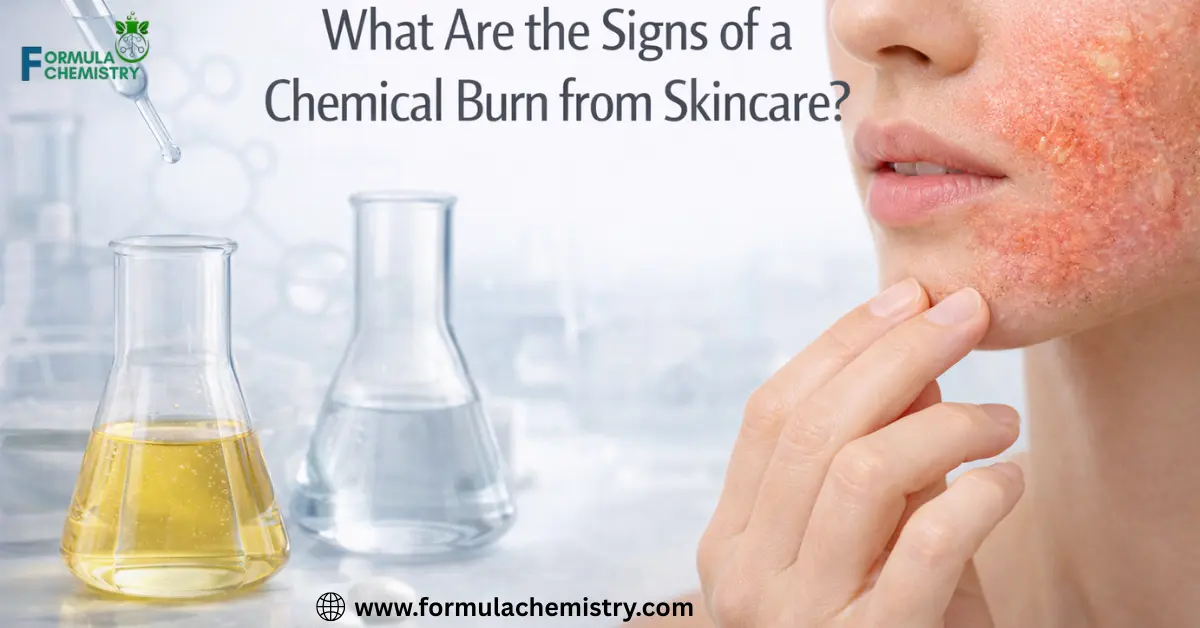
A chemical burn usually manifests in stages. Initially, you may notice intense erythema (redness) and a feeling of “tightness.” Within hours, the skin may become inflamed and develop a shiny, plastic-like texture.
In more severe cases (second-degree burns), small blisters or weeping may occur. It is vital to monitor if the skin turns a dark brown or grayish color, which indicates significant cellular damage.
Differentiating Irritation from Burns
It is easy to confuse Contact Dermatitis or general irritation with a burn. Irritation typically diminishes within a few hours of washing the product off and is usually limited to dry, itchy patches.
A chemical burn, however, involves a compromised skin barrier where the “sting” persists even when applying plain water. If your standard, non-active moisturizer causes a burning sensation, you are likely dealing with a chemical burn.
How to Treat and Heal a Face Burn Safely
The recovery phase is about “minimalism.” The skin’s natural defense system is down, making it highly susceptible to environmental stressors and bacteria.
The Immediate 48-Hour Protocol
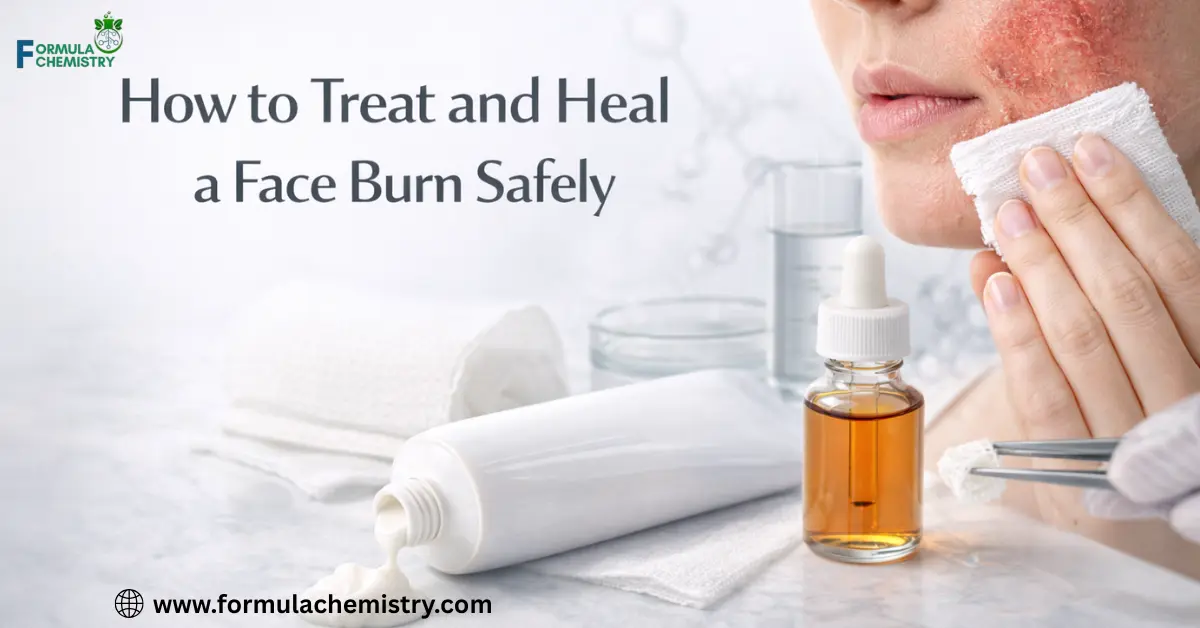
Once you have flushed the skin, stop all skincare products except for a gentle, non-foaming cleanser and a bland occlusive. Use a soap-free cleanser with a pH of 5.0 to 6.0 to avoid disrupting the remaining lipid barrier.
Following cleansing, apply a thick layer of Petrolatum or a Ceramide-rich balm. This creates an artificial “seal” that prevents Transepidermal Water Loss (TEWL), which is the leading cause of delayed healing and scarring.
Ingredients to Use and Avoid
During the healing process, your ingredient deck should be strictly limited. Look for Humectants like Glycerin and Hyaluronic Acid, which draw moisture into the skin, and Emollients like Squalane.
Avoid the following strictly until the skin is fully healed:
- L-Ascorbic Acid (Vitamin C) (Low pH is too aggressive)
- Fragrances and Essential Oils (High irritation potential)
- Physical Scrubs (Causes micro-tears in fragile skin)
- Chemical Sunscreens (May sting; switch to Zinc Oxide or Titanium Dioxide)
| Recovery Phase | Recommended Ingredients | Purpose |
| Phase 1: Cooling | Water, Aloe Vera (Pure) | Heat dissipation |
| Phase 2: Sealing | Petrolatum, Dimethicone | Occlusive protection |
| Phase 3: Repair | Ceramides, Phytosphingosine | Lipid replenishment |
| Phase 4: Soothing | Allantoin, Bisabolol | Anti-inflammatory |
Common Problems and Fixes During Recovery
Even with a careful routine, issues like extreme dryness or “scabbing” can occur. Handling these correctly determines whether you will be left with a permanent mark.
Managing Peeling and Scabbing
As the skin heals, the damaged top layer will eventually die and flake off. Problem: It is tempting to peel this skin off manually.
Fix: Never pick or scrub the peeling skin. Doing so exposes “raw” skin that isn’t ready for the environment, leading to hyperpigmentation. Instead, keep the area heavily moisturized with a B5 Panthenol cream to soften the scales until they fall off naturally.
Addressing Post-Burn Dark Spots
Once the redness fades, you may be left with brown or purple spots, known as Post-Inflammatory Hyperpigmentation. Problem: Users often rush back to brightening acids to “fix” the spots. Fix: Wait at least 3 weeks post-healing. Then, introduce gentle tyrosinase inhibitors like Niacinamide (at 2-5%) or Azelaic Acid, which are much safer for sensitized skin than high-strength Hydroquinone or Glycolic Acid.
Guidelines for Stopping Future Chemical Burns
Prevention is the foundation of cosmetic chemistry. Most burns are the result of “user error” or a lack of understanding regarding ingredient compatibility and pH levels.
The Importance of Patch Testing
A patch test is mandatory for high-activity formulations. Apply a small amount of the product to the side of the neck or behind the ear for 24 to 48 hours.
If no reaction occurs, proceed with caution. This is especially important for products containing Salicylic Acid or Tretinoin, where the cumulative effect may not be visible for several days.
Formulation Safety and Layering
One of the most common causes of facial burns is the “cocktailing” of incompatible products. Using a 10% AHA toner followed by a 1% Retinol cream creates a hyper-acidic environment that most skin types cannot tolerate.
Always check the usage instructions given by the manufacturer. If you are formulating your own products, remember that preservation is key; never apply a DIY “soothing” mask made of water-based food items (like cucumber) without proper broad-spectrum preservation, as bacteria can easily infect burned skin.
FAQs about How to Treat a Chemical Burn on the Face from Skincare?
How long does a chemical burn from skincare take to heal?
For a first-degree burn (redness and dryness), healing typically takes 7 to 10 days. Deeper burns involving blistering can take 3 to 4 weeks to fully re-epithelialize.
Can I use makeup over a chemical burn?
It is highly recommended to avoid makeup for at least the first 3-5 days. Many foundations contain alcohols or pigments that can irritate the open skin barrier and trap bacteria.
Is Vaseline safe for a face burn?
Yes, 100% Pure White Petrolatum (Vaseline) is one of the safest occlusives for a burn. It is non-comedogenic and provides a sterile-like barrier that prevents the wound from drying out.
Should I use hydrocortisone on a chemical burn?
While Hydrocortisone can reduce inflammation, it should only be used for a short period (under 3 days) and under medical supervision, as it can thin the skin if overused on the face.
When can I start using Retinol again after a burn?
You should wait until your skin has returned to its baseline texture and sensitivity, usually one full month after all peeling and redness have completely disappeared.
Does a chemical burn on the face always scar?
Not necessarily. If the burn is kept moist and protected from the sun, most superficial burns heal without permanent scarring. UV exposure is the biggest risk factor for permanent marks.
Why does my moisturizer sting after a burn?
When the stratum corneum (top layer of skin) is damaged, ingredients that are usually “safe” can penetrate deeper and reach nerve endings. This is a sign your barrier is still compromised.
Can I use Aloe Vera on a chemical burn?
Yes, provided it is pure, fragrance-free Aloe Vera. Avoid “After-Sun” gels that contain Alcohol Denat or Menthol, as these will cause excruciating pain and further dehydration.