

Introduction
The intersection of adolescent development and advanced cosmetic and skincare products science has triggered considerable concern among parents and young consumers.
As high-potency skincare trends reach younger groups, the question of whether topical ingredients can interfere with physiological development is more relevant than ever.
At Formula Chemistry, we focus on the intersection of ingredient efficacy and developmental safety to ensure formulations are appropriate for their intended users.
While the skin is a remarkably efficient barrier, some substances possess the molecular weight and chemical profile to penetrate the dermis and potentially enter systemic circulation.
Comprehending the distinction between local skin irritation and systemic endocrine disruption is necessary for maintaining both skin health and overall growth trajectories.
Quick Answer
- Primary Concern: Most standard skincare ingredients do not stunt growth, but certain endocrine disruptors and high-potency retinoids require caution.
- Who it’s for: This guidance is specifically for adolescents, pre-teens, and those formulating products for younger groups.
- How to use: Stick to basic hydration and mineral sun protection for those under age 12.
- Typical usage range: Active compounds such as salicylic acid should be kept at 2% or lower in wash-off products for teens.
- pH/Solubility: Maintain a physiological skin pH of 4.5–5.5 to protect the developing skin barrier.
- Common Mistakes: Using “anti-aging” products containing high concentrations of Vitamin A or certain chemical UV filters before physical maturity.
- Safety Note: Always perform a patch test on the inner forearm for 24 hours to monitor for localized reactions prior to full application.
What Ingredients Raise Concerns for Growing Bodies?
The primary concern regarding growth and skincare involves endocrine-disrupting chemicals (EDCs). These substances can mimic or block natural hormones, potentially interfering with the sophisticated signaling required for bone growth and puberty.
While the cosmetic industry is highly regulated, some ingredients remain subject to scrutiny for their cumulative effects on the endocrine system.
FormulaChemistry emphasizes that the dose and frequency of exposure are the most critical factors. A single application of a product is unlikely to cause systemic change, but chronic contact with specific chemical classes during high-growth phases (like puberty) warrants a more conservative approach to formulation and selection.
Endocrine Disruptors and Hormonal Interference
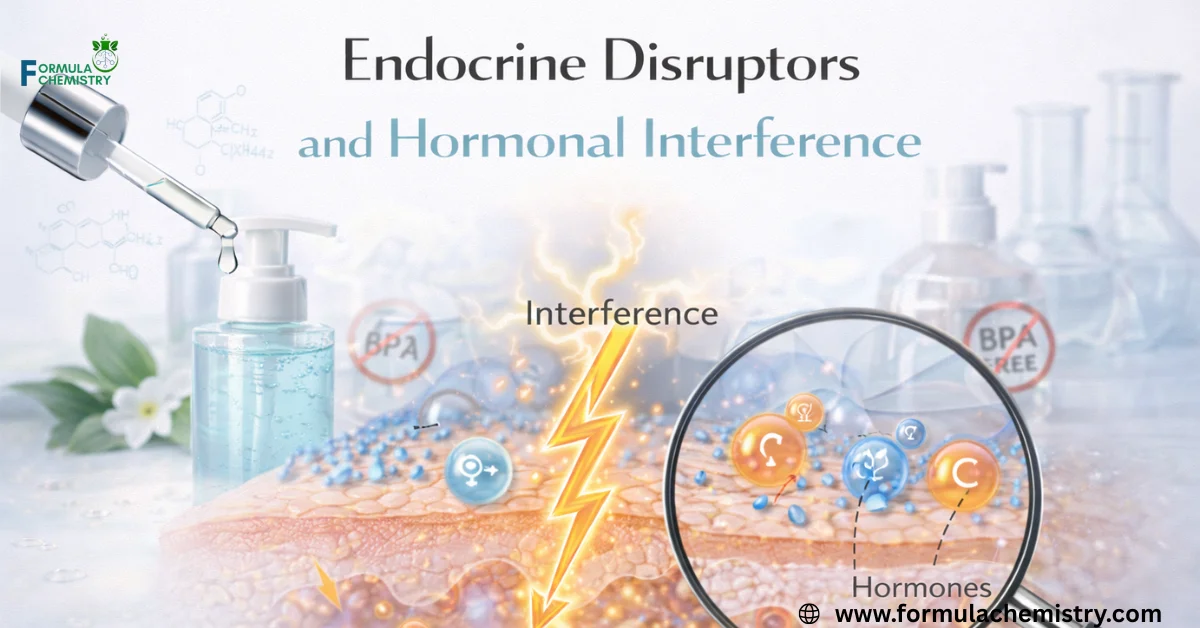
Phthalates and certain parabens are frequently cited in discussions regarding hormonal health. Phthalates are often used to improve the flexibility of plastics or as solvents in fragrances, while parabens serve as preservatives.
Some studies suggest these can mimic estrogen, though the concentrations found in modern skincare are strictly limited by regulatory bodies.
Another group of concern includes certain chemical UV filters, such as oxybenzone. Research has indicated that these molecules can be detected in the bloodstream after topical application.
For younger users, mineral-based sunscreens (Zinc Oxide or Titanium Dioxide) are often recommended as better choices because they sit on top of the skin rather than absorbing into it.
Retinoids and Vitamin A Derivatives
Retinoids are gold-standard ingredients for acne and aging, but they are highly bioactive. In clinical oral doses (like Isotretinoin), Vitamin A derivatives have a documented impact on bone growth plates.
While topical over-the-counter retinol is much less potent, there is a professional consensus that high-strength retinoids should be used by adolescents only under medical supervision.
Who should avoid:
Children under the age of 12 and those without specific medical needs for acne intervention should avoid high-potency retinoids. Using these ingredients prematurely can also lead to severe barrier compromise, making the skin more susceptible to environmental toxins.
The Biological Barrier and Systemic Absorption
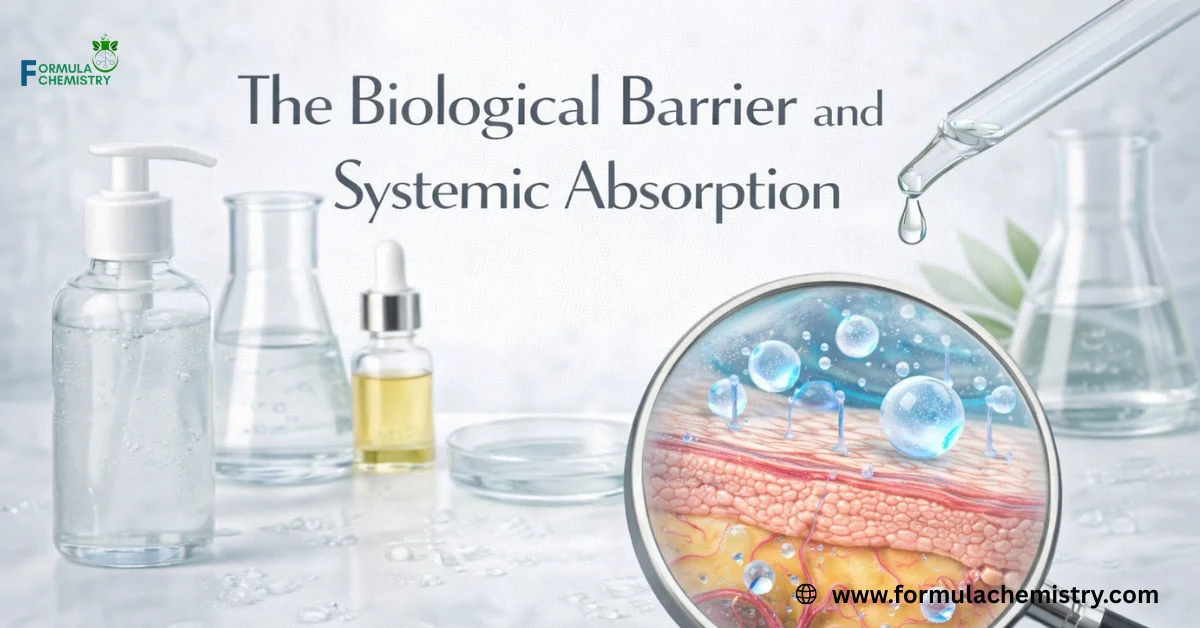
To understand if a product can “stunt growth,” one must look at the skin’s permeability. The stratum corneum acts as a primary defense, but factors like molecular size, lipid solubility, and skin integrity dictate whether an ingredient stays on the surface or reaches the vascularized dermis.
FormulaChemistry provides practical formulation education and safety-forward guidance to help developers deal with these complex biological interactions.
We focus on creating products that respect the skin’s natural architecture while delivering necessary benefits without systemic risk.
Factors Affecting Ingredient Penetration
Smaller molecules (below 500 Daltons) are more likely to penetrate deeply. If a product is formulated with penetration enhancers like ethanol or dimethyl isosorbide, the risk of systemic absorption increases.
In the context of growth, the surface-area-to-volume ratio in children is higher than in adults, meaning they may absorb a proportionately higher dose of any given topical chemical.
| Ingredient Category | Growth Risk Level | Primary Action | Recommendation |
| Hyaluronic Acid | Negligible | Surface Hydration | Safe for all ages |
| Oxybenzone | Low/Monitored | UV Absorption | Use Mineral Filters |
| Hydroquinone | Moderate | Pigment Inhibition | Avoid in adolescents |
| Phthalates | Moderate | Fragrance Solvent | Choose Phthalate-Free |
| Ceramides | None | Barrier Repair | Highly Recommended |
Comparison of Adult vs. Adolescent Skin
Adolescent skin is often more reactive and has a higher rate of cell turnover, but its barrier function can be easily disrupted by aggressive “adult” formulations. Over-exfoliation with Alpha Hydroxy Acids (AHAs) can lead to chronic inflammation.
While inflammation itself doesn’t stunt growth, it can trigger stress responses in the body that are counterproductive to healthy development.
- Common Problems and Fixes:
- Problem: Skin irritation from adult-strength Vitamin C. Fix: Switch to a stable, low-concentration derivative like Sodium Ascorbyl Phosphate.
- Problem: Compromised barrier from over-cleansing. Fix: Use non-foaming, pH-balanced cleansers (pH 5.0–5.5).
- Problem: Sensitivity to synthetic fragrances. Fix: Formulate with fragrance-free options or hydrosols at low 0.5%–1% ranges.
Possible Risks of Heavy Metals and Contaminants
While intentional ingredients are regulated, contaminants pose a different set of risks. Heavy metals like lead, mercury, and arsenic are neurotoxins and can interfere with various developmental processes if present in significant quantities. These are most commonly found in unregulated or counterfeit cosmetics.
Safety-forward formulation entails strict sourcing. At FormulaChemistry, we advocate for using high-purity, cosmetic-grade raw materials that come with a Certificate of Analysis (COA) to ensure that heavy metal content is well below safety limits.
Identifying Toxic Contaminants
Mercury is sometimes illegally added to skin-lightening creams to inhibit melanin. Mercury exposure is a serious health risk that can affect the nervous system and potentially impact growth and development in children. Always ensure that products are obtained from reputable brands that follow Good Manufacturing Practices (GMP).
Key warnings:
Avoid “miracle” lightning products that do not list full ingredients or are manufactured within regions with lax cosmetic oversight.
Who should avoid:
Everyone, but especially pregnant women and children, must strictly avoid all products suspected of containing heavy metals or unlisted actives.
Preservation and Microbiological Safety
Growth stunting isn’t just about chemicals; it’s about overall health. Water-based products that lack robust preservation systems are able to harbor pathogenic bacteria.
While the bacteria themselves may not stunt growth, the resulting systemic infections or chronic skin conditions can place a heavy burden on a developing immune system.
Preservation reminder:
Any formulation containing water, hydrosols, or aloe vera juice must include a broad-spectrum preservative system (e.g., Phenoxyethanol and Ethylhexylglycerin) to remain safe for consumer use.
Safe Skincare Practices for Younger Groups
The consensus among dermatologists and chemists is that “less is more” for those whose bodies are still growing.
The focus should be on protection and support rather than transformation. Using high-potency actives before they are biologically necessary is not only a waste of resources but a potential risk factor for long-term skin sensitivity.
Editorial responsibility at Formula Chemistry involves steering users toward age-appropriate ingredients.
By focusing on biocompatible lipids, gentle humectants, and non-nano mineral sunscreens, one can maintain healthy skin without any risk to physiological development.
Recommended Ingredients for Adolescents
For young skin, the goal is to support the acid mantle. Ingredients like glycerin, ceramides, and fatty acids are ideal. They provide the building blocks the skin needs without interfering with hormonal pathways.
If acne occurs, low-strength Salicylic Acid (BHA) is generally considered safe when used as a spot treatment or in wash-off forms.
Usage ranges: Keep Salicylic Acid at 0.5%–2% and ensure the final product is not used on large areas of the body to prevent excessive salicylate absorption.
When to Consult a Professional
If there is a legitimate concern about growth delays or hormonal imbalances, the first step should always be a consultation with a pediatrician or endocrinologist. Skincare is rarely the sole cause of such issues, but it can be a contributing factor in a larger “chemical load.”
When not to use:
Discontinue any product that causes systemic signs such as dizziness, headaches, or widespread rashes, as these may signify considerable absorption or an acute allergic reaction.
FAQs about Can Ingredients in Skincare Products Stunt Growth?
Can retinol stop a teenager from growing?
There is no evidence that topical, over-the-counter retinol stunts height, but high-strength Vitamin A can affect bone health if taken orally in excessive amounts.
Are parabens dangerous for children’s development?
Current scientific consensus and regulatory authorities, including the SCCS, state that parabens, at used concentrations, are safe and do not reach levels that disrupt hormones.
Is it safe for kids to use “anti-aging” serums?
It is generally unnecessary and potentially harmful to the skin barrier. These products often contain actives that are too aggressive for younger skin.
Can it lead to makeup stunt growth?
Yes, heavy metals like lead are neurotoxins and can interfere with development. Only use products from trusted brands that test for contaminants.
What is the safest sunscreen for a growing child?
Mineral sunscreens containing Zinc Oxide or Titanium Dioxide are preferred as they are not absorbed systemically.
Does salicylic acid enter the bloodstream?
Small amounts can be used, which is why it should be used in limited concentrations (under 2%) and avoided over large body areas in children.
Should I worry about phthalates in fragrances?
While many modern brands are phthalate-free, chronic exposure to certain phthalates is linked to endocrine disruption, so choosing fragrance-free products is a safer bet for kids.
Can skincare cause early puberty?
There are concerns that high exposure to certain EDCs might play a role, but skincare is usually a minor contributor compared to diet and environment.
- Salicyclic Acid Solubility in Glycerin, BG, and PEG-400: Formulator’s Comparison Guide
- Salicylic Acid Solubility in Propylene Glycol vs Ethanol: Formulator’s Comparison Guide
- Salicylic Acid Solubility in Water: Complete Formulator’s Guide
- How to Use Salicylic Acid on Face: A Beginner’s Guide
- Salicylic Acid vs Benzoyl Peroxide Face Wash