
Introduction
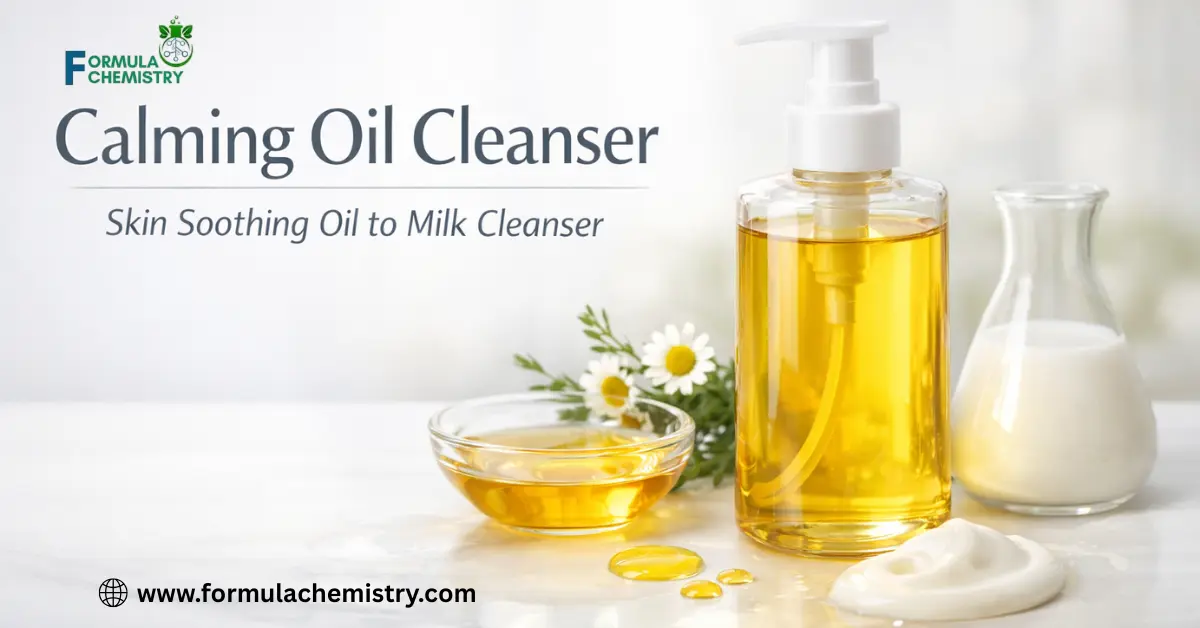
Cleansing is the foundation of any routine, but harsh soaps often strip the skin of essential moisture, leading to irritation and redness. A calming oil cleanser solves this by dissolving impurities while maintaining the skin barrier.
With precise formula chemistry, we create a product that applies as a luxurious oil and turns into a milky emulsion with water. This enables deep cleansing and effortless rinsing with no greasy residue.
With the basics established, this guide now explores the science behind oil-to-milk cleansers and provides a Formula Chemistry DIY recipe so you can create your own skin-soothing cleanser at home.
What is the Science Behind Oil to Milk Cleansers?
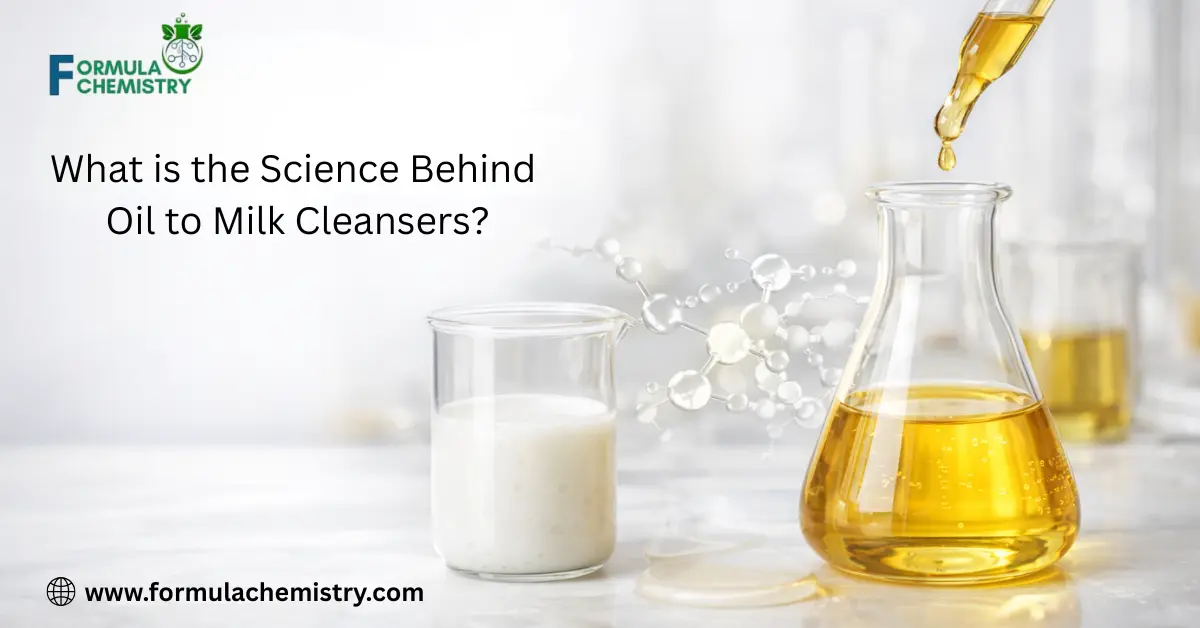
This type of cleanser relies on a specific interaction among lipids, surfactants, and water to effectively remove debris.
The Principle of Emulsification
Oil and water do not naturally mix. To make an oil rinse water-soluble, we must include an emulsifier in the chemical formula.
The emulsifier reduces surface tension, so when water is added, it surrounds the oil droplets, forming the milky substance that quickly washes away dirt and makeup.
Lipophilic Cleansing
“Like dissolves like” is a fundamental concept in chemistry.
Sebum, sunscreen, and waterproof makeup are lipophilic (oil loving), so water-based cleansers can’t remove them. Oil cleansers bind to these and dissolve them without scrubbing.
The Formula Chemistry of Soothing Lipids
The base of your cleanser determines its therapeutic properties; choosing the right carrier oils is essential for calming inflammation.
Oat Oil for Barrier Repair
Oat oil is high in ceramides and phospholipids, which are similar to the skin’s natural structure.
These components mimic the skin’s natural structure, helping to seal in moisture and soothe itching or redness associated with a compromised barrier.
Blue Tansy and Chamomile
For a truly calming effect, chamazulene-containing ingredients are preferred.
Blue Tansy gives the cleanser a beautiful color and provides potent anti-inflammatory benefits. Integrating these extracts into the chemistry formula turns a simple cleansing step into a soothing ritual for reactive skin.
Key Ingredients for Your Calming Cleanser Formula
A successful formulation requires a balance of varying molecular weights to ensure spreadability and effective cleansing.
Carrier Oils
You need a blend of light and medium-weight oils.
Sunflower or Safflower oils are excellent bases because they are high in Linoleic Acid, which helps thin sebum and prevent pore clogging. Castor oil can be added in small amounts for its “drawing” properties, pulling dirt from pores.
The Solubilizer
The magic ingredient that makes the “milk” happen is the solubilizer or emulsifier.
Polyglyceryl-4 Oleate or Polysorbate 80 is effective and safe. The emulsifier ensures your cleanser rinses off easily, leaving no oily residue.
Antioxidants
Oils are prone to oxidation (going rancid).
Vitamin E (Tocopherol) is added to delay this process. It protects the integrity of the fatty acids, ensuring your Formula Chemistry DIY creation stays fresh and beneficial for the skin.
Formula Chemistry DIY: The Calming Blue Tansy Recipe
Here is a professional-grade recipe you can create in your own lab or kitchen, designed to soothe sensitive skin.
Phase A: The Oil Base
- Sunflower Oil (High Linoleic): 60%
- Oat Oil: 20%
- Castor Oil: 5%
Phase B: The Functional Ingredients
- Polyglyceryl-4 Oleate (Emulsifier): 14%
- Vitamin E (Tocopherol): 0.5%
- Blue Tansy Essential Oil: 0.5%
Instructions
- Weigh: Measure all Phase A ingredients into a clean, sanitized beaker.
- Mix: Add Phase B ingredients to the beaker.
- Stir: Mix gently until the solution is completely uniform. The blue tansy will turn the oil a beautiful emerald or azure color.
- Package: Pour into a pump bottle. Keep water out of the bottle to preserve the chemical formula.
Customizing the Chemistry Formula for Your Skin Type
One of the benefits of DIY is the ability to adjust specific elements of your lipid profile, such as levels of various fats and oils, to perfectly match your biological needs.
For Acne-Prone Skin
Replace Sunflower Oil with Hemp Seed Oil or Grapeseed Oil. These alternatives are high in linoleic acid and can help balance oily, congested skin.
These high-linoleic, “dry” oils help balance sebum and avoid congestion in acne-prone skin.
For Dry, Mature Skin
Incorporate heavier oils, such as Avocado or Macadamia Nut Oil.
Oleic and palmitoleic acids provide a cushion during cleansing, leaving skin soft and conditioned.

The Role of Surfactants in Formula Chemistry Skincare
While this is an oil cleanser, the emulsifier acts as a surfactant, and selecting the right one affects the “after-feel.”
HLB System Considerations
The Hydrophile-Lipophile Balance (HLB) determines how water-soluble an emulsifier is.
For an oil-to-milk cleanser, we generally look for an emulsifier with a lower HLB (around 4-6) or a specialized blend. This ensures it stays stable in the oil bottle but activates instantly when water comes into contact with it.
Avoiding the “Stripped” Feeling
Some emulsifiers are too powerful and remove too much oil.
Polyglyceryl-4 Oleate is plant-derived and provides a gentle rinse that respects the acid mantle.
How to Use Your Oil-to-Milk Cleanser Correctly
The application method is just as important as the ingredients; chemistry requires the right conditions to work.
Apply to Dry Skin
This is non-negotiable. You must apply the oil to a dry face with dry hands.
If you add water too early, the emulsion happens in your hands, not on your face. The oil needs direct contact with the sebum and makeup to dissolve the chemical formula of those impurities first.
** The Emulsification Step**
After massaging the oil for 60 seconds, wet your hands and massage your face again.
You will see the oil turn white and milky. This is the emulsifier bonding with the water. Massage for another 30 seconds to lift everything away, then rinse thoroughly.
Troubleshooting Your DIY Formulation
Even simple anhydrous (water-free) formulas can have issues; here is how to fix common problems.
Separation
If your emulsifier sinks to the bottom, the mixture wasn’t stirred enough, or the ingredients are incompatible.
Ensure you mix thoroughly. Some heavier emulsifiers may need slight heating to fully blend with lighter carrier oils before cooling.
Cloudiness
If your final product looks hazy, moisture may have gotten into the bottle.
Since this formula contains no preservatives, introducing water is dangerous. Ensure all equipment is completely dry before you start your Formula Chemistry DIY process.
Why This Cleanser Supports Barrier Health
Unlike foaming cleansers that raise the skin’s pH, oil cleansers are neutral and non-disruptive.
Preserving the Acid Mantle
The acid mantle is your skin’s first line of defense.
Oil cleansers do not alter this acidic environment. By cleaning without stripping lipids, you keep the microbiome happy and prevent the “tight” feeling that signals barrier damage.
Reducing Physical Friction
The “slip” provided by the oil allows you to massage the skin without dragging it.
This reduces physical irritation, a major trigger of inflammation and premature aging. It is a gentle approach aligned with the philosophy of restorative Formula Chemistry skincare.
Conclusion
A Calming Oil to Milk Cleanser is a perfect introduction to the world of cosmetic formulation.
It demonstrates the power of formula chemistry, transforming a simple oil into a functional, high performance cleanser through the principles of emulsification.
Whether you are looking to soothe sensitive skin or dissolve heavy makeup, this customizable, scientifically sound method offers a gentle yet effective solution.
FAQ’s about Calming Oil Cleanser
Do I need a preservative in this oil cleanser?
Technically, no, because it is an anhydrous (water-free) product, and bacteria need water to grow. However, because it is kept in the bathroom, where steam and wet hands are common, adding an oil-soluble preservative, such as Phenoxyethanol, or an antioxidant, such as Vitamin E, is highly recommended for safety.
Can I use Polysorbate 80 instead of Polyglyceryl-4 Oleate?
Yes, Polysorbate 80 is a very effective emulsifier and will create a stable oil-to-milk cleanser. However, it is a synthetic ingredient. If you prefer a natural “green” chemistry profile for your Formula Chemistry DIY project, Polyglyceryl-4 Oleate is the superior choice.
Will this cleanser clog my pores?
It is unlikely that you choose the right carrier oils. Oils like Sunflower, Hemp, and Safflower are non-comedogenic (won’t clog pores). The emulsifier ensures the oil rinses away completely, taking pore-clogging debris with it, which often improves acne-prone skin.
Why does my cleanser turn white when I rinse?
This is the “blooming” effect, caused by the emulsifier. When water is added, the emulsifier coats the oil droplets, forming a stable mixture called an emulsion. This structure scatters light, making the clear oil appear milky white.
Can I use this to remove eye makeup?
Yes, oil cleansers are excellent for breaking down waterproof mascara and eyeliner. However, be careful with essential oils like Blue Tansy around the eyes. If your eyes are sensitive, make a fragrance-free version of the chemistry formula for eye makeup removal.
Is double cleansing necessary with this product?
For many people, this cleanser is sufficient on its own because it rinses clean. However, if you wear heavy makeup or have oily skin, you may prefer to follow up with a gentle water-based cleanser to ensure absolutely no residue remains.
How long will this DIY cleanser last?
Without water, the shelf life is determined by the oil with the shortest expiration date (usually about 6 to 12 months). Adding Vitamin E helps delay oxidation (rancidity), keeping the oils fresh and the chemical formula stable for longer.
Can I add water to the bottle to make it creamy?
No, do not add water to the storage bottle. Introducing water will prematurely activate the emulsifier, creating an environment where bacteria and mold can grow rapidly. The transformation should only happen on your face, not in the bottle.