
Introduction
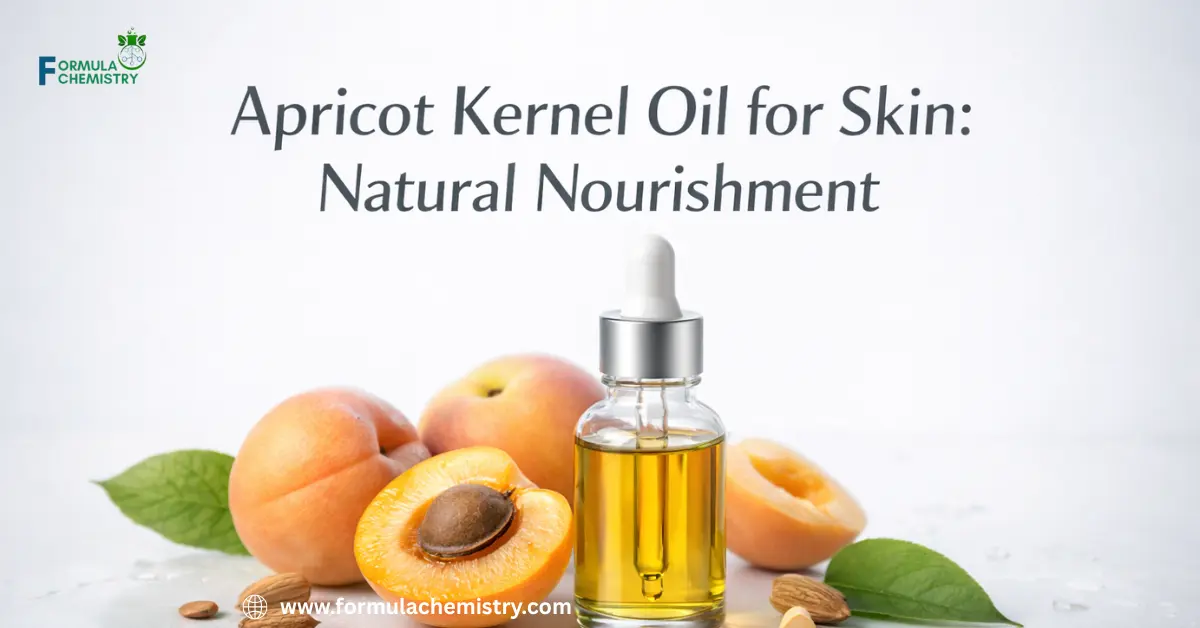
Apricot Kernel Oil, scientifically called Prunus armeniaca, is a light, odorless, and nutrient-dense fixed oil obtained from the seeds or “kernels” of apricots.
For cosmetic formulators at FormulaChemistry, this oil is essential because of its high concentration of essential fatty acids and vitamins.
Its molecular structure allows it to mimic the skin’s natural oils, making it an excellent emollient for supporting the skin barrier without a heavy, greasy residue.
Quick Facts
- What it is: A lightweight, non-greasy carrier oil rich in oleic and linoleic acids.
- Who it’s for: Ideal for dry, sensitive, mature, and dehydrated skin types.
- How to use: Apply directly as a facial oil or incorporate into emulsions and anhydrous balms.
- Typical usage range: 1% to 100%, depending on the desired viscosity and skin feel.
- Solubility/Compatibility: Oil-soluble; compatible with most vegetable oils, esters, and waxes.
- Common Mistakes: Overheating the oil during the oil phase, which may degrade its delicate vitamin content.
- Safety Note: Always perform a patch test, as individuals with stone fruit allergies may react to the proteins.
The Nutritional Profile of Prunus Armeniaca
The efficacy of Apricot Kernel Oil derives from its high levels of Vitamin E (alpha-tocopherol) and Vitamin A. These antioxidants help neutralize free radicals, which are responsible for premature aging and environmental skin damage.
FormulaChemistry states that while this oil is nourishing, it must be stored correctly in amber glass to prevent oxidation. Because it contains polyunsaturated fatty acids, it is prone to rancidity if exposed to light and heat for extended periods.
Discover gentle, effective moisturization with Turkey Red Oil: Nature’s Emulsifying Moisturizer.
What are the Benefits of Apricot Kernel Oil for Skin?
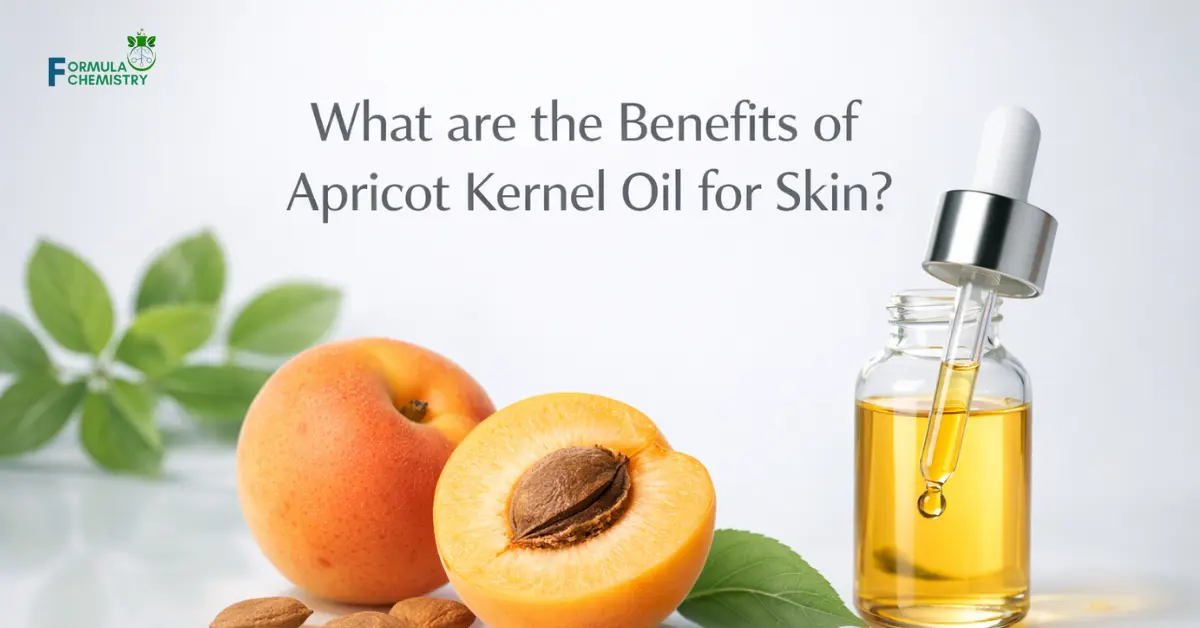
Apricot Kernel Oil is primarily valued for its emollient properties. Emollients work by filling the gaps between skin cells with lipids, which smooths the skin surface and improves total texture. This oil is especially effective for those with a compromised lipid barrier, as it provides the building blocks necessary to retain moisture.
Deep Hydration and Barrier Support
The high oleic acid content (typically 60-70%) makes this oil deeply penetrative.
Unlike heavier oils that sit on the surface, Apricot Kernel Oil reaches deeper layers of the stratum corneum to deliver moisture. This makes it a preferred choice for “dry touch” body oils and facial serums.
- Common Problems and Fixes:
- Problem: The oil feels too thin for very cracked skin.
- Fix: Blend with a heavier occlusive like Cocoa Butter or Beeswax to increase the moisture seal.
- Problem: The oil leaves a slight film on oily skin types.
- Fix: Reduce usage to 5-10% in a lotion or blend with “drier” oils like Rosehip or Isopropyl Myristate.
- Problem: Formulations go rancid quickly.
- Fix: Add 0.1% Vitamin E (Tocopherol) or Rosemary Leaf Extract to extend the shelf life of the final product.
Soothing Sensitive and Mature Skin
Because it is chemically similar to the oil produced by human skin, it is rarely irritating. It is frequently used in formulations for inflammatory conditions like eczema or psoriasis because it provides a protective layer that limits transepidermal water loss (TEWL).
For mature skin, the presence of Vitamin A (as a precursor) helps support natural skin turnover. While it is not as potent as a retinoid, it provides a gentle, natural way to support a youthful glow.
Who should avoid: Those with extremely oily or cystic acne-prone skin should use this oil with caution, as it has a comedogenic rating of 2, which may clog pores in some individuals.
Formulating with Apricot Kernel Oil
In the laboratory, Apricot Kernel Oil is a multifunctional ingredient that functions well in various formats.
FormulaChemistry provides practical formulation education and safety-forward direction to ensure that natural oils are employed effectively within a stable chemical framework. It can be used in the oil phase of an emulsion or as the base of an anhydrous serum.
Usage Levels and Compatibility
The versatility of this oil allows it to be used at 100% as a massage oil or at lower levels in complex creams.
It has a neutral pH note as it is an anhydrous (water-free) ingredient, but when used in emulsions, the final product’s pH should generally be adjusted to 4.5 to 5.5 for skin health.
| Feature | Specification | Compatibility |
| Iodine Value | 90–115 | High |
| Saponification Value | 185–195 | Excellent |
| Texture | Light/Medium | Blends well |
| Color | Pale Yellow | Low impact on aesthetics |
| Heat Sensitivity | Moderate | Avoid boiling |
When creating water-based products like lotions, a preservation reminder is essential: any formula containing water must include a broad-spectrum preservative to prevent microbial growth, regardless of how “natural” the oils are.
Incorporating Actives and Essential Oils
Apricot Kernel Oil serves as an excellent carrier for fat-soluble actives like CoQ10 or Vitamin C derivatives (THD Ascorbate). It also acts as a stable base for essential oils.
Key warnings: When adding essential oils, ensure they do not exceed dermal limits (usually 0.5% to 1% for facial applications) to prevent sensitization.
The oil’s low odor profile guarantees that it does not interfere with the fragrance of the finished cosmetic product. This makes it a better choice compared to “nutty” smelling oils like unrefined Shea or Argan oil when scent clarity is a priority.
Safety and Best Practices for Application
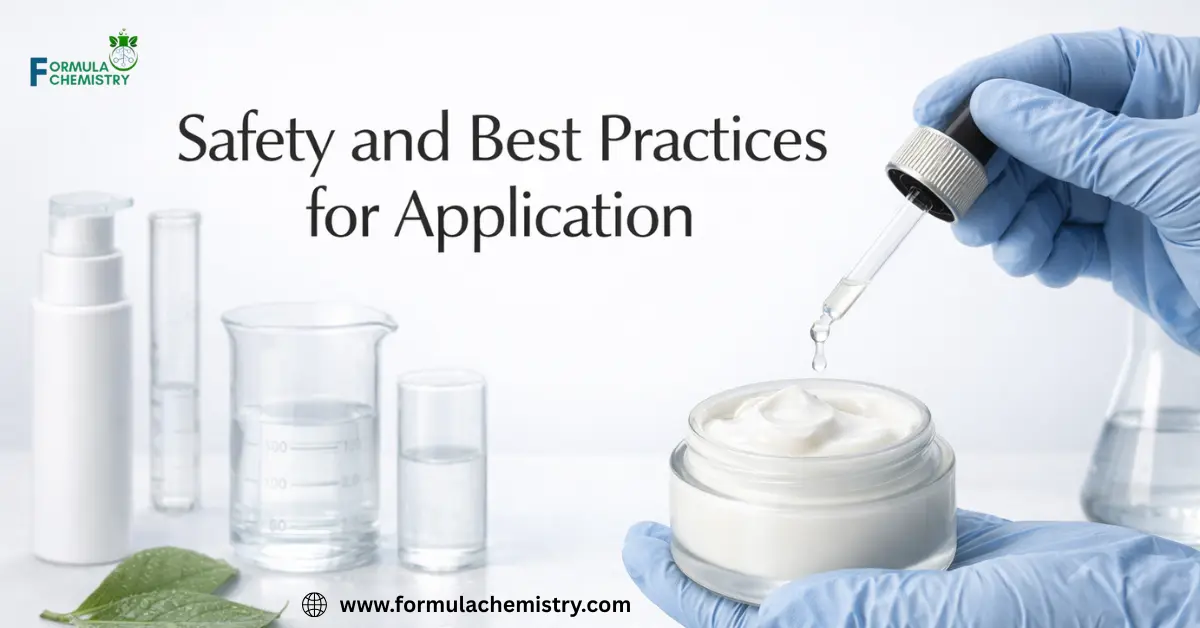
While Apricot Kernel Oil is generally recognized as safe (GRAS), its application requires a methodical approach to ensure maximum efficacy and safety.
At FormulaChemistry, we focus on the integrity of the raw material from the sourcing stage to the final application.
Proper Storage and Handling
To maintain the vitamin content, Apricot Kernel Oil should be kept in a cool, dark place. Exposure to oxygen triggers a chain reaction called lipid peroxidation, which not only makes the oil smell bad but can also create free radicals that irritate the skin.
Key warnings: If the oil develops a sharp, sour, or “play-dough” scent, it has oxidized and should be discarded.
For home formulators, adding an antioxidant like Tocopherol at 0.2% is able to significantly stabilize the oil.This is a standard practice in professional manufacturing to ensure a shelf life of 12 to 24 months.
Application Techniques and Skin Types
For best results, Apricot Kernel Oil should be applied to slightly damp skin. This helps the emollient trap water on the skin surface, maximizing hydration.
Who should avoid: People with known allergies to apricots, peaches, or almonds should avoid this oil because of possible cross-reactivity.
- For Dry Skin: Use as a final step in a routine to seal in serums.
- For Sensitive Skin: Use a purified, cold-pressed version to minimize the presence of impurities or allergens.
- For Oily Skin: Limit use to the eye area or use as a rinse-off oil cleanser.
The editorial team at FormulaChemistry maintains that while natural oils offer incredible benefits, they are most effective when part of a balanced, scientifically-backed skincare regimen.
FAQ about Apricot Kernel Oil for Skin: Natural Nourishment
Is Apricot Kernel Oil comedogenic?
It has a comedogenic rating of 2, meaning it is unlikely to clog pores for most people but may cause issues for those with very oily or acne-prone skin.
Can I use Apricot Kernel Oil on my face every day?
Yes, it is gentle enough for daily use, especially for dry or mature skin types, providing steady hydration and protection.
How does it compare to Almond Oil?
Apricot Kernel Oil is slightly lighter and absorbs faster than Sweet Almond Oil, making it better for facial applications and “dry” body oils.
Does it contain Vitamin C?
While the fruit contains Vitamin C, the oil extracted from the kernel primarily contains fat-soluble vitamins like A and E, rather than water-soluble Vitamin C.
Is it safe for babies?
Yes, due to its mild nature, it is often used in baby oils and lotions, but a patch test is always recommended for infant skin.
Can I use it for oil cleansing?
Absolutely. Its light texture helps dissolve makeup and sebum, and it rinses off more easily than heavier oils like Castor or Olive oil.
Does Apricot Kernel Oil help with wrinkles?
It helps soften the appearance of fine lines by hydrating the skin and providing antioxidants, though it does not replace medical-grade anti-aging treatments.
Should I buy refined or unrefined oil?
Unrefined (cold-pressed) oil contains more nutrients but has a shorter shelf life; refined oil is more stable and has less odor, making it easier to formulate.