
Introduction to Keratolytic Agents
A keratolytic formula fails when the formulator treats “dead skin removal” as a single mechanism. Keratolytic Agents differ sharply in chemistry, pH demand, solubility, irritation potential, and the way they change the feel of compacted stratum corneum.
This profile explains how cosmetic keratolytics work, which materials belong in acid exfoliation systems, and where urea, sulfur, enzymes, and petrolatum fit. You will know how to select a keratolytic agent for a cosmetic brief without drifting into medical claims.
Keratolytic Agents in Cosmetic Formulation Defined
A keratolytic agent is a material used to loosen, soften, or reduce the appearance of built-up surface keratin. In cosmetic formulation, keratolysis should be described as surface smoothing, texture refinement, and support for a more even-looking skin surface.
The stratum corneum is the outer skin layer made from corneocytes held together by corneodesmosomes and intercellular lipids. A good keratolytic system changes the appearance and feel of this layer without promising to treat a disease.
Acids are the most familiar keratolytic ingredients in cosmetic work. Urea, sulfur, proteolytic enzymes, and retinoid adjacent cosmetic systems are also discussed as keratolytic or desquamation supporting tools.
Key Properties Table for Keratolytic Agents
| Keratolytic agent | INCI name | CAS number | Chemical class | Molecular weight | pKa where applicable | Active pH range | Solubility | Typical cosmetic use | Difficulty |
| Glycolic acid | Glycolic Acid | 79 14 1 | Alpha hydroxy acid | 76.05 g/mol | 3.83 | pH 3.0 to 4.0 | Water soluble | 3.00 to 10.00 percent leave on, higher in professional systems | Intermediate |
| Lactic acid | Lactic Acid | 50 21 5 | Alpha hydroxy acid | 90.08 g/mol | 3.86 | pH 3.0 to 4.2 | Water soluble | 2.00 to 10.00 percent | Beginner to intermediate |
| Salicylic acid | Salicylic Acid | 69 72 7 | Beta hydroxy acid | 138.12 g/mol | 2.98 | pH 2.8 to 4.0 | Oil soluble, low water solubility | 0.50 to 2.00 percent in many cosmetic systems | Intermediate |
| Urea | Urea | 57 13 6 | Carbamide humectant | 60.06 g/mol | Not applicable | pH 4.0 to 7.0 preferred | Highly water soluble | 2.00 to 10.00 percent for cosmetic softening | Beginner |
| Sulfur | Sulfur | 7704 34 9 | Elemental sulfur | 32.06 g/mol | Not applicable | Vehicle dependent | Insoluble in water | Low level rinse off or targeted cosmetic use | Advanced sensory control |
| Papain | Papain | 9001 73 4 | Proteolytic enzyme | Protein mixture | Not applicable | Often pH 5.0 to 7.0 | Water dispersible | Enzyme masks and rinse off products | Intermediate |
How Keratolytic Agents Break Down Dead Skin Cells
Keratolytic agents work by reducing the tightness of surface cell attachment or softening hardened keratin-rich material. In acid systems, low pH increases the fraction of free acid that can influence corneocyte cohesion.
AHA ingredients such as glycolic acid and lactic acid act mainly in the water-rich spaces of the stratum corneum. BHA ingredients, such as salicylic acid, bring more oil phase compatibility and need stronger solubility planning.
Urea behaves differently from exfoliating acids. At cosmetic levels, it improves water binding and softens the rough surface feel rather than acting like a strong, low pH peel.
AHA Keratolytic Agents for Surface Renewal
Alpha hydroxy acids are water-soluble keratolytic agents with a hydroxy group near a carboxylic acid group. Glycolic acid, lactic acid, mandelic acid, and citric acid are common cosmetic examples.
Glycolic acid gives strong surface activity because it has the smallest AHA structure. That small size makes it useful, but it also makes pH control and exposure control non-negotiable.
Lactic acid gives a softer bench profile in many leave-on products. It contributes both acid activity and humectant feel, which helps explain why it often feels less sharp than glycolic acid at similar use levels.
Mandelic acid has a larger aromatic structure and a slower sensory profile. It suits formulas where a gentler perceived activity matters more than rapid exfoliating impact.
BHA Keratolytic Agents for Oily Skin Feel
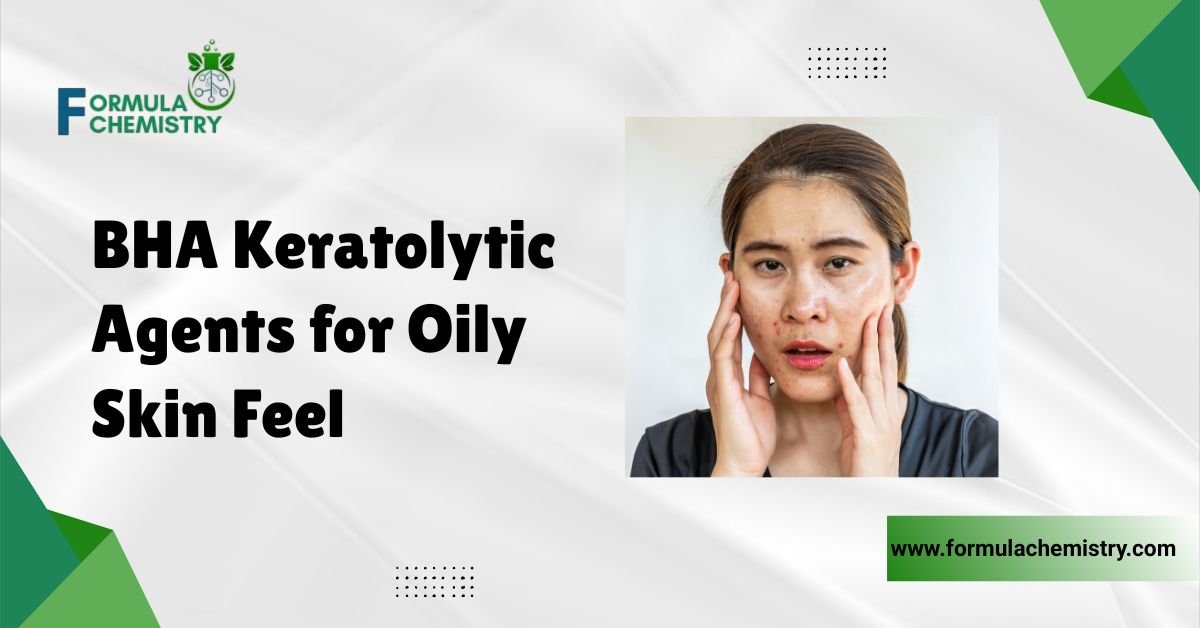
Salicylic acid is the benchmark BHA keratolytic agent in cosmetic formulation. Its oil solubility makes it useful in products designed to improve the feel of oily skin and the appearance of congested pores.
Salicylic acid formulation is mainly a solubility exercise. Water alone cannot hold enough salicylic acid for many effective cosmetic concepts, so propanediol, alcohol, and other compatible solvent systems may be required.
Crystallization is a common failure. A formula can look clear after manufacture and still grow crystals during cold storage, water loss, or packaging interaction.
Urea as a Keratolytic Support Agent
Urea is not an acid exfoliant, but it can support a smoother feel when rough skin has a dry, compacted surface. Its INCI name is Urea, and it is highly water-soluble.
At 2.00 to 5.00 percent, urea mainly supports humectancy and surface softness. At higher cosmetic levels, it can contribute more noticeable smoothing, but preservation, odor, pH drift, and irritation checks become more important.
https://formulachemistry.com/Urea needs careful storage and pH control because decomposition can produce ammonia odor. In formula chemistry, urea is usually used in moisturizers, foot creams, and rough-skin body products rather than in low-pH acid peels.
Sulfur and Enzyme Keratolytic Agents
Sulfur is a traditional keratolytic agent with a strong odor and difficult aesthetics. It can support formulas designed for oily skin feel, but it creates sensory and compatibility problems that many small brands underestimate.
Papain and bromelain are proteolytic enzymes used in rinse-off exfoliating products. They do not behave like acids because their performance depends on protein activity, water availability, pH, temperature, and exposure time.
Enzyme formulas must avoid overheated processing and harsh preservation systems that reduce enzyme activity. A mild label story does not guarantee a mild formula on skin.
Keratolytic Agents Comparison Table
| Parameter | AHA acids | Salicylic acid | Urea | Enzymes | Sulfur |
| Main cosmetic action | Surface smoothing | Oily skin feel and pore appearance | Softening rough feel | Oily skin feels supported | Oily skin feel support |
| pH dependence | High | High | Moderate | High for enzyme activity | Vehicle dependent |
| Solubility challenge | Usually low | High | Low | Moderate | High |
| Sensory risk | Sting | Sting and dryness | Tack or odor | Tingle or sensitivity | Odor and grit |
| Best format | Toners, masks, creams | Clear gels, toners, targeted products | Creams and lotions | Rinse off masks | Rinse off or targeted formulas |
| Beginner suitability | Lactic acid only | Not ideal | Suitable | Moderate | Not ideal |
Percentage Guide for Keratolytic Agents
A keratolytic percentage only has meaning when the formulator also states pH, vehicle, contact time, and use frequency. Ten percent glycolic acid and ten percent urea do not belong in the same risk category.
| Ingredient | Mild cosmetic range | Stronger cosmetic range | Main control point |
| Glycolic acid | 3.00 to 5.00 percent | 6.00 to 10.00 percent | pH and sting |
| Lactic acid | 2.00 to 5.00 percent | 6.00 to 10.00 percent | pH and skin feel |
| Salicylic acid | 0.50 to 1.00 percent | 1.00 to 2.00 percent | Solubility and legal limit |
| Urea | 2.00 to 5.00 percent | 5.00 to 10.00 percent | Odor and preservation |
| Enzymes | Supplier dependent | Supplier dependent | Activity after processing |
| Sulfur | Formula dependent | Formula dependent | Odor and dispersion |
Stronger does not mean better in cosmetic exfoliation. The best keratolytic system gives measurable smoothness, stable aesthetics, and instructions the user can follow without damaging the barrier feel.
pH Control for Keratolytic Agents
pH decides how aggressively acid keratolytics behave. A formula with the same glycolic acid percentage can feel mild at pH 4.0 and sharp at pH 3.0.
Use a calibrated pH meter for acid keratolytic formulas. Strips do not give enough precision for low pH product approval.
Buffering can make a formula more controlled, but it does not erase irritation potential. The finished product still needs stability testing, preservative efficacy testing, and user safety review.
Formulation Considerations for Keratolytic Agents
Keratolytic formulas should be built around the weakest system constraint. For salicylic acid, that constraint is often solubility; for glycolic acid, it is often pH sting; for urea, it is often odor and preservation.
Thickener choice matters because low pH can collapse viscosity. Carbomer, gums, acrylates, and cellulose grades must be screened at the final pH and electrolyte load.
Packaging also matters because acids and solvents migrate. Dropper bulbs, metal springs, decorative coatings, and poorly matched liners can fail during stability testing.
Safety Limits for Keratolytic Agents
Keratolytic agents should not be positioned as acne treatments, wart removers, psoriasis products, or callus medicines in cosmetic copy. Those claims move the product away from cosmetic surface appearance language.
People with visibly irritated, cracked, sunburned, freshly shaved, or recently exfoliated skin should avoid strong keratolytic products. The formula may increase discomfort when the barrier already feels stressed.
Vaseline, which is petrolatum, is not keratolytic. It is an occlusive material that reduces water loss and can soften the surface feel by increasing hydration under the film.
Common Mistakes With Keratolytic Agents
- Calling every exfoliant an acid: This happens when marketing uses exfoliation as one category. Fix it by identifying whether the ingredient is an AHA, BHA, urea, enzyme, sulfur, or physical exfoliant.
- Using percentage without pH: This happens when formulators copy ingredient lists. Fix it by recording the final pH, acid value, use level, contact time, and use frequency.
- Treating salicylic acid as water-soluble: This happens when a clear hot batch gives false confidence. Fix it with solvent screening, cold cycling, and crystal checks.
- Overusing strong acids on sensitive skin: This happens when performance claims outrun tolerance testing. Fix it with lower acid load, higher pH, rinse off formats, and clear use directions.
- Ignoring urea odor drift: This happens when early samples smell acceptable. Fix it with pH control, compatible preservation, and real-time aging.
- Using the enzyme incorrectly: This happens when enzymes enter the hot phase. Fix it by adding enzymes during cool down at the supplier-recommended temperatures.
Suitability Guide
Keratolytic agents suit formulators who can match chemistry to skin feel, product format, and user experience level. Beginners should start with urea creams, low-level lactic acid masks, or PHA systems before making strong acid products.
Oily and resilient skin may tolerate salicylic acid or stronger AHA systems better than dry and reactive skin. Dry, thin feeling, recently exfoliated, sun-exposed, or compromised skin needs lower keratolytic pressure.
Body skin often tolerates stronger keratolytic agents than facial skin. Foot creams, elbow creams, and rough skin lotions can use urea or acid systems that would feel too aggressive on the face.
Formula Chemistry recommends rinse-off formats for new keratolytic development because contact time is easier to control. Leave-on products require tighter pH, preservation, stability, and use direction review.
Always conduct a 48-hour patch test with any new formula before wider use.
FAQ About Keratolytic Agents
What is a keratolytic agent?
A keratolytic agent is an ingredient used to loosen or soften built-up surface keratin. In cosmetics, it supports a smoother-looking texture and a softer skin feel.
What are examples of keratolytics?
Examples include glycolic acid, lactic acid, salicylic acid, urea, sulfur, papain, and bromelain. Each works through a different chemistry and needs a different formula design.
What is the strongest keratolytic?
Strength depends on concentration, pH, vehicle, and exposure time. In cosmetic formulation, strong low-pH acid peels carry more risk than routine urea or enzyme products.
Who should avoid keratolytic cream?
People with irritated, cracked, sunburned, or freshly shaved skin should avoid strong keratolytic creams. A cautious user should restart only after the skin feels normal again.
Is Vaseline keratolytic?
Vaseline is not keratolytic because petrolatum does not break down keratin bonds. It is an occlusive that can soften the skin’s feel by reducing water loss.
Is salicylic acid keratolytic?
Salicylic acid is a keratolytic beta-hydroxy acid. It is commonly used in cosmetic products designed for an oily skin feel and a smoother surface texture.
What are the 4 pillars of acne?
The four commonly discussed acne factors are excess sebum, follicular plugging, microbial activity, and inflammation. Cosmetic products should not claim to treat acne unless regulated for that purpose.
Why use Vaseline at night?
Some users apply petrolatum at night to reduce water loss and support a softer morning feel. It suits dry skin better than oily or congestion-prone skin.
Keratolytic Agents Key Takeaways
- Keratolytic Agents include acids, urea, sulfur, and enzymes, but they do not share one mechanism.
- AHA ingredients need pH control, BHA ingredients need solubility control, and urea needs odor and preservation control.
- Salicylic acid is keratolytic, while Vaseline is occlusive and not keratolytic.
- Stronger percentages do not guarantee better cosmetic results because vehicle, pH, contact time, and user tolerance decide performance.
- Cosmetic copy should describe smoother texture, softer feel, and improved appearance without promising to treat skin disease.
Choose the keratolytic agent only after the formula format, target pH, contact time, and user tolerance are fully defined.