

Introduction
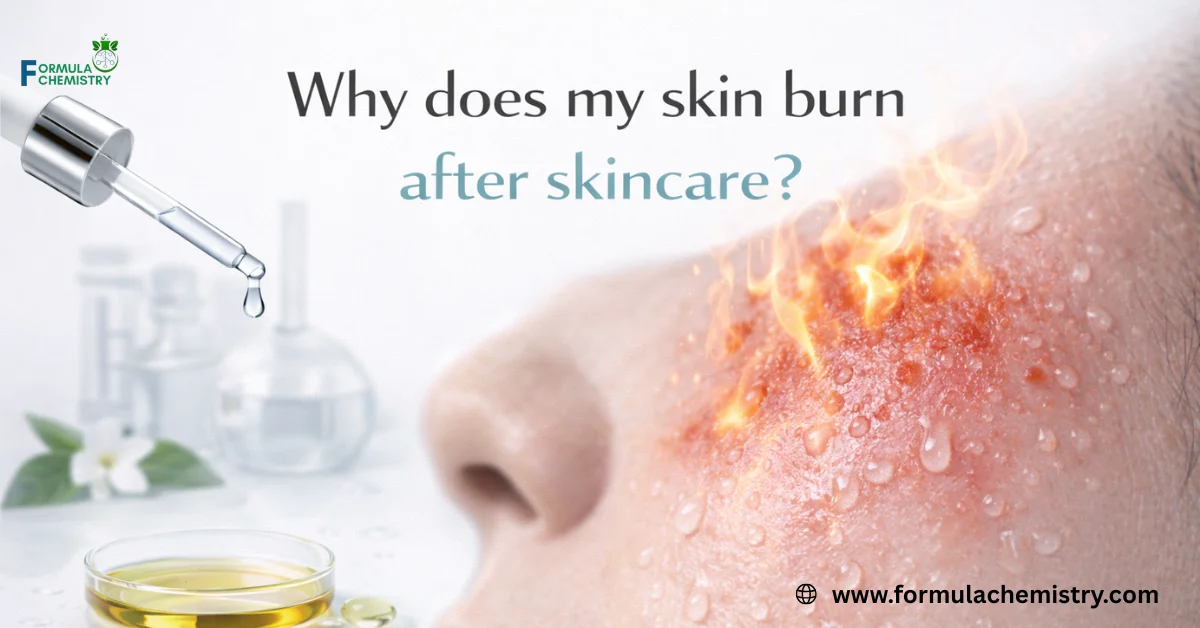
Experiencing a stinging or burning sensation after applying skincare products is a frequent issue for both DIY formulators and amateurs. Sometimes skin burn after skincare.
This reaction frequently indicates a compromise in the skin’s natural protective barrier or a specific sensitivity to an active ingredient.
At FormulaChemistry, we focus on understanding the science behind these reactions to help you build safer, more effective routines.
Determining the root cause of the burn whether it is a damaged acid mantle, an allergic reaction, or an incorrect product pH is crucial for long-term skin health.
This guide examines the biochemical reasons for skin irritation and how to adjust your formulation or application habits to prevent further damage.
Quick Answer
- What it is: A sensory response to nerve endings being triggered by irritation, pH imbalances, or a compromised skin barrier.
- Who it’s for: Individuals using high-potency actives (AHAs, BHAs, Retinoids) or those with sensitive skin types.
- How to use: Discontinue the irritating product immediately and pivot to a minimalist, ceramide-rich routine.
- Typical usage range: High-strength acids should generally stay within 5%–10% for home use to minimize burn risk.
- pH notes: Products with a pH below 3.5 are more likely to cause significant stinging on application.
- Common mistakes: Over-exfoliating, mixing incompatible actives (such as Vitamin C and Retinol), or skipping a patch test.
- Safety note: If burning is accompanied by swelling or blistering, seek medical advice and avoid all active ingredients until the skin is fully healed.
What Causes the Burning Sensation During Skincare?
The sensation of burning is often a “protest” from the stratum corneum, the outermost layer of the skin.
When this barrier is healthy, it keeps moisture in and irritants out. However, if the barrier is thinned or “leaky” due to over-cleansing or harsh weather, products that usually feel neutral can suddenly become painful.
Another primary driver is the activation of vanilloid receptors (TRPV1) in the skin. These receptors respond to heat and chemical stimuli.
When a product with a low pH or high ethanol content touches the skin, these receptors transmit an immediate “pain” signal to the brain, even if no visible damage has occurred yet.
Barrier Dysfunction and Trans-Epidermal Water Loss
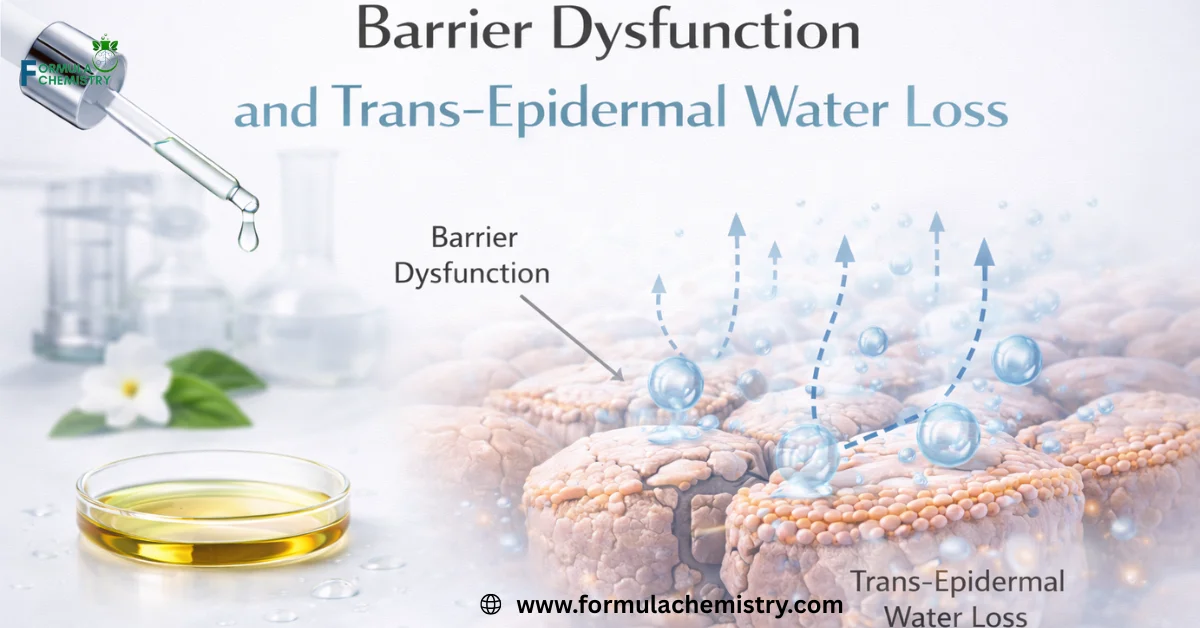
A compromised skin barrier is the most frequent culprit behind unexplained burning. When the lipid bilayer composed of ceramics, cholesterol, and fatty acids is depleted, the skin loses its ability to regulate its internal environment. This results in increased Trans-Epidermal Water Loss (TEWL).
In this state, even benign ingredients like water or simple humectants can cause a stinging sensation. FormulaChemistry emphasizes that maintaining a slightly acidic skin surface, typically around pH 4.5–5.5, is vital for barrier enzyme function. If you have stripped this layer through excessive physical scrubbing, any subsequent product will likely burn.
Chemical Irritation and pH Imbalance
Certain ingredients are “sensitizers” by nature. High concentrations of L-ascorbic acid or Glycolic acid require a low pH to remain effective, but this same acidity can irritate the nerves.
If a formulation’s pH is significantly lower than the skin’s natural pH, a transient burning sensation is expected, though it should not persist for more than a few seconds.
[Internal link: How to calibrate a pH meter for skincare → (insert appropriate FormulaChemistry URL)]
| Ingredient Category | Common Irritant | Typical Usage Range | pH Note |
| Exfoliants | Glycolic Acid | 5%–10% | pH 3.0–4.0 |
| Brighteners | L-Ascorbic Acid | 10%–20% | pH 2.5–3.5 |
| Acne Care | Benzoyl Peroxide | 2.5%–5% | pH 5.0–6.0 |
| Preservatives | Phenoxyethanol | 0.5%–1% | Stable pH 4–10 |
Identifying the Ingredients That Trigger Skin Burning
Not all skin burning is caused by “bad” ingredients; often, it is a matter of concentration or the “who should avoid” category. For instance, essential oils like Cinnamon or Clove contain cinnamaldehyde and eugenol, which are known potent irritants if used above 0.05% usage ranges.
Understanding the difference between a “purge” and a “burn” is critical for safety. While some activities like retinoids can cause mild redness initially, a sharp, stinging burn is rarely a sign of a product “working.” It is more likely a sign of acute contact dermatitis or a chemical burn.
The Role of Surfactants and Alcohols
Harsh surfactants, such as Sodium Lauryl Sulfate (SLS), can strip the skin’s natural oils, rendering it more vulnerable to burning from the products applied afterward.
Similarly, high concentrations of denatured alcohol are often used to help ingredients penetrate deeper, but they can also dehydrate the skin cells rapidly, leading to a stinging sensation.
Formula Chemistry provides practical formulation education and safety-forward guidance to help users identify these triggers.
Who should avoid high-alcohol products:
individuals with eczema, rosacea, or naturally dry skin. When formulating, replacing harsh alcohols with propanediol or fatty alcohols can provide a similar skin feel without the irritation.
High-Potency Actives and Over-Exfoliation
Alpha Hydroxy Acids (AHAs) and Retinoids are the most common triggers for skin burning. These ingredients speed up cell turnover, which is beneficial for anti-aging but can temporarily thin the stratum corneum.
If used too frequently, the skin does not have time to repair its barrier between applications.
- Common Problems and Fixes:
- Problem: Skin burns when applying moisturizer after an acid.
- Fix: Wait 15–20 minutes after acid application for the skin pH to neutralize before applying the next layer.
- Problem: Stinging occurs every time a specific serum is used.
- Fix: Perform a patch test on the inner forearm for 24 hours to rule out an allergy.
- Problem: Face feels tight and burns when washing.
- Fix: Switch to a non-foaming, surfactant-free cleanser with a pH of 5.5.
Learn the best post-shave care in Can You Do Your Skincare Routine After Shaving?
How to Treat and Prevent Skincare-Induced Burning
If your skin is currently burning, the first step is a “skincare fast.” This involves removing all active ingredients acids, vitamins, and fragrances from your routine for at least 7 to 14 days.
This timeframe allows the skin to complete a full cycle of desquamation and barrier repair.
During this recovery phase, focus on “biomimetic” ingredients. These are substances that mimic the skin’s natural composition, such as squalane, ceramides, and glycerin.
FormulaChemistry suggests keeping your recovery routine simple: a gentle cleanser, a basic moisturizer, and mineral-based sunscreen.
The Importance of Patch Testing and Gradual Introduction
Prevention is always more effective than a cure. Before applying any new formulation to the face, a patch test is mandatory. Apply a small amount of the product behind the ear or on the inner elbow. If no redness or burning occurs after 24–48 hours, it is generally safe for wider use.
When introducing high-potency actives, the “low and slow” method is the gold standard. Start with a usage range of 1–2 times per week and monitor for any signs of sensitivity. Key warnings:
Never apply acids to damp skin, as water can increase the penetration depth and intensity of the acid, leading to an accidental chemical burn.
Proper Formulation Techniques for Irritation Mitigation
For DIY formulators, the way a product is put together matters as much as the ingredients. Incorporating soothing agents like Allantoin (0.5% usage range) or Bisabolol (0.1%–0.5%) can greatly dampen the irritation potential of a formula.
[Internal link: Formulating with Allantoin for sensitive skin → (add suitable FormulaChemistry URL)]
Guaranteeing proper preservation is also a safety requirement. A product that has “gone off” due to bacterial growth or oxidation (common with Vitamin C) can become highly irritating.
Preservation reminder:
Always use a broad-spectrum preservative in any formula containing water or aqueous extracts to prevent microbial contamination that can lead to skin infections and burning.
Establishing a Long-Term Barrier Protection Strategy
To prevent future burning, you must view your skin as a living ecosystem. This means respecting the acid mantle and avoiding the “more is better” trap. A healthy routine should feel comfortable; “no pain, no gain” does not apply to skincare.
FormulaChemistry is committed to editorial responsibility by making sure users understand the limits of topical treatments.
If burning persists even after removing all actives, the issue may be systemic or an undiagnosed skin condition like perioral dermatitis, which requires professional dermatological intervention.
Environmental Aspects and Product Interaction
Your environment plays a massive role in how your skin reacts to products. Cold, dry winter air saps moisture from the skin, making it more reactive to ingredients that were fine during the humid summer. Adjusting your routine seasonally is a hallmark of an advanced skincare strategy.
Furthermore, pay attention to product interactions. Using a copper peptide serum alongside a high-percentage L-ascorbic acid product can lead to skin flushing and stinging.
Who should avoid mixing actives:
Beginners who haven’t yet established a baseline for their skin’s tolerance levels. Focus on a single primary goal like acne or aging at a time to minimize the risk of overstraining the skin.
Final Safety Considerations
Always check the expiration dates on your products. Ingredients like Retinol and Vitamin C are notoriously unstable; when they oxidize, they not only lose potency but can become pro-inflammatory.
pH notes:
If you notice your product has changed color, smell, or consistency, discard it immediately.
By adhering to the guidance provided by FormulaChemistry, you can manage the complexities of cosmetic science with confidence. Understanding the “why” behind the burn is the initial step toward a radiant, resilient, and pain-free complexion.
FAQs about Why does my skin burn after skincare?
Is it normal for my face to sting a little after applying moisturizer?
No, moisturizer should generally be soothing. If it stings, your skin barrier is likely damaged, or you are sensitive to a preservative or fragrance in the product.
Why does my skin burn only when I apply sunscreen?
Chemical UV filters (like Avobenzone or Oxybenzone) can be irritating to compromised skin. Try switching to a mineral sunscreen containing Zinc Oxide or Titanium Dioxide.
Can I use Vitamin C if it makes my skin tingle?
A slight tingle for a few seconds is normal due to the low pH of L-ascorbic acid. However, persistent burning or redness is a sign to switch to a gentler derivative like Sodium Ascorbyl Phosphate.
Does a burning sensation mean the product is working?
Generally, no. While some treatments have a “sensory profile,” sharp or prolonged burning indicates irritation and potential barrier damage, not efficacy.
How long should I wait for my skin to heal after a chemical burn?
It typically takes 7 to 21 days for the skin barrier to repair itself. Avoid all exfoliants and actives during this time.
Can hot water cause skincare products to burn?
Yes. Washing with hot water strips lipids and increases blood flow to the surface, making the skin significantly more reactive to topical ingredients.
Should I wash off a product if it starts burning immediately?
Yes. Use cool water and a gentle, pH-balanced cleanser to remove the product as quickly as possible to prevent further irritation.
What is the best ingredient to stop the burning?
Colloidal oatmeal, panthenol (Pro-Vitamin B5), and ceramides are excellent for soothing the skin and strengthening the barrier during an irritation flare-up.
- Salicyclic Acid Solubility in Glycerin, BG, and PEG-400: Formulator’s Comparison Guide
- Salicylic Acid Solubility in Propylene Glycol vs Ethanol: Formulator’s Comparison Guide
- Salicylic Acid Solubility in Water: Complete Formulator’s Guide
- How to Use Salicylic Acid on Face: A Beginner’s Guide
- Salicylic Acid vs Benzoyl Peroxide Face Wash