

Introduction
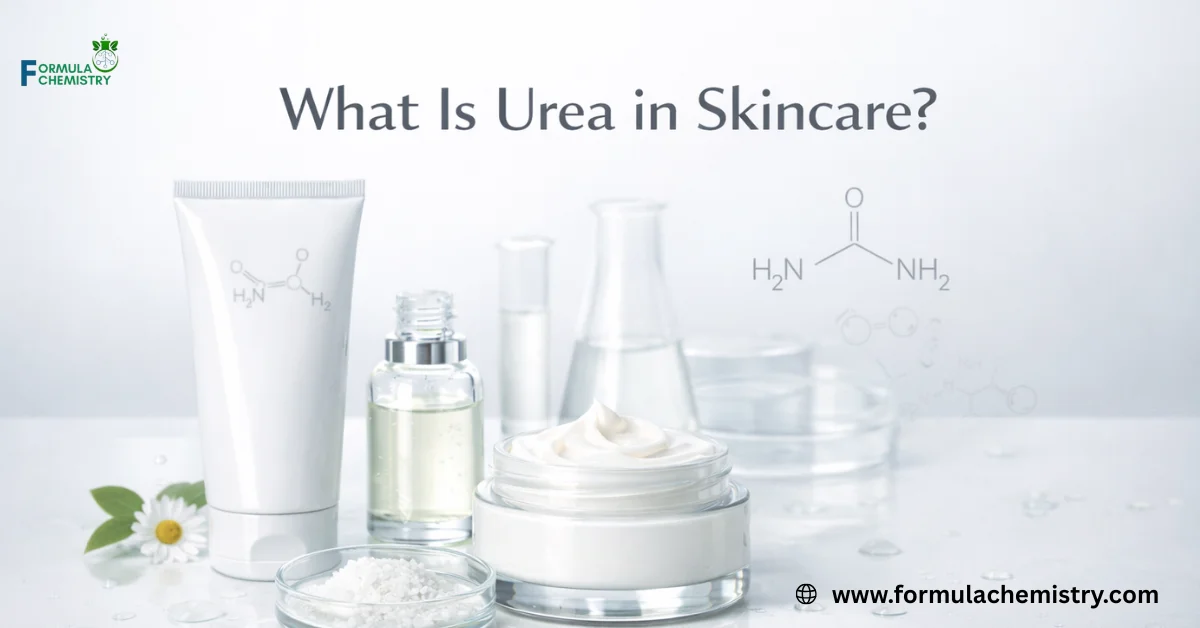
Urea is a naturally occurring component of the skin’s Natural Moisturizing Factor (NMF), playing a vital function in maintaining hydration and skin barrier integrity.
In the world of cosmetic science, it is classified as a “true” humectant and a keratolytic agent, meaning it both attracts water and helps shed dead skin cells.
At FormulaChemistry, we focus on the technical understanding of such multifunctional ingredients to ensure safe and effective product development.
Quick Facts
- What it is: A diamide of carbonic acid that functions as an effective humectant and exfoliant.
- Who it’s for: Individuals with dry, dehydrated, or hyperkeratotic skin conditions like keratosis pilaris.
- How to use: Apply to clean, damp skin; higher concentrations should be used as focused treatments.
- Typical usage range: 2% to 10% for general moisturizing; 10% to 40% for therapeutic exfoliation.
- pH/Solubility: Highly water-soluble; requires a final formula pH of 6.0 to 6.2 to avoid degradation into ammonia.
- Compatibility: Works well with lactic acid, glycerin, and ceramides; sensitive to high-heat processing.
- Common Mistakes: Using high-percentage urea on broken skin or failing to stabilize the pH, leading to product instability.
- Safety Note: Always perform a patch test, as urea can increase the penetration of other ingredients, which may lead to irritation.
The Biological Role of Urea
Urea constitutes approximately 7% of the NMF. Its primary biological function is to bind to water molecules within the stratum corneum, keeping the skin soft and pliable. When urea levels drop commonly due to age, environment, or skin conditions like eczema the skin becomes brittle, itchy, and prone to cracking.
Through formulating with synthetic urea, we can replenish these levels topically. At FormulaChemistry, we view urea as a primary ingredient for “corneotherapy,” a treatment approach centered on repairing the stratum corneum to improve overall skin health.
What Are the Benefits of Urea in Cosmetic Formulations?
Urea is a unique molecule because its behavior changes substantially based on its concentration in a formula. At lower levels, it is one of the most effective ways to treat transepidermal water loss (TEWL).
Unlike simple humectants that just sit on the surface, urea has the ability to modify the structure of skin proteins (keratins), allowing them to hold more moisture.
At higher concentrations, urea transitions from a moisturizer to a keratolytic. It breaks the hydrogen bonds in keratin, effectively dissolving the “glue” that holds dead skin cells together.
This makes it an exceptional choice for treating thickened skin on the heels, elbows, or areas affected by follicular plugging.
Hydration and Barrier Repair
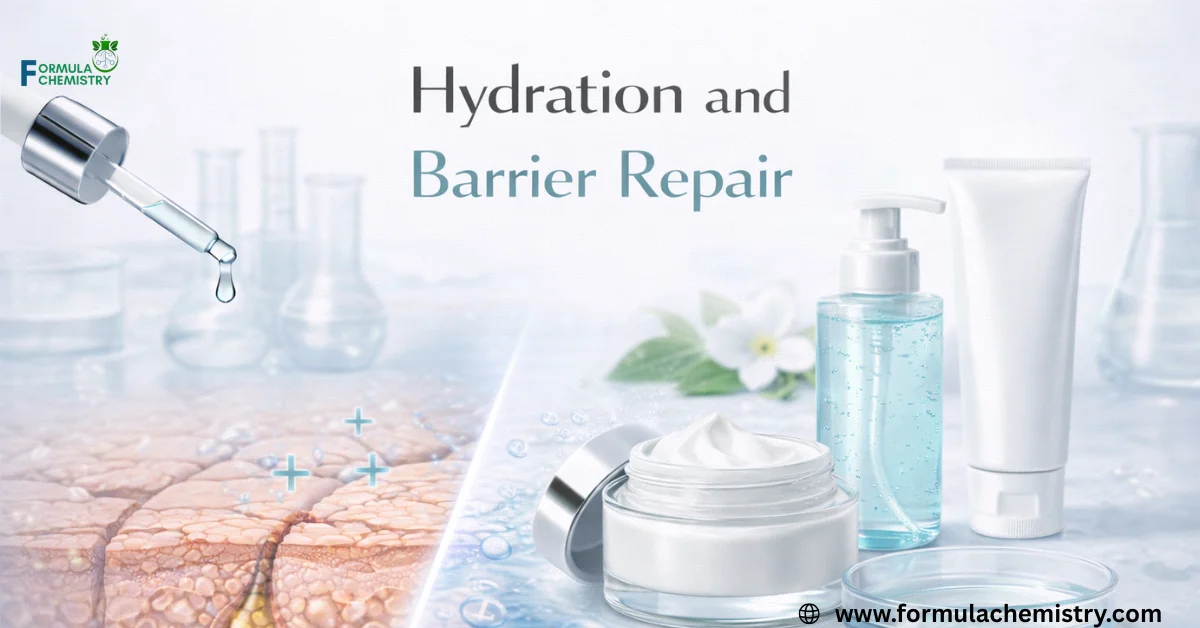
Low-dose urea (under 10%) works by increasing the water-binding capacity of the skin. It helps the skin stay hydrated even in low-humidity environments. Furthermore, urea has been shown to upregulate the expression of genes involved in barrier function, such as those responsible for ceramide production.
This twofold action adding water and strengthening the “seal” makes it superior to many standard moisturizers.
For formulators, achieving the right balance is essential. Usage ranges for daily lotions typically hover around 5%.
At this level, it is typically well-tolerated and provides a noticeable “plumping” effect. However, because it is a small molecule, it can sting if the skin barrier is severely compromised.
Keratolytic and Exfoliating Properties
When used at 10% to 25%, urea becomes a potent exfoliant. It is frequently preferred over Alpha Hydroxy Acids (AHAs) for dry-skin exfoliation because it hydrates while it peels. This makes it a gold-standard treatment for “strawberry skin” (keratosis pilaris) and ichthyosis.
Common Problems and Fixes:
- Problem: Product smells like ammonia over time.
- Fix: Ensure the pH is buffered to 6.0–6.2 using a Triethyl Citrate or a Lactic Acid/Sodium Lactate buffer system.
- Problem: Gritty texture in the final cream.
- Fix: Ensure urea is fully dissolved in the water phase at room temperature before emulsification; avoid heating urea above 50°C.
- Problem: High irritation levels in users.
- Fix: Lower the concentration or include soothing agents like Allantoin or Bisabolol.
How to Formulate Safely with Urea
From a chemistry perspective, urea is a “fussy” ingredient. It is inherently unstable in aqueous solutions because it goes through a slow non-enzymatic hydrolysis, breaking down into ammonia and carbon dioxide.
This process raises the pH of the product, which in turn accelerates the breakdown, forming a feedback loop that ruins the formulation.
FormulaChemistry emphasizes the importance of buffering to prevent this degradation. Without a proper buffer, a urea cream can quickly become alkaline, leading to skin irritation and a foul odor.
It is a safety-forward practice to always include a pH meter in your formulation kit when working with this active.
Stability and pH Management
The stability of urea is highly dependent on temperature and pH. It is most stable at a pH of 6.2. If the pH drops too low (acidic) or climbs too high (alkaline), the rate of decomposition increases.
Formulators must use a strong buffering system to hold the pH steady over the product’s shelf life.
| Feature | Low Concentration Urea (2-5%) | High Concentration Urea (10-40%) |
| Primary Goal | Hydration & Barrier Support | Exfoliation & Callus Removal |
| Texture | Lightweight, fast-absorbing | Can feel tacky or heavy |
| Frequency | Daily Use | Targeted/Intermittent Use |
| Common Use | Facial moisturizers, hand creams | Foot creams, peeling treatments |
| pH Note | Must be buffered to ~6.0 | Must be buffered to ~6.0 |
Preservation and Compatibility
Because urea is a nutrient-rich molecule, products containing it can be prone to microbial growth if not preserved correctly.
Furthermore, because urea increases skin permeability, the choice of preservative is critical. Some preservatives that are safe at low levels may become irritating if urea “pushes” them further into the dermis.
Who should avoid:
Individuals with extremely sensitive skin, active dermatitis, or open wounds should avoid high-concentration urea.
Key warnings
include avoiding the eye area and making sure that high-percentage urea products are not used on children unless formulated specifically for them.
Best Practices for Using Urea Products
For the end-user, urea is most effective when used consistently. Because it mimics the skin’s natural chemistry, it is often better tolerated than synthetic exfoliants when applied correctly.
However, users must be aware that urea is a penetration enhancer. If you apply a urea cream and then apply a product with potent actives (like Retinol), the urea may increase the absorption of the second product, resulting in unexpected sensitivity.
FormulaChemistry provides practical formulation education to help creators deal with these interactions. We believe that understanding the science behind the ingredient leads to safer consumer experiences.
Application Tips for Maximum Efficacy
Urea is best applied to damp skin. This allows the humectant to “trap” the moisture already present on the skin’s surface.
For thick calluses on the feet, applying a 20% urea cream and then wearing cotton socks overnight can dramatically improve results.
Usage ranges for the face should generally stay below 5% to avoid stinging. For the body, 10% is the industry standard for treating dry, flaky skin.
It is noteworthy to note that while urea is not strictly a photosensitizer, the exfoliation it provides can make skin more vulnerable to UV damage. Daily sunscreen use is recommended.
Storage and Shelf Life
Because of its ability to cause degradation, urea products should be stored in a cool, dry place. Heat is the enemy of urea stability.
If a product begins to smell strongly of ammonia or the packaging appears bloated, the urea has likely decomposed, and the product should be discarded.
Editorial responsibility at FormulaChemistry dictates that we remind users: always check the “Period After Opening” (PAO) symbol on your urea-based skincare.
FAQ about What Is Urea in Skincare?
Is urea in skincare made from urine?
No. While urea is found in urine, the urea used in the cosmetic industry is synthetic, created in a laboratory from inorganic starting materials (ammonia and carbon dioxide). It is pure, odorless, and vegan-friendly.
Can I use urea on my face every day?
Yes, provided the concentration is low (usually below 5%). At these levels, it acts as a gentle humectant that supports the skin barrier. If irritation occurs, reduce frequency or switch to a lower percentage.
Does urea help with acne?
Urea is not a primary acne treatment, but its keratolytic properties can help prevent pores from becoming clogged by dead skin cells. It is also helpful for hydrating skin that has been dried out by harsh acne medications.
Is urea safe during pregnancy?
Topical urea is widely regarded as safe for use during pregnancy in standard cosmetic concentrations. However, always consult with a healthcare provider before adding new active ingredients to your routine during pregnancy.
What is the difference between urea and hydroxy acids?
While both exfoliate, AHAs (like Glycolic Acid) work by lowering the pH of the skin to break cell bonds. Urea works by hydrating and unfolding proteins. Urea is typically more hydrating and less likely to cause sun sensitivity than AHAs.
Why does urea sting when I apply it?
Stinging usually occurs if the skin barrier is broken or if the concentration is too high for your skin type. If you have persistent stinging, the category who should avoid includes those with active eczema flares or cracked skin.
Can I mix urea powder into my existing lotion?
This is not recommended. Urea is highly unstable and requires specific pH buffering and preservation to remain safe. Adding it to a pre-made lotion will likely cause the product to spoil and the pH to drift dangerously.
How long does it take to see results from urea?
For hydration, results are often immediate. For keratolytic effects (smoothing rough skin or calluses), it typically takes 1 to 2 weeks of regular daily application to see a significant difference in skin texture.