

Introduction
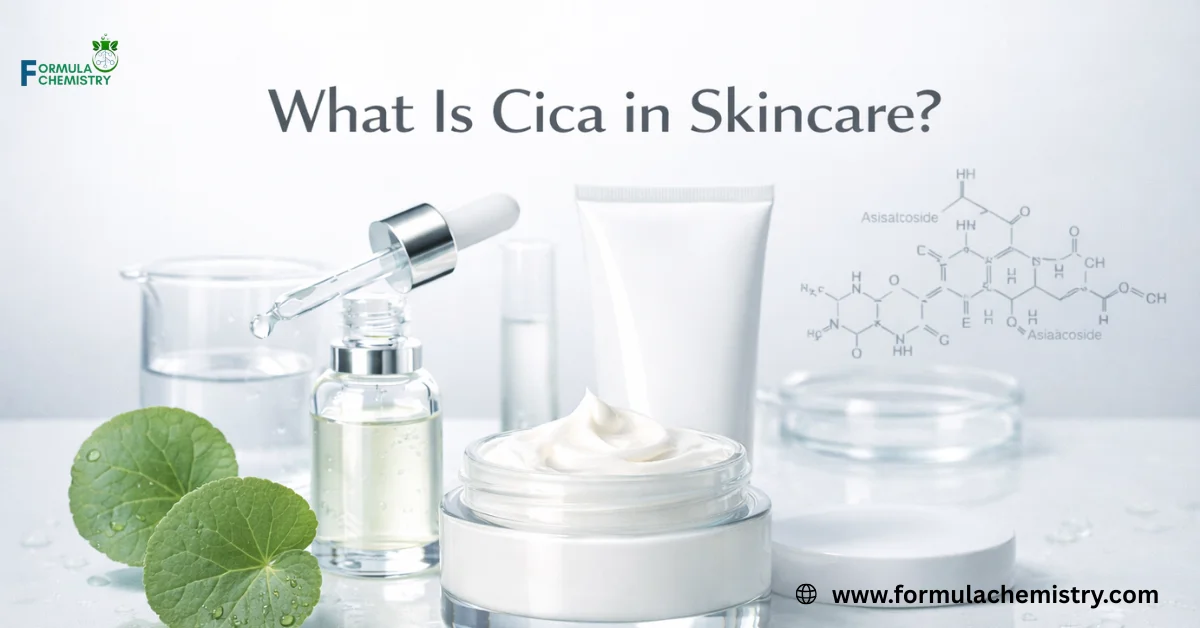
In the developing landscape of cosmetic science, few ingredients have maintained as much staying power as Cica. Short for Centella asiatica, Cica is a perennial herb native to the wetlands of Asia.
Often referred to as “Tiger Grass” due to legends of injured tigers rolling in the plant to heal their wounds, it has transitioned from traditional pharmacopeia into high-performance dermatological formulations.
At FormulaChemistry, we evaluate ingredients through the lens of biochemical efficacy and formulation stability, making certain that practitioners understand not just the “what,” but the “how” of active botanicals.
Quick Facts
- What it is: A botanical extract derived from the Centella asiatica plant, rich in triterpenoid saponins.
- Who it’s for: Primarily those with compromised skin barriers, sensitive skin, or post-procedure inflammation.
- Main Benefits: Accelerates wound healing, stimulates collagen synthesis, and provides potent antioxidant protection.
- Usage Range: Typically used at 0.5% to 5.0% in finished formulations, depending on extract concentration.
- Solubility/pH: Generally water-soluble; maintains optimal stability in a pH range of 5.0 to 7.0.
- Compatibility: Highly compatible with hyaluronic acid, ceramides, and niacinamide; use caution when pairing with high-strength exfoliating acids in a single step.
- Common Mistakes: Depending excessively on “Cica” marketing when the ingredient is listed at the very bottom of the INCI deck.
- Safety Note: Always perform a patch test; while generally soothing, botanical extracts can occasionally trigger allergic contact dermatitis.
The Phytochemical Composition of Centella Asiatica
The efficacy of Cica rests in its specific terpene profile. The four primary active compounds Asiaticoside, Madecassoside, Asiatic Acid, and Madecassic Acid work cooperatively to modulate the skin’s inflammatory response.
These compounds are responsible for the plant’s ability to promote fibroblast proliferation and increase the tensile strength of newly formed skin. For formulators at FormulaChemistry, knowing these fractions is vital for creating focused treatments for erythema and barrier repair.
What Are the Main Benefits of Cica?
Cica functions as a multi-modal active, meaning it addresses several skin concerns simultaneously. Its main mechanism of action involves the regulation of the extracellular matrix. By promoting the production of Type I and Type III collagen, Cica helps in the structural remodeling of the skin.
This makes it a priceless asset in anti-aging serums and “cica-creams” designed for post-inflammatory hyperpigmentation (PIH).
Barrier Repair and Anti-Inflammatory Properties
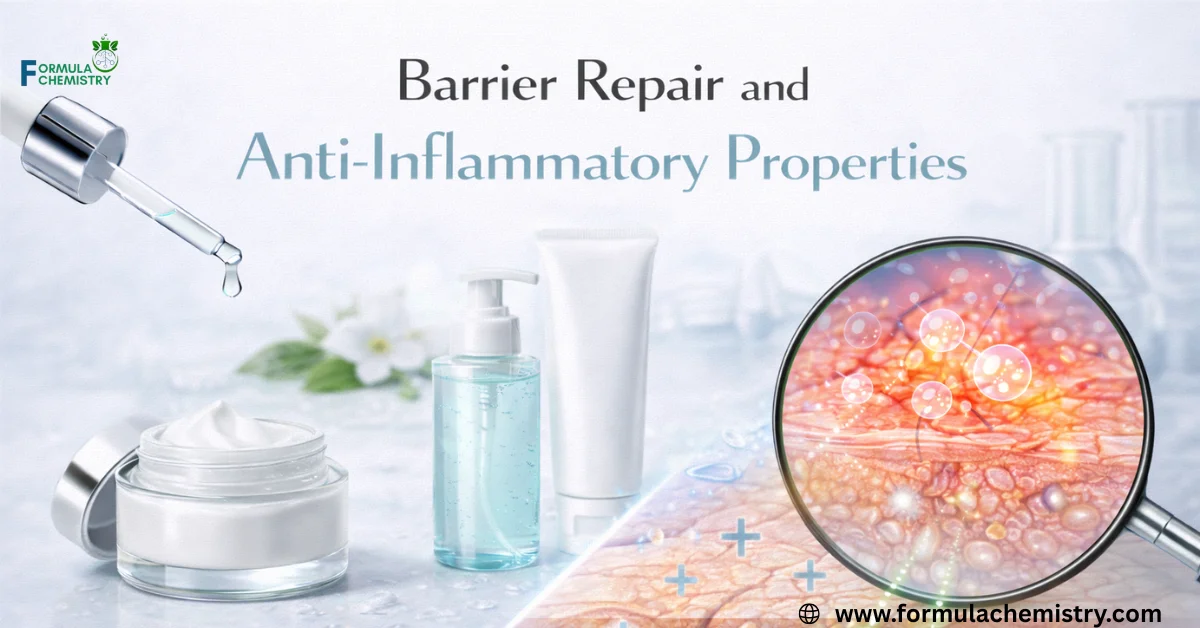
The most recognized benefit of Cica is its ability to soothe irritated skin. It suppresses the activity of pro-inflammatory cytokines, which are the signaling molecules responsible for redness and swelling.
This makes Cica a gold-standard ingredient for conditions like rosacea, eczema, and psoriasis. Once integrated into a , Cica acts as a calming agent that offsets the possible irritation of other functional actives.
Antioxidant Protection and Wound Healing
Beyond soothing, Cica delivers considerable protection against oxidative stress induced by UV radiation and pollutants. The saponins in Centella asiatica increase antioxidant levels within the skin tissue during the early stages of healing.
This helps prevent the degradation of collagen fibers. In a formulation context, Cica is often used to accelerate the recovery of the skin’s moisture barrier after chemical peels or laser treatments.
| Ingredient Form | Recommended Usage | Best For | Compatibility |
| Centella Asiatica Extract | 1.0% – 5.0% | General soothing | Most water-based systems |
| Madecassoside (Isolated) | 0.1% – 0.5% | Intense inflammation | Active-heavy serums |
| Cica Glycolic Extract | 2.0% – 10.0% | Hydrating cleansers | Surfactant systems |
| Asiaticoside | 0.2% – 1.0% | Anti-aging/Firming | Emulsions (O/W) |
Formulating with Cica for Maximum Efficacy
Successfully incorporating Cica into a skincare product necessitates a thorough comprehension of its physical and chemical properties. Because Cica is a botanical, it is susceptible to microbial contamination and oxidation if not handled correctly.
FormulaChemistry provides practical formulation education and safety-forward help to ensure that these extracts remain potent from the beaker to the consumer’s vanity.
Solubility and Stability in Emulsions
Cica extracts are offered in various forms, including powders, glycero-aqueous liquids, and liposomal dispersions.
Most standardized extracts are water-soluble and should be added during the cool-down phase of an emulsion (below 40°C) to prevent the degradation of the sensitive triterpenes. Maintaining a pH of 5.5 is ideal for skin compatibility and ingredient longevity.
- Common Problems and Fixes:
- Problem: Sedimentary fallout in clear serums. Fix: Use a solubilizer or switch to a standardized liquid extract rather than a raw powder.
- Problem: Product discoloration over time. Fix: Examine oxidation of the botanical polyphenols; consider adding a chelating agent like Disodium EDTA and guaranteeing a robust antioxidant system (e.g., Vitamin E).
- Problem: Lack of visible results. Fix: Ensure you are using a standardized extract containing at least 10% active triterpenoids rather than a highly diluted “water” version.
Preservation and Safety Procedures
Any water-containing formula featuring Cica must be properly preserved to prevent the growth of mold, yeast, and bacteria. Botanicals are essentially “food” for microbes. Using a broad-spectrum preservative system is a non-negotiable step in cosmetic chemistry. Furthermore, while Cica is generally safe,
who should avoid it? Individuals with a known allergy to the Apiaceae (parsley) family should exercise caution.
Key warnings include avoiding use on deep, infected puncture wounds without medical supervision, as Cica can close the surface of the skin too quickly, trapping bacteria underneath.
Integrating Cica into a Skincare Routine
For the end-user, Cica is a flexible component that fits into almost any regimen. It is most effective when left on the skin, such as in a moisturizer, serum, or overnight mask. Because it is non-photosensitizing, it can be used both in the morning and at night.
FormulaChemistry states that while Cica is a “hero” ingredient, it works best when supported by a well-rounded formula including humectants and barrier agents.
Synergistic Pairs and Layering
Cica pairs exceptionally well with other skin-replenishing ingredients. When combined with Vitamin C, it can assist in reducing the stinging sensation some users feel with L-ascorbic acid. In a Cica serves as the “buffer” that allows the skin to tolerate more rigorous treatments.
- Cica + Hyaluronic Acid: For intense hydration and plumping.
- Cica + Ceramides: For structural barrier restoration.
- Cica + Niacinamide: For reducing redness and refining pore texture.
- Cica + Retinol: To soothe the irritation often associated with retinoid acclimation.
Usage for Specific Skin Types
While Cica is a universal pleaser, its application varies by skin type. For oily and acne-prone skin, a lightweight Cica gel can provide hydration without blocking pores, while also calming active breakouts.
For dry or mature skin, a thick Cica balm (often called “Cica-Plast” or “Cica-Baume”) provides the necessary lipid support to seal in moisture and repair the lipid mantle. At FormulaChemistry, we remind users that the vehicle (the cream or serum base) is just as important as the active Cica itself.
Editorial responsibility at FormulaChemistry makes certain that we stress transparency regarding botanical sourcing.
When choosing Cica products, look for transparency in the concentration of active fractions to ensure the product delivers on its promise of skin regeneration.
FAQs about What Is Cica in Skincare?
Can I use Cica every day?
Yes, Cica is safe for daily use, both morning and night. Its soothing qualities make it an excellent maintenance ingredient for skin health.
Is Cica better than Aloe Vera?
While both are soothing, Cica has stronger scientific backing for collagen synthesis and wound healing, whereas Aloe is primarily used for superficial cooling and hydration.
Does Cica help with acne?
Cica does not treat the bacterial cause of acne, but it greatly reduces the redness and inflammation associated with breakouts and helps prevent scarring.
Can Cica be used with Retinol?
Absolutely. Cica is one of the best ingredients to pair with Retinol to minimize the “retinization” period characterized by peeling and redness.
What is the ideal pH for Cica products?
Cica flourishes in a slightly acidic environment, typically between pH 5.0 and 6.5, which corresponds to the skin’s natural acid mantle.
Who should avoid Cica?
Who should avoid: Those with a known hypersensitivity to the Centella asiatica plant or other members of the Apiaceae family should avoid it or perform a strict patch test.
How long does it take to see results from Cica?
Soothing effects on redness are often immediate, but structural benefits like barrier repair and scar reduction typically require 4 to 6 weeks of regular use.
Is Cica safe for pregnancy?
Cica is widely regarded as safe for topical use during pregnancy, though it is always recommended to consult with a healthcare provider regarding any new skincare ingredient.