
Introduction
Cracked, dry lips are uncomfortable and unsightly, but the right lip balm can change them instantly. While store-bought sticks are convenient, they frequently miss the richness required for true repair.
Creating or choosing a scented balm involves more than simply choosing a flavor; it demands balancing the formula chemistry of waxes, oils, and aromatics. By comprehending the science behind the ingredients, you can ensure your lips stay hydrated and glossy all day.
This guide examines the art of formulating a natural scented lip balm. We explore the ingredients that soothe inflammation and create that coveted high-shine finish safely.
What Constitutes a Scientifically Effective Lip Balm?
To heal the lips, we must grasp their distinctive biological structure and what they lack compared to the rest of the skin.
The Absence of Sebaceous Glands
Lips do not have oil glands (sebaceous glands) to produce natural moisture. They rely entirely on external protection.
A scientifically effective balm acts as a surrogate barrier. It utilizes a specific chemical formula of occlusives to trap moisture and emollients to soften the keratin, preventing the painful splitting associated with dehydration.
The Mechanics of Shine
Shine is a result of light reflection. To achieve a high gloss, you need ingredients with a high refractive index.
Thick, viscous oils sit on top of the lip surface instead of absorbing instantly. This creates a smooth, mirror-like plane that reflects light, producing the effect of fuller, healthier lips through simple optical physics.
The Formula Chemistry of Scent: Flavor vs. Fragrance
Scenting a lip product is the most delicate part of the process because the lips are a mucous membrane and highly susceptible to irritation.
Flavor Oils vs. Essential Oils
In Formula Chemistry DIY, we distinguish between flavor oils (scent + taste) and essential oils (scent only).
Commercial flavor oils are often sweetened with Stevia to trick the brain into “tasting” the fragrance. Essential oils are potent plant extracts. Their chemistry formula contains reactive substances such as limonene, which can be irritating if not properly diluted.
Safe Usage Rates
The lips have a thinner barrier than the face. Therefore, the concentration of scent must be strictly controlled.
We generally recommend keeping essential oils below 1% of the total formula. Exceeding this interferes with the lipid barrier, causing contact dermatitis—a condition where the “soothing” balm actually causes more redness and peeling.
Selecting Waxes: The Structural Skeleton
Waxes provide the structure of the balm, determining whether it is a hard stick or a soft pot gloss.
Beeswax for Stability
Beeswax is the gold standard for stick balms. It has a melting point of around 63°C (145°F).
Its chemical formula creates a flexible network that holds oils in place. It effectively prevents the balm from melting in your pocket while forming a breathable barrier to wind and cold.
Candelilla and Vegan Alternatives
For a plant-based option, Candelilla wax is superior. It is harder than beeswax and provides a glossy finish.
Because it is denser, you need slightly less of it in your Formula Chemistry skincare recipes. It provides excellent “slip,” allowing the balm to slide smoothly over rough patches without dragging.
Carrier Oils: The Engine of Soothing and Shine
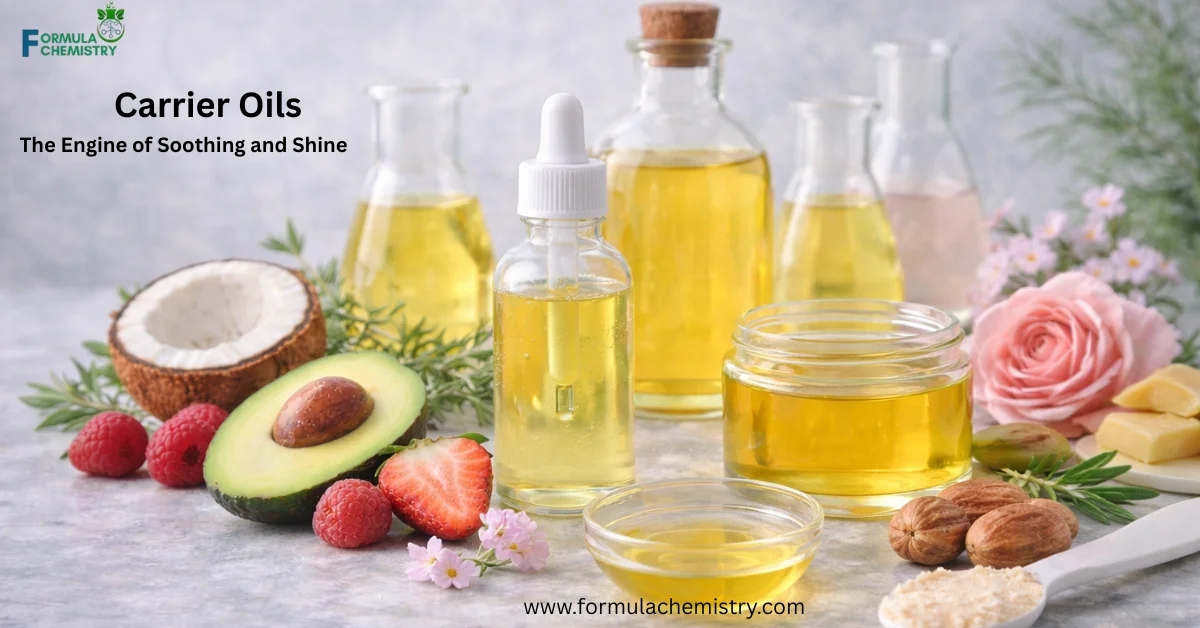
The liquid oils in your formula determine the therapeutic benefits and the finish of the product.
Castor Oil for Maximum Shine
Castor oil is unique due to its high content of Ricinoleic Acid. It is thick, viscous, and incredibly shiny.
In formula chemistry, this is the go-to oil for gloss. It creates a cushiony feel and lingers on the lips for hours, delivering prolonged protection against atmospheric dehydration.
Jojoba and Sweet Almond Oil
For soothing properties, lighter oils are necessary to penetrate the upper layers.
Jojoba oil is technically a liquid wax ester that mimics human sebum. It integrates into the lip surface to soften rough skin, while Sweet Almond oil is rich in Vitamin E, soothing inflammation caused by sun or wind burn.
Butters and Occlusives: The Moisture Lock
Butters add creaminess and act as the heavy-duty sealants that prevent moisture from evaporating.
Shea Butter Benefits
Shea butter is rich in stearic and oleic acids. It melts at body temperature, providing a luxurious application.
However, Shea butter can become grainy if not cooled quickly. This graininess occurs when the fatty acids in the chemical formula crystallize at different rates, a frequent issue in natural formulations.
Cocoa Butter for Hardness
Cocoa butter is a brittle solid at room temperature. It adds “snap” to a stick balm.
It naturally smells like chocolate, which can complement your scented profile. Its high antioxidant content helps stabilize the shelf life of the balm while providing deep, lasting nourishment.
Formula Chemistry DIY: Soothe & Shine Recipe
Here is a balanced formulation designed to be poured into tubes or pots, emphasizing high gloss and barrier repair.
The Ingredient Ratio
A standard starting point is the 1:1:1 ratio (Wax:Butter:Oil), but for a glossier finish, we adjust the lipids.
- 20% Beeswax (Structure)
- 25% Shea Butter (Nourishment)
- 40% Castor Oil (Shine and Barrier)
- 14% Sweet Almond Oil (Soothing)
- 1% Vitamin E & Scent (Protection)
The Procedure
Melt the wax and butter in a double boiler first. High heat is needed to break the lattice structure.
Add the liquid oils last to prevent overheating them. Once liquid, remove from heat and stir constantly as it cools. Add your scent only when the mixture is below 45°C to preserve the volatile chemistry formula of the essential oils.
Preventing Rancidity with Antioxidants
Lip balms are anhydrous (water-free), so they don’t grow bacteria, but the oils can go rancid (oxidize).
The Role of Vitamin E (Tocopherol)
Vitamin E is an antioxidant, not a preservative. It sacrifices itself to oxygen molecules.
Intercepting oxygen prevents the double bonds in your plant oils from breaking down. This keeps your balm smelling fresh and prevents the formation of harmful free radicals on your lips.
Storage and Heat
Heat accelerates oxidation. Always store your natural balms in a cool place.
If you are using unstable oils like Hemp or Rosehip in your Formula Chemistry DIY projects, consider keeping the final product in the fridge or adding Rosemary Oleoresin Extract (ROE) for stronger protection.
Safety of Photosensitive Essential Oils
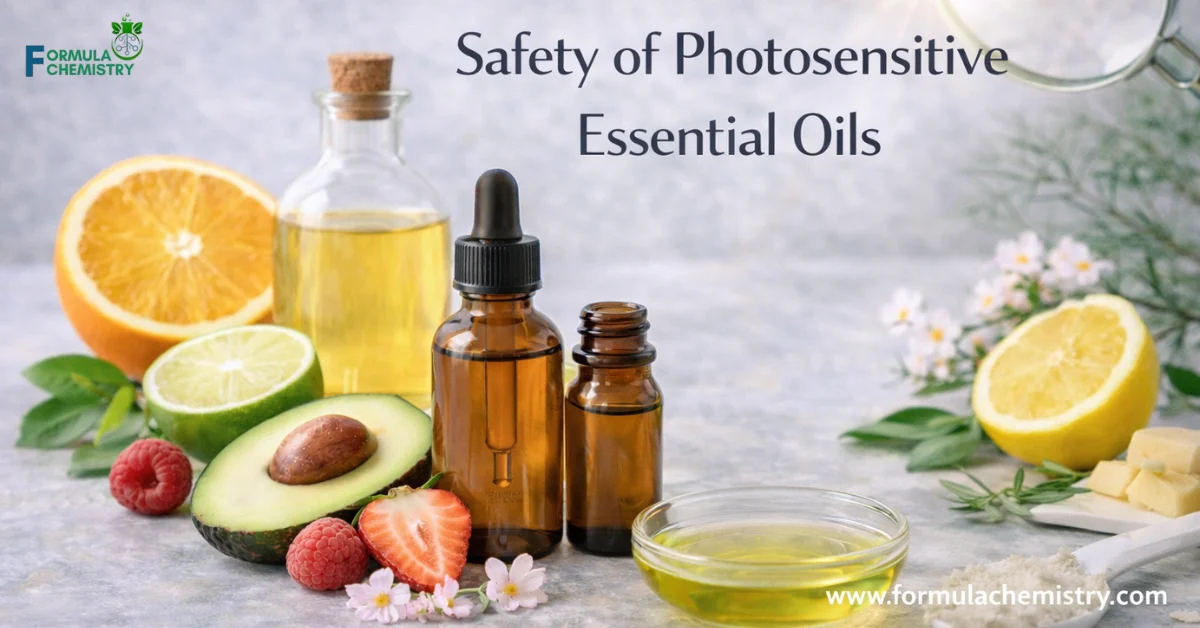
Many popular scents for lip balms fall into the citrus category, which calls for attentive selection.
The Furocoumarin Danger
Cold-pressed citrus oils (Lemon, Lime, Grapefruit) contain furocoumarins. These compounds react with UV light.
Applying a lemon-scented balm and going into the sun can cause severe blistering (phytophotodermatitis). To avoid this, always use “steam distilled” or “FCF” (Furocoumarin-Free) citrus oils in your formulations.
Safe Scent Alternatives
Peppermint and Spearmint are well-known for their cooling effect (menthol).
Vanilla oleoresin is soothing and universally liked. These options provide a pleasant sensory experience without risking the integrity of the skin barrier or reacting negatively with sunlight.
Troubleshooting Common Texture Issues
Even with a perfect recipe, physical chemistry can cause texture defects that affect the user experience.
Fixing Graininess
If your balm feels sandy, the Shea butter has bloomed.
To fix this, remelt the balm and hold it at 70°C for 20 minutes to reset the crystal memory of the fat. Then, place the containers in the freezer immediately after pouring to force a rapid cool-down, locking in a smooth formula chemistry.
Sinkholes and Cracking
As wax cools, it shrinks. This often creates a hole in the center of the tube.
To achieve a professional finish, save a small amount of the melted mixture. Once the poured balms have set and developed a sinkhole, carefully top them off with the remaining liquid to create a flat, immaculate surface.
Coloring Your Balm Naturally
You can add a subtle tint to your soothe-and-shine balm using natural minerals.
Micas and Iron Oxides
Micas are minerals coated with pigments that provide shimmer. Iron oxides provide matte color.
Because these are powders, they will sink to the bottom if the balm is too thin. You must ensure the chemical formula has enough yield stress (thickness) to suspend the particles while the balm cools.
Root Powders
For a purely plant-based color, Alkanet root produces a ruby red, and Gromwell root produces a purple-red.
Infuse these roots into your carrier oil (like Sweet Almond Oil) for two weeks, then strain. This creates a tinted oil that imparts a sheer, natural flush to the lips without using mineral pigments.
Conclusion
Creating a scented lip balm is a perfect introduction to the world of cosmetic science, blending the physics of light reflection with the biology of barrier repair.
By choosing the appropriate chemical formula of waxes for structure and oils for shine, you can create a product that heals and beautifies simultaneously.
Whether you rely on the refreshing tingle of mint or the soothing heat of vanilla, a well-formulated balm is the essential aid for healthy, kissable lips.
FAQ’s about Scented Lip Balm Soothe & Shine Naturally
Why do my lips feel drier after using lip balm?
This often happens if the balm contains humectants (like glycerin or hyaluronic acid) without enough occlusives (wax/butter), or aggravants like camphor, phenol, or menthol. These ingredients can increase water loss or cause irritation, resulting in a loop of re-application and dryness.
Can I use food coloring in my DIY lip balm?
No, water-based food coloring will not mix with the oils and waxes in lip balm; it will bead up and separate. You must use oil-soluble colors or oil-dispersible pigments like micas and iron oxides to ensure a uniform tint within the formula chemistry.
What is the best oil for shiny lips?
Castor Oil is the undisputed king of shine in natural formulation. Its high viscosity and unique fatty acid structure allow it to sit on the surface of the lip, creating a thick, reflective film that mimics the look of a synthetic lip gloss.
How much essential oil is safe for lip balm?
For lip products, the recommended safety limit is typically 0.5% to 1% of the total formula. Because the lips are a mucous membrane, they absorb chemicals rapidly. Exceeding this limit increases the risk of sensitization and allergic reactions.
Is coconut oil good for lip balm?
Coconut oil is a decent emollient, but it melts very quickly (76°F) and can make the balm too soft or greasy in warm weather. In Formula Chemistry skincare, we prefer fractionated coconut oil for stability or mixing it with harder butters like Cocoa Butter.
How do I stop my lip balm from melting in my pocket?
You need to increase the melting point of the mixture. This is done by increasing the percentage of wax (Beeswax or Candelilla) or adding a hard butter like Cocoa Butter. A higher wax-to-oil ratio ensures the physical structure holds up against body heat.
Can I use honey in my lip balm?
Honey is water-soluble, while lip balm is oil-based. Adding raw honey will cause the product to separate and eventually grow bacteria since it introduces water activity. To use honey safely, you need an emulsifier, or you can use an oil-soluble honey extract.
What makes a lip balm “healing”?
A healing balm must contain ingredients that repair the skin barrier and reduce inflammation. Look for ingredients rich in Vitamin E, Allantoin, or Bisabolol. These penetrate the cracks to soothe nerve endings while the waxes seal the area to prevent further damage.