
Introduction
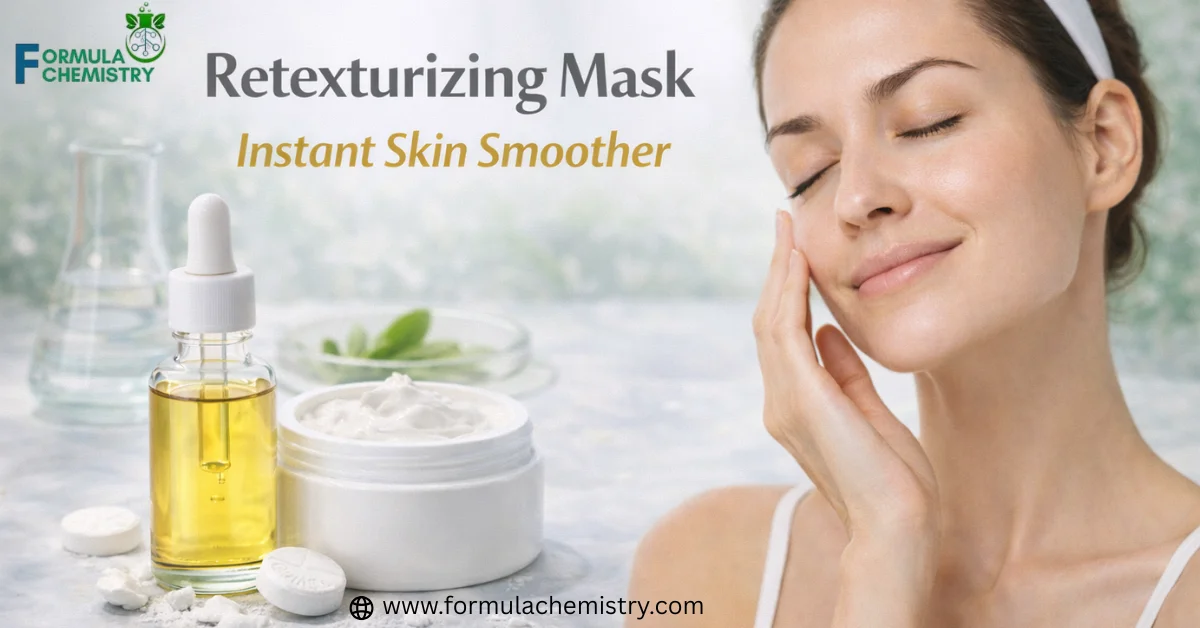
Rough, uneven skin texture is one of the most common complexion complaints, often making makeup look cakey and skin appear dull. A retexturizing mask is the targeted solution, designed to rapidly resurface the epidermis.
However, achieving a smooth finish without causing irritation requires a fine equilibrium of exfoliating agents and soothing buffers. It is not about scrubbing harder; it is about utilizing formula chemistry to break the bonds that hold dead cells together.
In this guide, we explore the science behind instant smoothing masks, breaking down the ingredients and methods that deliver professional results safely.
What Causes Rough Skin Texture and Dullness?
To smooth the skin, we must first understand the biological mechanism of desquamation, the natural shedding process of the skin.
The Corneocyte Buildup
The outermost layer of your skin is composed of corneocytes flattened, dead skin cells.
When the shedding process slows because of aging or dehydration, these cells accumulate unevenly. This accumulation creates a rough topography that scatters light, making the skin look dull rather than radiant.
The Cellular Glue
These dead cells are held together by protein bridges called desmosomes.
A retexturizing mask must chemically break these bonds. By altering the chemical formula of the skin’s surface conditions, we can release these old cells, revealing the fresh, smooth tissue underneath.
The Chemistry Formula of Alpha Hydroxy Acids (AHAs)
AHAs are the workhorses of retexturizing masks, offering immediate smoothing by lowering the pH of the skin surface.
Glycolic Acid: The Deep Penetrator
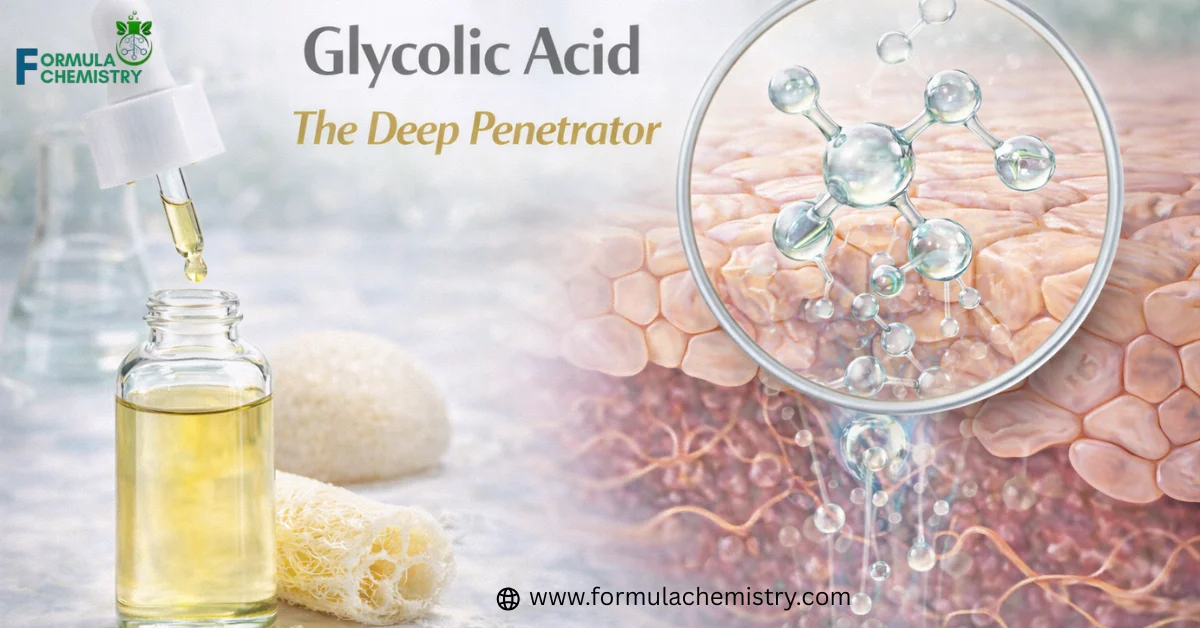
Glycolic Acid has the smallest molecular size of all AHAs.
Its compact chemistry formula allows it to penetrate deep into the upper layers of the epidermis. It breaks ionic bonds quickly, providing an “instant” smooth feel, but it also carries a higher risk of irritation for sensitive skin.
Lactic Acid: The Hydrating Exfoliant
Lactic Acid is a larger molecule that works more slowly on the surface.
In Formula Chemistry skincare, Lactic Acid is prized for its humectant properties. It pulls moisture into the skin while it exfoliates, making it the ideal choice for retexturizing dry, dehydrated skin without stripping it.
Enzymatic Exfoliation in Formula Chemistry
For those who cannot tolerate acids, enzymes offer a biological alternative that digests protein specifically.
Proteolytic Action
Enzymes like Bromelain (from pineapple) and Papain (from papaya) are proteolytic, meaning they break down proteins.
They specifically target the keratin protein in dead skin cells. Unlike acids, which can affect living cells if the pH is too low, enzymes generally stop working when they hit live tissue, delivering a safer formula chemistry profile.
Pumpkin Enzyme Potency
Pumpkin is a favorite in retexturizing masks because it is naturally rich in Vitamin A and enzymes.
It provides a dual action: chemical exfoliation from the enzymes and cellular renewal from the Vitamin A. This creates a potent “peel” effect that smooths texture instantly while feeding the skin.
Formula Chemistry DIY: The Pumpkin Spice Resurfacer
You can create a professional-grade retexturizing mask at home using bioactive ingredients found in nature.
Selecting the Base
Use pure, organic pumpkin puree (not pie filling).
Pumpkin provides the enzymatic activity. To this, we add a small amount of raw honey. Honey is a natural humectant and anti-inflammatory, buffering the strength of the enzymes to prevent redness.
The Activator
To boost the exfoliating power, add a pinch of organic cane sugar or a few drops of lemon juice (Citric Acid).
- Phase A: 2 tbsp Pumpkin Puree.
- Phase B: 1 tsp Raw Manuka Honey.
- Phase C: 0.5 tsp Plain Yogurt (Lactic Acid source).
- Result: A Formula Chemistry DIY mask that brightens and smooths in 10 minutes.
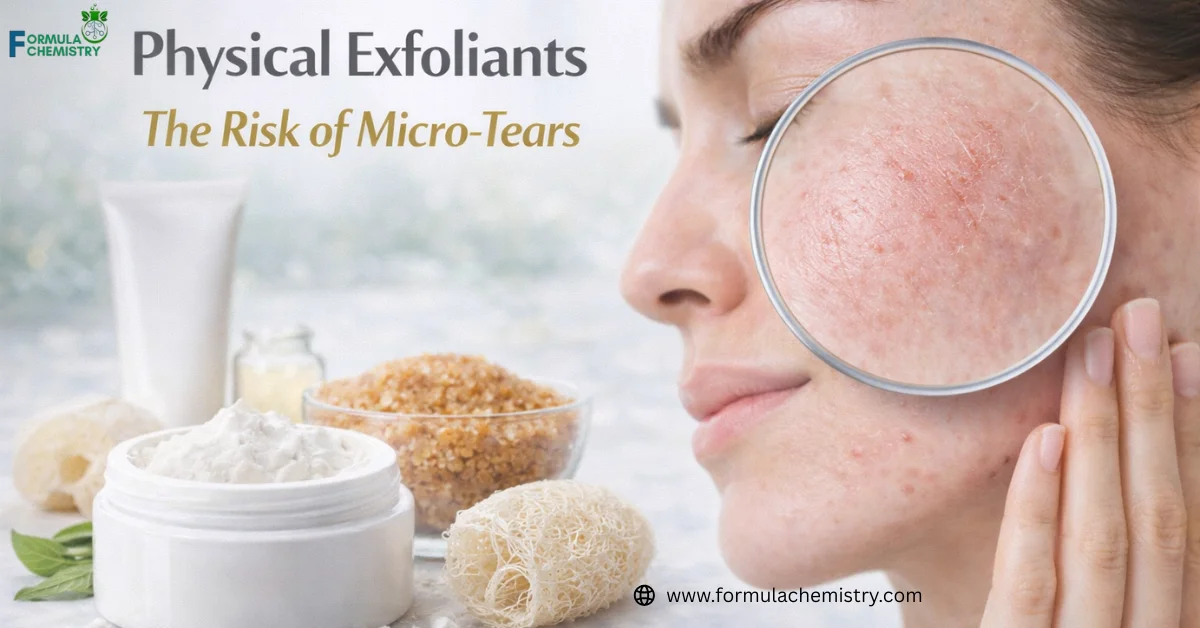
Physical Exfoliants: The Risk of Micro-Tears
Many “smoothing” masks rely on crushed shells or pits, but these can cause more harm than good to the skin barrier.
Jagged vs. Spherical Particles
Apricot pits and walnut shells have jagged edges at a microscopic level.
When rubbed on the face, they cause micro-tears. These invisible wounds invite bacteria and cause inflammation. In professional Formula Chemistry skincare, we prefer perfectly spherical beads (like Jojoba beads) or avoiding physical scrubbing entirely.
The Role of Clays
Kaolin or Bentonite clays provide a mild physical polish without the damage.
As the clay dries and is rinsed off, it gently lifts the dead cells that the acids have loosened. This combination of chemical loosening and mild physical removal is the secret to a “glass skin” finish.
Understanding pH and pKa in Formulation
The efficacy of an acid-based mask is entirely dependent on the acidity level of the final product.
The Free Acid Value
The pKa is the pH at which 50% of the acid is free (active), and 50% is neutralized (salt).
For Glycolic Acid, the pKa is 3.8. If your mask has a pH of 6.0, the acid is mostly neutralized and won’t exfoliate. An effective chemistry formula must be buffered to a pH between 3.5 and 4.0 to preserve safety and power.
Buffering Agents
To prevent chemical burns, formulators use buffers like Sodium Citrate or Sodium Hydroxide.
These ingredients stabilize the pH. They ensure that the acid remains active enough to smooth the skin but doesn’t drop so low that it causes necrosis or severe stinging.
The Role of Humectants in Retexturizing
Stripping the dead cells exposes fresh, vulnerable skin that must be hydrated immediately to look smooth.
Hyaluronic Acid Integration
High-quality retexturizing masks include Hyaluronic Acid.
This ingredient binds water to the newly exposed cells, plumping them up. Plump cells line up better and more evenly than dehydrated ones, greatly improving the light-reflective properties of the skin.
Glycerin and Aloe
Glycerin is a small molecule that penetrates deeply to hydrate.
Aloe Vera provides polysaccharides that form a soothing film. In Formula Chemistry skincare, these ingredients are essential to counteract the potential dryness caused by the exfoliation process.
Safety Procedures for At-Home Peels
Retexturizing masks are potent treatments; respecting the instructions is vital to avoiding barrier damage.
The Tingle Test
A slight tingle is normal with active masks; a burning sensation is not.
If the mask feels hot, wash it off immediately with cold water. Neutralize the skin with a baking soda solution if you suspect a chemical burn. Listening to your skin is the most important rule in Formula Chemistry DIY.
Sun Sensitivity
AHAs strip the protective layer of dead skin, increasing UV sensitivity by up to 50%.
You must wear a broad-spectrum SPF 30+ for at least a week after using a retexturizing mask. Failure to protect the fresh skin will result in more damage and hyperpigmentation than you started with.
Post-Mask Barrier Repair
The 20 minutes after you remove the mask are the most critical for locking in the smoothing results.
Lipid Replacement
The exfoliation process can remove some of the skin’s natural oils.
Apply a barrier cream rich in Ceramides, Cholesterol, and Fatty Acids. This “mortar” fills the gaps between the fresh skin cells, ensuring the smooth texture lasts for days rather than hours.
Avoiding Other Actives
Do not follow a retexturizing mask with Retinol or Vitamin C.
Your skin is in a heightened state of absorption and sensitivity. Overloading it with more actives can lead to contact dermatitis. Stick to bland, soothing hydration for the rest of the evening.
Who Should Use a Retexturizing Mask?
While most skin types can benefit from exfoliation, the frequency and type of mask should vary.
Oily and Congested Skin
Those with blackheads and rough texture benefit most from BHA or Clay-based retexturizing masks.
These penetrate the pore lining. Using such a mask 2 times a week helps regulate sebum and keeps the surface smooth and reflective.
Dry and Mature Skin
Mature skin has a slower turnover rate and needs help shedding.
However, it is also thinner. An enzyme or Lactic Acid mask used once a week is ideal. It gently digests the buildup without thinning the already delicate chemical formula of the lipid barrier.
Conclusion
A retexturizing mask is an effective instrument in your beauty arsenal, capable of delivering instant gratification through science.
By choosing the right exfoliating agents and respecting the fine equilibrium of pH and hydration, you can reveal a smoother, brighter complexion.
Whether you rely on sophisticated retail formulations or whip up a Formula Chemistry DIY enzyme treatment, the key to success is gentle consistency and rigorous sun protection.
FAQ’s about Retexturizing Mask: Instant Skin Smoother
How often should I use a retexturizing mask?
For most skin types, once a week is sufficient. If you have very oily or resilient skin, you might tolerate it twice a week. Overusing exfoliating masks can lead to “over-exfoliation,” which results in a shiny, plastic-like appearance and extreme sensitivity.
Can I use a scrub instead of a chemical mask?
You can, but chemical or enzymatic masks are generally superior for “retexturizing.” Scrubs only remove the very top loose cells and can cause micro-tears. Chemical masks dissolve the bond holding the rough patch together, resulting in a more uniform and lasting smoothness.
Is it normal for my skin to turn red after a mask?
A slight pink flush is normal due to elevated blood circulation and the acidic nature of the product. However, if your skin is bright red, hot, or stinging for more than 30 minutes, the formula chemistry is likely too strong for your skin type.
Can I use Retinol on the same night as a retexturizing mask?
No, this is a recipe for irritation. Both Retinol and retexturizing masks speed up cell turnover. Using them together is too aggressive for the moisture barrier. Skip your Retinol on the night you do your mask.
What is the difference between an enzyme mask and an acid mask?
Enzymes (like pumpkin or papaya) digest the keratin protein in dead cells specifically. Acids (like Glycolic) dissolve the bonds between cells. Enzymes are generally gentler and stop working when they hit live skin, while acids can penetrate deeper and irritate live tissue.
Can I make a retexturizing mask with baking soda?
No, you should never use baking soda on your face. It has a pH of 9 (highly alkaline), while your skin is pH 5.5. Using baking soda destroys the acid mantle, leading to bacterial proliferation and moisture loss, the opposite of healthy Formula Chemistry skincare.
Why does my makeup look better after a mask?
Makeup adheres to the surface of the skin. If the surface is covered in dead, flaky cells, the foundation grabs onto them, looking patchy. By removing this rough layer, you create a flawless base that allows makeup to glide on evenly.
Do I need to neutralize a DIY acid mask?
If you are using fruit acids (lemon, yogurt) in a Formula Chemistry DIY setting, rinsing with plenty of water is usually enough to neutralize them. However, if you are working with stronger professional peels at home (which we advise caution with), a baking soda and water solution is often needed to stop the acid’s action.