
Dullness is often not a result of poor health, but rather a layer of dead cells hiding your true complexion. A liquid peel uses gentle chemical exfoliation to dissolve these bonds.
Unlike harsh scrubs, a 5% Alpha Hydroxy Acid (AHA) solution works at the microscopic level to improve texture without abrasion. This concentration is the sweet spot for daily or weekly use, offering visible results with minimal irritation.
In this guide, we explore the formula chemistry behind this glow-inducing treatment. We will uncover how specific acids interact with your skin’s biology to reveal a smoother, more radiant surface.
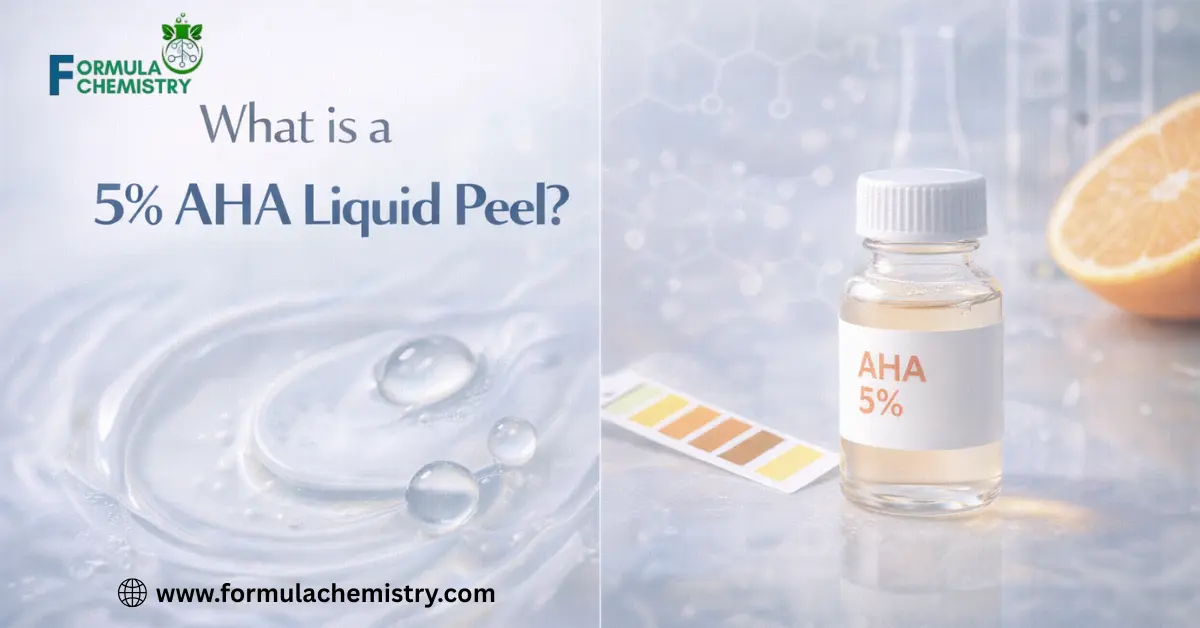
What is a 5% AHA Liquid Peel?
This product is a low-viscosity fluid designed to chemically unglue dead skin cells from the stratum corneum.
The Mechanism of Desquamation
Your skin naturally sheds cells, but this process slows down with age. An AHA peel slightly lowers the pH of the skin surface.
This acidic shift dissolves the desmosomes (protein bridges) holding dead cells together. Once these bonds are broken, the rough outer layer simply washes away, revealing the fresh, hydrated cells underneath.
Why 5% is the Magic Number
High-strength peels (20%+) require downtime and professional supervision. A 5% concentration acts as a progressive treatment.
It is strong enough to trigger cell turnover but gentle enough to maintain the integrity of the barrier. This makes it an ideal entry point for advanced Formula Chemistry skincare, equilibrating efficiency with safety.
The Chemistry Formula of Alpha Hydroxy Acids
Not all acids are created equal; the molecular size determines how fast and how deeply the peel penetrates the skin layers.
Glycolic Acid: The Deep Diver
Glycolic Acid, derived from sugar cane, has the smallest molecular structure of all AHAs.
Its compact chemistry formula allows it to penetrate the epidermis rapidly. It stimulates fibroblast activity, boosting collagen production while exfoliating, making it the gold standard for anti-ageing and texture refinement.
Lactic Acid: The Hydrating Exfoliant
Lactic Acid is larger than Glycolic Acid and is naturally found in the body as part of the Natural Moisturising Factors (NMF).
Because of its larger size, it penetrates more slowly and causes less irritation. Uniquely, it also acts as a humectant, drawing moisture into the skin while exfoliating, making it perfect for dry skin types.
Understanding pH and Free Acid Value
The percentage on the container indicates only half the story; the pH level dictates how much of that acid is actually active.
The Concept of pKa
Every acid has a specific pKa value (3.8 for Glycolic, 3.86 for Lactic). This is the pH at which the molecule is 50% active as an acid and 50% as a salt.
If the product’s pH is significantly higher than the pKa, most of the acid is neutralised into a salt and becomes ineffective. Mastering this proportion is the core of effective formula chemistry.
Bioavailability vs. Irritation
A 5% peel at pH 3.5 is highly effective. The same 5% peel at pH 6.0 is essentially a moisturiser.
To achieve radiance without burns, formulation science dictates keeping the pH between 3.5 and 4.0. This ensures there is enough free acid available to exfoliate without burdening the skin’s pain receptors.
Formula Chemistry DIY: Designing Your Peel
Creating a liquid peel at home requires precise measurements and precautions to ensure the acid remains stable and safe.
Selecting the Vehicle
Water is the primary carrier, but simple water evaporates too quickly. You need penetration enhancers and humectants.
Adding Propanediol or Butylene Glycol improves the spreadability. These solvents ensure the active chemistry formula is distributed evenly across the face, preventing “hot spots” of irritation.
The Importance of Buffering
You cannot simply mix acid powder and water; the pH would be dangerously low. You must use a buffering agent.
Sodium Hydroxide or Arginine is used to raise the pH to a safe level. This process converts some acid into salt, creating a buffered system which keeps a stable pH over time, a key step in Formula Chemistry DIY.
Improving the Formula with Soothing Agents
Exfoliation induces a controlled injury response, so adding anti-inflammatories is essential to calm the skin immediately.
Botanical Extracts
Ingredients such as Aloe Vera, Chamomile, or Green Tea Extract are commonly added to the water phase.
These provide antioxidants and soothe the stinging sensation associated with acid application. They work synergistically with the AHA to reduce redness while the acid clears the debris.
Hydrators to Prevent Dryness
Acids can strip surface lipids. Including Hyaluronic Acid or Glycerin counteracts this drying effect.
These ingredients form a hydrogen-bonded network on the surface. This makes certain that while the old cells are shedding, the new cells beneath are kept plump and hydrated.
Application Protocols for Maximum Results
How you apply the liquid peel is just as important as the ingredients inside the bottle; technique prevents barrier damage.
Clean and Dry Canvas
Always apply an AHA peel to thoroughly cleansed, completely dry skin.
Water can act as a vehicle, pulling the acid deeper than intended and causing stinging. Wait at least 5 minutes after washing your face before applying the liquid to ensure the chemical formula interacts only with the surface layer.
Cotton Pad vs. Fingers
Using a cotton pad provides mild physical exfoliation and ensures an even, thin layer.
Applying with fingers is more economical but can cause uneven application. Swipe gently across the forehead, cheeks, and chin, avoiding the delicate eye area and lips.
Post-Peel Care: Protecting the Barrier
After using a 5% AHA peel, your skin is in a vulnerable state and requires specific aftercare to maintain the glow.
Neutralization
While low-strength peels often self-neutralise over time, rinsing with cool water stops the activity immediately.
This halts the chemical reaction on the skin. Follow up with a pH-balanced toner to restore the acid mantle’s natural equilibrium rapidly.
Sun Protection is Mandatory
AHAs thin the dead outer layer of skin, removing your natural sun protection.
This increases photosensitivity significantly. You must wear a comprehensive SPF 30 or higher every day. Failing to do so will result in UV damage that reverses all the benefits of your Formula Chemistry skincare routine.
Frequency and Long-Term Maintenance
Consistency creates the “glass skin” effect, but over-exfoliation creates inflammation and acne.
Start Slow
Even with a gentle 5% concentration, start by using the peel 2-3 times a week.
Monitor your skin for signs of tightness or excessive shine. If tolerated, you can increase frequency, but usually, every other night is sufficient for maximum radiance.
Cycling with Other Actives
Do not use Retinol or Vitamin C at the same time as your AHA peel.
This creates too much stimulation. Use the AHA peel on nights when you are not using other potent actives to allow the skin’s chemical formula to recover and regenerate.
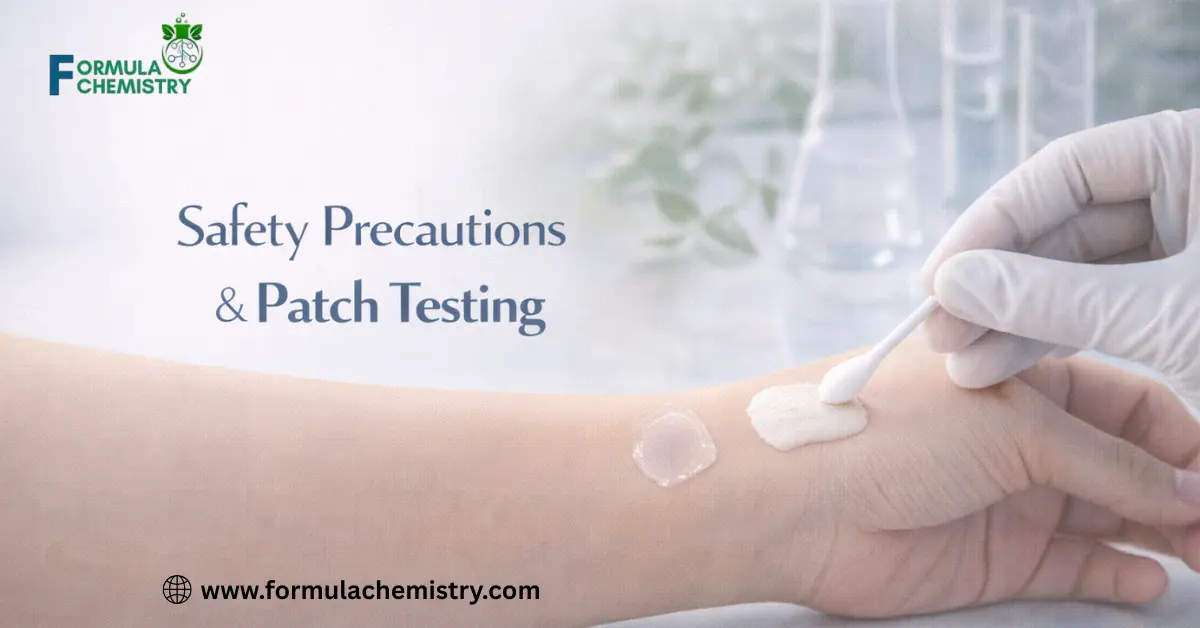
Safety Precautions and Patch Testing
Acids are effective instruments; treating them with respect prevents chemical burns and allergic reactions.
The Patch Test Protocol
Apply a small amount of the liquid behind your ear or on the inner arm.
Leave it for 24 hours. If there is no redness, itching, or blistering, it is generally safe for facial application. This is a non-negotiable step in both commercial and Formula Chemistry DIY practices.
Knowing When to Stop
A slight tingle is normal; intense burning is not.
If your skin feels hot or turns bright red, rinse immediately with cold water. Apply a soothing barrier cream and discontinue use until your barrier has fully healed.
Conclusion
A “Radiance-Revealing Liquid Peel with 5% AHA” is beyond simply a beauty product; it is a deliberate application of organic chemistry crafted to improve cellular turnover.
By grasping the interaction between concentration, pH, and pKa, you can safely reveal the fresh, luminous skin waiting under the surface.
Whether you purchase a lab-formulated product or venture into Formula Chemistry DIY, the key to glowing skin lies in respecting the science of the acid and the biology of your barrier.
Frequently Asked Questions
What is the difference between a liquid peel and a toner?
A liquid peel typically has a lower pH and a higher concentration of free acids compared to a standard exfoliating toner. While toners are meant for daily balancing, a liquid peel is a targeted treatment designed to actively dissolve dead skin cells for immediate radiance.
Can I use a 5% AHA peel if I have sensitive skin?
Yes, but you should choose the right acid. Lactic Acid or Mandelic Acid are larger molecules that penetrate slowly, making them much gentler than Glycolic Acid. Always patch test and buffer the application with a moisturiser immediately afterwards.
Do I need to wash off a 5% liquid peel?
It depends on the specific instructions of the product. Many 5% peels are designed as “leave-on” treatments that self-neutralise as they absorb. However, if you feel excessive tingling or have very sensitive skin, rinsing it off after 10-15 minutes is a safer approach.
Can I use Niacinamide after an AHA peel?
Yes, Niacinamide is excellent to use after an acid peel. It helps soothe inflammation and repair the barrier that the acid may have temporarily disrupted. Just ensure you wait a few minutes for the acid to absorb before applying the Niacinamide to avoid temporary flushing.
How does pH affect the strength of the peel?
The pH is the key element. A 5% AHA solution at pH 3.0 is significantly stronger and more irritating than a 5% solution at pH 5.0. Lower pH means more “free acid” is available to work on the skin; higher pH means more acid has been neutralised into salt.
Why does my skin tingle when I apply the peel?
The tingling sensation is caused by the hydrogen ions from the acid penetrating the skin and interacting with nerve endings. A mild tingle that subsides quickly is normal; a sharp, persistent burn indicates the chemical formula is too strong or your barrier is compromised.
Is this safe for pregnancy?
Glycolic and Lactic acid at low concentrations (like 5%) are commonly regarded as safe for topical use during pregnancy. However, Salicylic Acid (BHA) is often restricted. Always seek advice from your healthcare professional before adding new active treatments during pregnancy.
Can I make my own AHA peel at home?
Yes, but it requires strict adherence to safety procedures. You must have a calibrated pH meter and understand how to use a buffering agent like Sodium Hydroxide. Without controlling the pH, a DIY acid solution can cause severe chemical burns and scarring.