
The debate between synthetic and natural skincare ingredients often ignores a crucial fact: nature is the original chemist. Many of the most potent pharmaceutical treatments originate in plants, but their efficacy depends entirely on the stability of their chemical formulas.
Understanding the science of botanicals is crucial for results. Instead of relying on marketing, we should examine clinical data and molecular structures to verify what penetrates the skin.
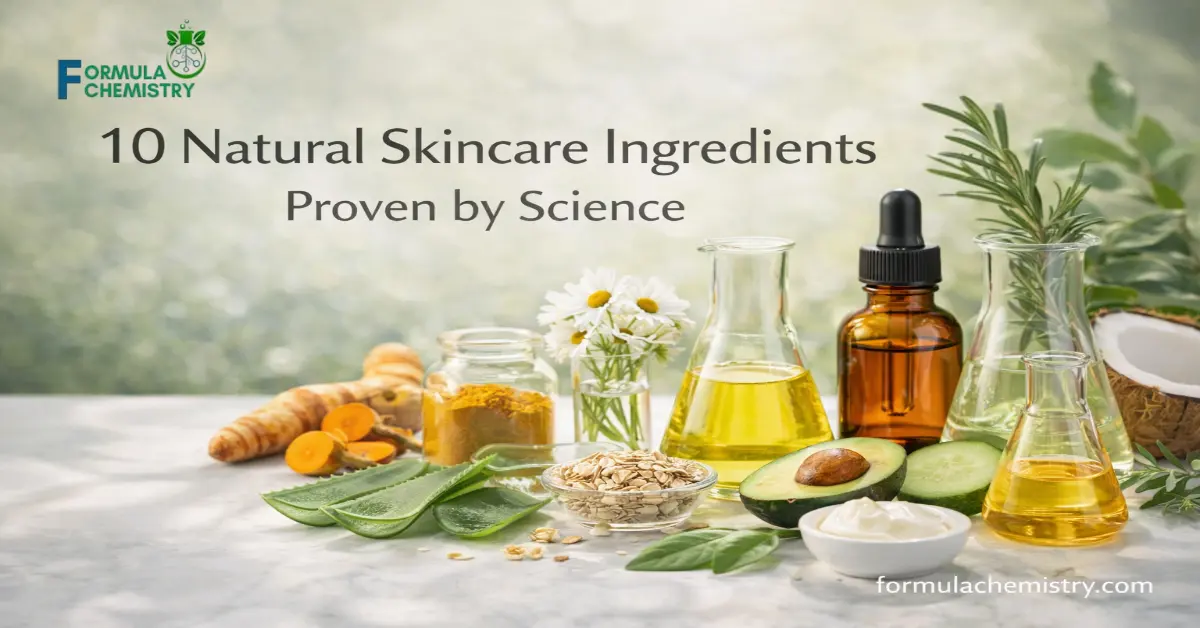
To transition into our ingredient spotlight, we explore 10 natural skin care ingredients that have withstood rigorous testing, validating their place in effective Formula Chemistry skincare.
Learn how urea helps your skin stay soft and hydrated in What Is Urea in Skincare?
What Defines a Scientifically skincare Proven Ingredient?
Before diving into the list, it is vital to understand the criteria that define an ingredient as “proven” in cosmetic science.
Clinical Trials vs. Anecdotal Evidence
A proven ingredient has undergone double-blind studies demonstrating a measurable change in skin histology.
In formula chemistry, the active compound, antioxidant or lipid must remain stable enough to benefit cells.
Bioavailability and Penetration
Just because a plant contains a vitamin doesn’t mean your skin can use it.
The chemical formula must have the correct molecular weight to pass through the skin barrier; otherwise, even nutrient-rich extracts remain on the surface.
Vitamin C: The Gold Standard Antioxidant
Vitamin C is arguably the most researched ingredient for brightening and protection, often sourced from potent botanicals like Kakadu Plum.
Mechanism of Action
Scientifically known as L-Ascorbic Acid, this molecule donates electrons to neutralize free radicals caused by UV exposure.
It is central to Formula Chemistry skincare because it also supports collagen synthesis, thickening the dermis over time.
Stability Challenges in Formulation
The main drawback of natural Vitamin C is its instability.
Exposed to air, natural Vitamin C oxidizes. Effective formulas combine it with stabilizers like Ferulic Acid or Vitamin E.
Bakuchiol: The Natural Retinol Alternative
For those who cannot tolerate the side effects of synthetic retinoids, Bakuchiol offers a scientifically validated plant-based solution.
Comparative Clinical Data
Derived from the Babchi plant, Bakuchiol, has been shown in studies to regulate gene expression similarly to Retinol.
It stimulates collagen production and accelerates cell turnover, reducing fine lines without the redness or peeling associated with traditional retinoids.
Implementing Formula Chemistry DIY
Bakuchiol is photostable, making it well-suited for daytime use.
Adding Bakuchiol to Squalane yields an anti-aging serum suitable for sensitive skin types.
Niacinamide: The Multitasking Vitamin B3
While often synthesized, Niacinamide naturally occurs in yeasts and root vegetables and is essential for barrier repair.
Regulating Sebum Production
This ingredient is unique because it communicates with the sebaceous glands to inhibit excess oil production.
Its chemical formula helps reduce inflammation and pore size, making it ideal for acne-prone, dehydrated skin.
Boosting Ceramide Synthesis
Niacinamide triggers the skin to produce its own ceramides and fatty acids.
This strengthens the skin barrier, preventing water loss and keeping your skin hydrated.
Green Tea Extract: The Polyphenol Powerhouse
Green tea is not just a beverage; it is a rich source of Epigallocatechin Gallate (EGCG), a potent antioxidant.
DNA Repair and Protection
Studies indicate that topical application of EGCG can repair DNA damage caused by UV radiation.
In the context of formula chemistry, this extract acts as a shield, reducing oxidative stress and preventing collagen fiber breakdown.
Formulation Tips for EGCG
EGCG is highly sensitive to light and heat.
Choose products in opaque, airless packaging to preserve EGCG’s integrity.
Hyaluronic Acid: The Biological Sponge
Though often created via bio-fermentation of wheat or bacteria, Hyaluronic Acid is a natural polysaccharide found in the human body.
Moisture Retention Capacity
This molecule can hold up to 1000 times its weight in water.
It draws moisture into the epidermis, instantly plumping skin and smoothing fine lines.
Molecular Weight Matters
In Formula Chemistry skincare, we use a range of molecular weights.
Low-molecular-weight HA penetrates deeply to hydrate, while high-molecular-weight HA sits on the surface to seal moisture in, creating a comprehensive hydration system.
Willow Bark Extract: Nature’s Salicylic Acid
Before aspirin was synthesized, willow bark was used for pain relief; in skincare, it is the natural precursor to Beta Hydroxy Acids (BHAs).
Exfoliation Within the Pore
Salicin, the active compound in willow bark, converts to Salicylic Acid on the skin.
This oil-soluble acid penetrates deeply into the pore lining, dissolving the glue that holds dead skin cells together, effectively treating blackheads and congestion.
Gentle Anti-Inflammatory Action
Unlike synthetic Salicylic Acid, which can be drying, Willow Bark contains soothing tannins.
Willow Bark toners gently exfoliate sensitive, acne-prone skin, helping prevent irritation.
Centella Asiatica: The Wound Healer
Also known as Gotu Kola or Cica, this herb has been used in medicine for centuries and is now backed by modern dermatology.
Stimulating Collagen Type I
The active compounds madecassoside and asiaticoside have been proven to stimulate fibroblast proliferation.
This makes it effective for healing scars and calming the skin barrier.
Ideal for Compromised Barriers
If you have over-exfoliated or have eczema, Centella is your go-to.
Its formula contains amino acids and phytochemicals that reduce redness and repair the barrier.
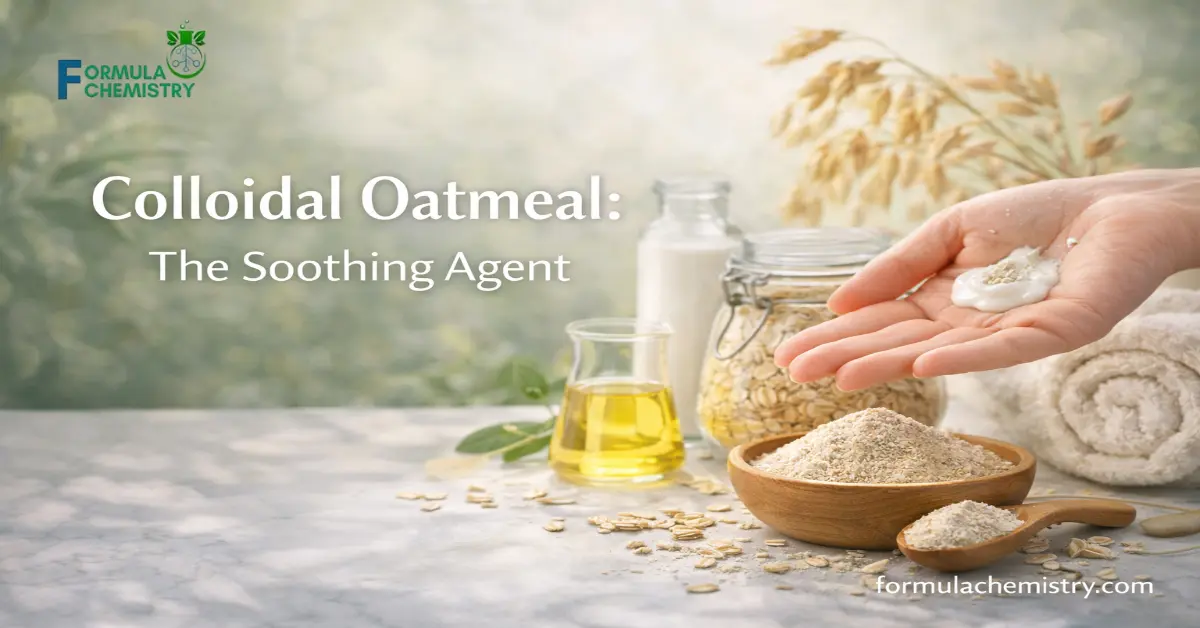
Colloidal Oatmeal: The Soothing Agent
Oats are not just for breakfast; they are an FDA-approved skin protectant for treating eczema and other skin irritations.
The Role of Avenanthramides
Colloidal oatmeal contains unique antioxidants called avenanthramides.
These compounds inhibit the release of inflammatory cytokines, providing immediate relief from itching and redness.
Creating a Protective Film
When dispersed in water, the beta-glucans in oats form a hydrocolloid film.
This barrier locks in moisture and protects from irritants, embodying Formula Chemistry skin protection.
Licorice Root Extract: The Brightener
For hyperpigmentation and dark spots, Licorice Root offers a safe alternative to harsh bleaching agents like Hydroquinone.
Inhibiting Tyrosinase Activity
The active compound, Glabridin, blocks tyrosinase, the enzyme responsible for pigment production.
By disrupting this melanogenesis pathway, it fades existing dark spots and prevents new ones from forming.
Anti-Inflammatory Benefits
Licorice also contains Licochalcone A, which controls oil production and soothes redness.
This dual action makes it perfect for treating post-inflammatory hyperpigmentation (PIH) left behind by acne breakouts.
Jojoba Oil: The Sebum Mimic
Technically, a liquid wax ester, Jojoba oil is chemically distinct from other vegetable oils.
Biocompatibility with Skin
The chemical formula of Jojoba oil is almost identical to human sebum.
This allows it to trick the skin into thinking it has produced enough oil, balancing production without clogging pores.
Stability and Carrier Use
Jojoba is incredibly stable and resistant to oxidation.
This makes it the perfect carrier oil for Formula Chemistry DIY serums, as it extends the shelf life of the more volatile essential oils it contains.
Conclusion
“Natural” and “scientific” increasingly overlap as data proves the efficacy of botanicals.
Understanding these formulas lets you build a routine that’s safe and effective.
Whether you are purchasing high-end formulations or exploring Formula Chemistry DIY, sticking to these ten proven ingredients ensures your skin receives the best nature has to offer.
FAQ’s about 10 Natural Skincare Products
How do I know if a natural ingredient is actually working?
You must look for clinical evidence supporting the ingredient’s efficacy, not just historical use. Ingredients like Vitamin C and Retinol alternatives have measurable effects on collagen depth and pigmentation that can be observed over 8 to 12 weeks of consistent use.
Can I mix Vitamin C with Niacinamide?
Yes, modern formula chemistry has debunked the myth that they cannot be mixed. While older, unstable formulas used to cause flushing, stable derivatives of Vitamin C work perfectly alongside Niacinamide to brighten and hydrate simultaneously.
Is Bakuchiol safe to use during pregnancy?
Yes, Bakuchiol is widely considered a safe alternative to Retinoids during pregnancy and breastfeeding. It provides similar anti-aging benefits without the potential risks associated with Vitamin A derivatives, making it a staple in safe Formula Chemistry skincare.
Why does my DIY Vitamin C serum turn brown?
Vitamin C (L-Ascorbic Acid) is highly unstable and oxidizes when exposed to air, light, or heat. This change in color indicates that the chemical formula has degraded and is no longer effective. It is best to make small batches and refrigerate them.
Do natural ingredients expire faster than synthetic ones?
Generally, yes. Natural ingredients lack the potent synthetic preservatives found in conventional products. To ensure safety, always check expiration dates and store your Formula Chemistry DIY creations in cool, dark places to prevent bacterial growth.
What is the difference between an essential oil and an extract?
An essential oil is a volatile, aromatic liquid obtained by distillation, while an extract is obtained by soaking the plant in a solvent (such as glycerin or alcohol). Extracts often contain water-soluble compounds, whereas essential oils contain oil-soluble terpenes.
Can I use lemon juice directly on my face?
No, you should never use raw lemon juice. It has a pH of around 2, which is far too acidic for the skin’s barrier. Proper Formula Chemistry skincare requires pH-balanced products (pH 4.5-5.5) to prevent chemical burns and irritation.
How long does it take to see results from natural skincare?
Natural ingredients work with your skin’s biological cycles, which typically take 28 to 40 days to renew. Therefore, consistency is key; expect to see visible improvements in texture and tone after at least one full skin cycle (about 4-6 weeks).
- Salicyclic Acid Solubility in Glycerin, BG, and PEG-400
- Salicylic Acid Solubility in Propylene Glycol vs Ethanol
- Salicylic Acid Solubility in Water
- How to Use Salicylic Acid on Face: A Beginner’s Guide
- Salicylic Acid vs Benzoyl Peroxide Face Wash