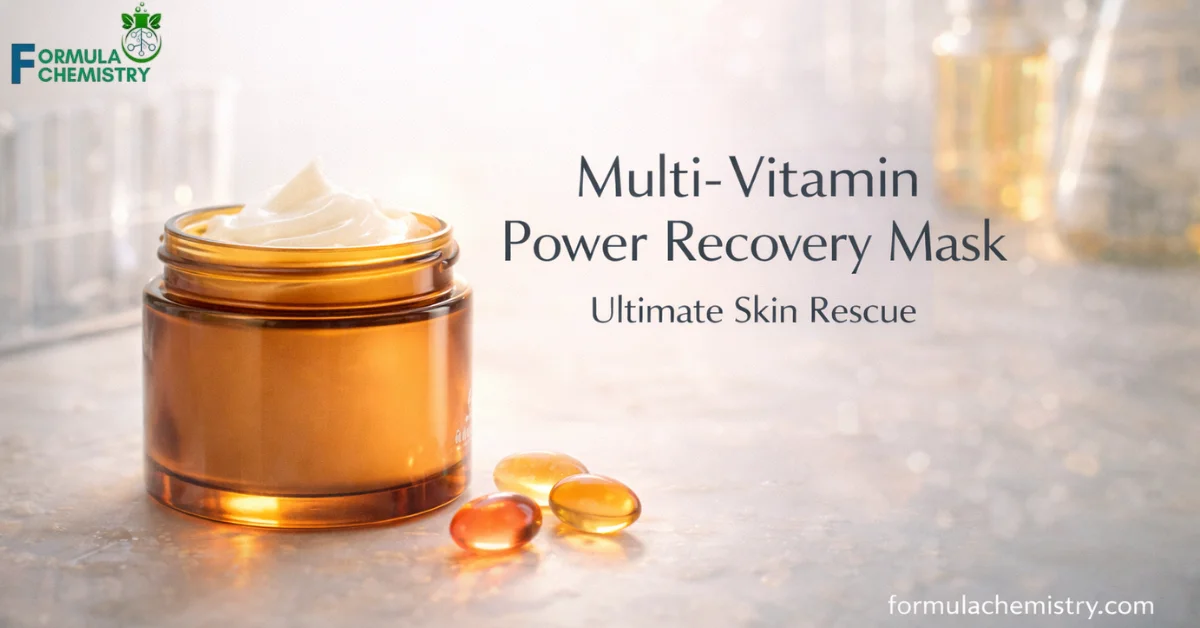

Introduction
Aging is a biological process accelerated by environmental stress, but modern cosmetic science allows us to hit the “reset” button on damage by recovery mask. A multi-vitamin power recovery mask is more than a luxury; it is a concentrated delivery system designed to rescue stressed, aging skin.
By utilizing high doses of antioxidant vitamins suspended in a lipid-rich base, these formulations repair the barrier and stimulate collagen. Understanding the formula chemistry behind these masks reveals how they act as an ambulance for your cells, reviving dullness and smoothing texture.
This guide examines the science behind multi-vitamin recovery, helping you understand how specific molecular structures interact to reverse the signs of aging.
What is a Multi-Vitamin Power Recovery Mask?
This category of skincare is defined by its function as an SOS treatment for skin undergoing structural breakdown due to stress or aging.
The Concept of Rescue Care
Unlike daily moisturizers, a recovery mask contains a higher concentration of restorative actives. It is designed to be occlusive, forcing ingredients into the stratum corneum.
In the context of Formula Chemistry skincare, these masks commonly use a water-in-oil emulsion. This heavy texture creates a seal, increasing the temperature of the skin slightly to maximize the penetration of the chemical formula.
Targeting the Signs of Aging
These masks specifically target photodamage, loss of elasticity, and dehydration.
By delivering a cocktail of Vitamins A, C, E, and B5, the mask intercepts reactive oxygen species (free radicals). It provides the raw materials the skin needs to repair the protein matrix that keeps it firm.
The Formula Chemistry of Vitamin Synergy
Vitamins work best when formulated together, creating a synergistic network which improves stability and efficacy.
The Antioxidant Network
Vitamins C and E are famous partners in formula chemistry. Vitamin E is oil-soluble and sweeps up free radicals in the cell membrane.
When Vitamin E captures a free radical, it becomes unstable. Vitamin C, which is water-soluble, regenerates the Vitamin E molecule, restoring its power. This cycle creates a continuous defense system against aging.
Stabilizing Volatile Molecules
Formulating a mask with multiple vitamins is chemically difficult because they degrade at different rates.
A successful chemistry formula uses stable derivatives, such as Ascorbyl Palmitate (Vitamin C) and Tocopheryl Acetate (Vitamin E). These esters are less likely to oxidize in the jar but become active once absorbed by the skin enzymes.
Key Ingredients and Their Chemical Formula
To truly understand anti-aging, we must examine the specific molecules that power these recovery masks and their biological functions.
Vitamin A: Retinyl Palmitate
Retinyl Palmitate is a gentle ester of Vitamin A. Unlike pure Retinol, it is less irritating, rendering it perfect for a recovery mask meant to soothe.
Its chemical formula allows it to convert slowly into Retinoic Acid within the skin. This stimulates fibroblasts to produce collagen, thickening the dermis and reducing the depth of wrinkles without causing redness.
Vitamin C: Ascorbyl Palmitate
This is an oil-soluble form of Vitamin C. Most Vitamin C is water-soluble (Ascorbic Acid) and cannot penetrate the lipid barrier easily.
Ascorbyl Palmitate can slip between skin cells. It acts as a potent antioxidant and a brightening agent, interfering with melanin production to fade age spots and correct uneven skin tone.
Pro-Vitamin B5: Panthenol
Panthenol is a humectant that converts to Pantothenic Acid in the skin.
It plays a key role in Formula Chemistry skincare because it stabilizes the skin barrier. By holding water within the cells and soothing inflammation, it creates the “plump” look associated with vibrant youthfulness, healthy skin.
Vitamin E: Tocopherol
Tocopherol is the primary lipophilic antioxidant in the human body.
It protects the cell membranes from oxidative stress caused by UV rays. In a recovery mask, it also serves as an emollient, smoothing the rough texture associated with dry, mature skin.
The Role of Barrier Repair in Anti-Aging
You cannot fix wrinkles if your skin barrier is leaking moisture; recovery masks focus on the lipid shield first.
Lipid Replacement Therapy
Aged skin produces fewer ceramides and fatty acids. This leads to chronic dryness and “crêpey” texture.
A power recovery mask is often formulated with botanical oils rich in Linoleic Acid. These oils mimic the skin’s skin’s natural oils, physically repairing the mortar between skin cells to restore elasticity and bounce.
Soothing Inflammation
Chronic, low-grade inflammation (inflammaging) accelerates the breakdown of collagen.
Ingredients like Bisabolol or Oat Kernel Extract are often added to the chemistry formula. They down-regulate inflammatory signals, calming the skin and enabling it to concentrate energy on repair rather than defense.
Combatting Glycation and Oxidative Stress
Aging is more than simply the sun; it is also about internal chemical reactions like glycation that stiffen the skin.
Understanding AGEs
Glycation occurs when sugar molecules bind to collagen and elastin fibers, forming Advanced Glycation End-products (AGEs).
This makes the collagen stiff and brittle, leading to sagging. Some multi-vitamin masks include specific peptides or botanical extracts (like Arginine/Lysine) designed to inhibit this chemical formula reaction, keeping the skin supple.
Neutralizing ROS
Reactive Oxygen Species (ROS) act akin to rust on a car.
The high concentration of vitamins in these masks neutralizes ROS instantly. This prevents the degradation of existing collagen, preserving the structural strength of the face during periods of high stress.
Formula Chemistry DIY: Making a Vitamin Mask at Home
For those who love to create, you can replicate the benefits of a recovery mask using potent, raw ingredients found in Formula Chemistry DIY supplies.
The Oil-Base Method
Since Vitamins A and E are oil-soluble, an anhydrous (water-free) balm is the easiest route.
- Base: Shea Butter (occlusive) and Rosehip Oil (natural Vitamin A).
- Actives: Add Tocopherol (Vitamin E) and Tetrahexyldecyl Ascorbate (liquid oil-soluble Vitamin C).
- Stability: Because there is no water, this formula chemistry is stable and preservative-free, offering immense nourishment.
The Fresh Emulsion Technique
You can mix a fresh mask for immediate use to ensure peak potency.
- Mix: Plain Greek yogurt (lactic acid and lipids) with the contents of a Vitamin E capsule and a drop of Panthenol.
- Apply: Leave for 15 minutes.
- Science: The lactic acid exfoliates gently, allowing the vitamins to penetrate deeper for an instant glow.
Professional Application Techniques
How you apply the mask changes how the chemical formula interacts with your skin thermodynamics.
Heat Activation
Vitamins penetrate better when the skin is warm.
Apply the mask after a warm shower or use a warm towel over your face while the mask is on. The heat dilates the pores and lowers the viscosity of the lipid base, increasing absorption rates.
Massage for Circulation
Don’t just let it sit; massage the mask into the skin for the first minute.
This mechanical action increases blood flow, bringing oxygen to the cells. It also helps emulsify the lipids with your natural skin oils, guaranteeing uniform distribution of the actives.
Who Needs This Mask the Most?
Although advantageous for many, specific skin conditions respond best to this intensive nutrient infusion.
Mature and Menopausal Skin
As estrogen drops, skin becomes dry and thin.
The rich lipid profile of a multi-vitamin mask compensates for the lack of natural oil. It provides the heavy-duty moisture that lightweight lotions cannot offer, restoring comfort and density.
Stressed and Smoker’s Skin
Stress and smoking deplete Vitamin C levels rapidly.
A power recovery mask replenishes these reserves. It helps reverse the grey, sallow tone associated with oxidative stress, bringing back a healthy, pink vibrancy.
FAQ’s about Multi-Vitamin Power Recovery Mask
Recovery masks are potent; using them correctly guarantees you receive the benefits without over-saturating the skin.
Weekly Maintenance
For most, using this mask once or twice a week is sufficient.
Think of it as a deep conditioning treatment. Overuse might at times result in congestion if the formula chemistry is very heavy in occlusives like petroleum or waxes.
Post-Exfoliation Use
The best time to use a recovery mask is immediately after exfoliating.
Once the dead skin cells are removed, the barrier is permeable. Applying the mask now allows the vitamins to travel unobstructed into the epidermis, maximizing the anti-aging effects.
Conclusion
A Multi-Vitamin Power Recovery Mask is a key element of an effective anti-aging strategy, connecting daily care and professional treatments.
By delivering concentrated Vitamins A, C, E, and B5 in a restorative lipid base, it makes use of cutting-edge formula chemistry to repair damage and protect against future aging.
Whether you rely on a high-tech commercial formulation or explore Formula Chemistry DIY blends, incorporating this rescue step ensures your skin stays strong, radiant, and biologically young.
Frequently Asked Questions
Can I use a multi-vitamin mask every day?
Generally, no. These masks are typically formulated with heavy lipids and potent actives designed for weekly deep treatments. Using them daily might lead to clogged pores (congestion) or over-saturation. Stick to 1-2 times a week to achieve the best outcome.
Is this better than a Retinol serum?
It is different. A Retinol serum is a daily active treatment for cell turnover. A multi-vitamin recovery mask is a restorative treatment that focuses on barrier repair, hydration, and antioxidant defense. They work best when used in the same routine (Retinol on some nights, mask on others).
Can acne-prone skin use power recovery masks?
You must be careful. Many recovery masks use heavy oils or Shea Butter, which can be comedogenic for acne types. Look for a chemical formula labeled “non-comedogenic” or one that uses lighter oils like Squalane or Argan to avoid breakouts.
Do I need to wash the mask off?
Most recovery masks are designed to be rinsed off after 10-15 minutes. However, if you have extremely dry skin, you can often tissue off the excess and leave the residue on as a sleeping mask to maximize the hydration benefits overnight.
At what age should I start using anti-aging masks?
Prevention is key. You can start using antioxidant-rich masks in your mid-20s. While you may not need heavy repair yet, retaining the formula chemistry of your collagen and elastin early on prevents the formation of deep wrinkles later.
Why does my skin tingle when I apply the mask?
A slight tingle may happen because of the activity of Vitamin C or the penetration of ingredients into dry, micro-cracked skin. However, if it burns or stings intensely, wash it off immediately. The chemistry formula may be too potent, or you may have a compromised barrier.
Can I make a vitamin mask with crushed vitamin tablets?
No, this is not recommended. Vitamin tablets contain fillers and binders that are not meant for the skin and can cause irritation. Furthermore, the molecular size may be too large to penetrate. Stick to cosmetic-grade ingredients for Formula Chemistry DIY projects.
How long does a vitamin mask last once opened?
Vitamins, especially Vitamin C and A, are unstable and oxidize when exposed to air. Once opened, a jar mask usually remains effective for 6 to 12 months. If the color changes (e.g., turns brown or orange) or the smell changes, the chemical formula has degraded and should be discarded.
- Salicyclic Acid Solubility in Glycerin, BG, and PEG-400: Formulator’s Comparison Guide
- Salicylic Acid Solubility in Propylene Glycol vs Ethanol: Formulator’s Comparison Guide
- Salicylic Acid Solubility in Water: Complete Formulator’s Guide
- How to Use Salicylic Acid on Face: A Beginner’s Guide
- Salicylic Acid vs Benzoyl Peroxide Face Wash