
Introduction
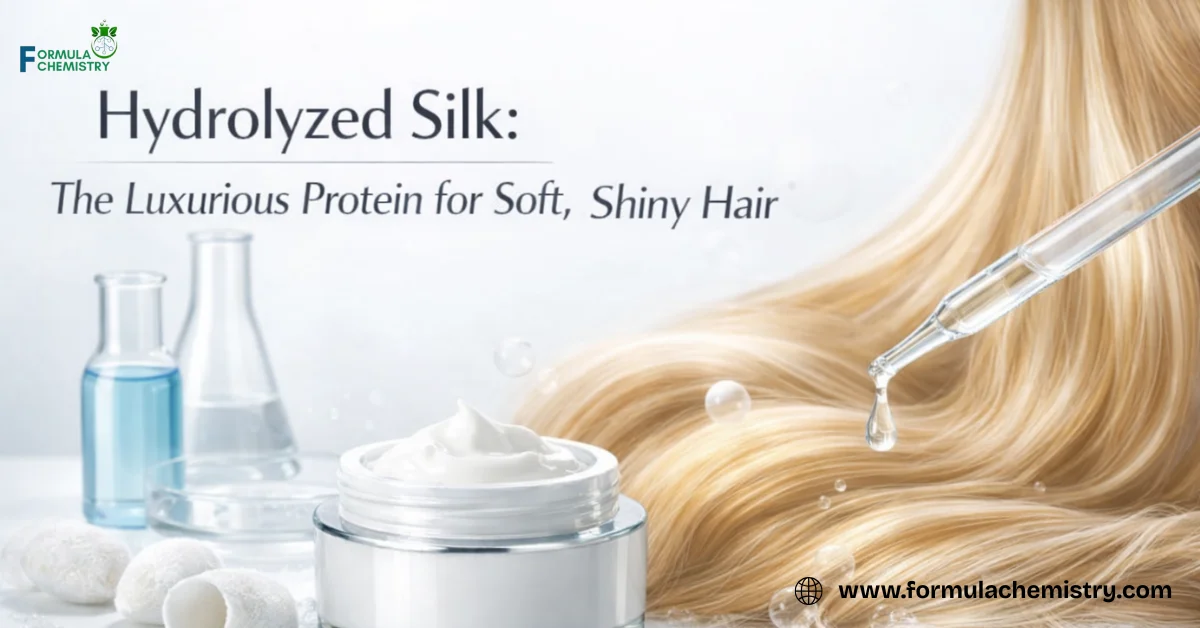
Inside the realm of cosmetic ingredients, few words conjure a feeling of luxury quite like “silk.” For centuries, silk has been prized for its smoothness, luster, and strength. In modern cosmetic chemistry, Hydrolyzed Silk brings these same prestigious qualities to hair and skincare formulations.
It is a protein that has been chemically broken down into smaller molecular fragments, allowing it to penetrate the hair shaft and bond with keratin, rather than just sitting on the surface. For formulators, Hydrolyzed Silk is more than merely a marketing claim; it is a functional powerhouse.
It creates a protective barrier on the hair strand, improving elasticity, moisture retention, and shine. Unlike heavier proteins that can cause buildup, silk protein is known for its light, non-greasy feel, making it a great option for leave-in conditioners, serums, and fine hair applications.
Quick Facts
- INCI Name: Hydrolyzed Silk
- Source: Derived from the cocoon of the silkworm (Bombyx mori).
- Function: Humectant, Film-Former, Anti-Static Agent, Hair Conditioning.
- Typical Usage Rate: 0.5% – 5.0% (Add to the water phase or cool down phase).
- Solubility: Water-soluble; insoluble in oils.
- Molecular Weight: Typically 2,000 – 4,000 Daltons (penetrates and coats).
- Optimal pH Range: Most stable between pH 4.0 and 7.0.
- Compatibility: Compatible with cationic polymers, anionic surfactants, and most common thickeners.
- Safety Note: Proteins are food for bacteria. Ensure your final formula has a strong, broad-spectrum preservative system.
What is Hydrolyzed Silk and How Does It Work?
Hydrolyzed Silk is produced through a process called hydrolysis. Raw silk fibers are extremely strong and insoluble in water because they are composed of long, tightly wound protein chains. To make them useful in liquid cosmetics, these chains must be cleaved.
Manufacturers use acid, alkali, or enzymatic hydrolysis to break the peptide bonds, resulting in smaller peptide chains and amino acids. The result is a golden, amber-colored liquid (or sometimes a powder) that dissolves easily in water.
Because the molecular weight is reduced during this process, the protein gains the ability to penetrate the hair cuticle (the outer layer) and reach the cortex (the inner structure). Once inside or coated on the surface, the amino acids specifically glycine and alanine form hydrogen bonds with the keratin in the hair.
Silk vs. Keratin vs. Wheat: Choosing the Right Protein
Not all proteins behave the same way. While Hydrolyzed Keratin is often used for structural repair because it mimics the hair’s natural composition, it can sometimes make hair feel stiff or brittle if overused (a phenomenon recognized as protein overload).
Hydrolyzed Wheat Protein is excellent for adding volume and body due to its film-forming properties, but it has a bigger molecular size that sits mostly on the surface. Hydrolyzed Silk occupies a unique middle ground.
This makes it the perfect choice for products targeting dryness, dullness, or tangling, rather than severe structural breakage. It provides “slip,” which reduces friction during combing and prevents future mechanical damage.
The Role of Amino Acids in Moisture Binding
The efficacy of Hydrolyzed Silk is mainly because of its amino acid profile. It is rich in serine, aspartic acid, and glycine. These amino acids are hygroscopic, meaning they attract moisture from the air and bind it to the hair shaft. This makes Hydrolyzed Silk a potent humectant.
In dry environments, this moisture-binding capability prevents the hair from drying out and becoming static-prone. In humid environments, the film-forming aspect of the protein helps to seal the cuticle, preventing excess moisture from entering the hair shaft and causing frizz.
This dual-purpose mechanism for hydrating while protecting is why silk is frequently found in “anti-frizz” serums and deep conditioning masques.
Formulating with Hydrolyzed Silk: Best Practices
When incorporating Hydrolyzed Silk into your formulations, temperature control is vital. While hydrolyzed proteins are more stable than native proteins, too much heat can still cause secondary denaturation or darkening of the product.
It is best practice to add Hydrolyzed Silk during the Cool Down Phase, once the emulsion has dropped below 40°C. If you are making a toner or a cold-process surfactant system (like a body wash), you can add the silk protein at any stage, provided it is fully dissolved.
Because it is water-soluble, it cannot be added directly to the oil phase of a salve or butter; it must be dissolved in a water phase or an emulsified system. For anhydrous (water-free) products, you would need to look for an oil-soluble derivative, such as an isostearoyl hydrolyzed silk, which is chemically modified to be lipophilic.
Usage Rates and Preservative Needs
The typical usage rate for liquid Hydrolyzed Silk is 0.5% to 5.0%. However, because it is supplied as a solution (usually 20-30% active protein in water), the actual active protein content in your final formula is quite low.
- Daily Conditioners: 0.5% – 2.0%
- Deep Treatment Masques: 2.0% – 5.0%
- Leave-in Sprays: 0.5% – 1.0%
The most critical aspect of formulating with proteins is preservation. Proteins are essentially “bug food.” A formula containing unpreserved or poorly preserved proteins will grow mold and bacteria rapidly.
Always ensure your formulation includes a strong, broad-spectrum preservative system (such as Phenoxyethanol & Ethylhexylglycerin or Sodium Benzoate & Potassium Sorbate) and that the pH is adjusted to within the preservative’s effective range.
Comparison of Common Hair Proteins
Selecting the correct protein depends on the specific hair problem you are trying to solve. Use the table below to guide your choice.
| Feature | Hydrolyzed Silk | Hydrolyzed Keratin | Hydrolyzed Wheat |
| Primary Benefit | Shine, Softness, Moisture | Strength, Structure | Volume, Film-Forming |
| Hair Type | Dry, Dull, Fine to Medium | Damaged, Brittle, Chemically Treated | Limp, Thin, Fine |
| Texture Feel | Silky, Smooth, “Slip” | Stiff, Strong | Tacky (if high usage), Bodifying |
| Solubility | Water | Water | Water |
| Cost | High (Luxury appeal) | Moderate | Low to Moderate |
Fixing Common Formulation Issues
Adding biological ingredients like proteins can introduce instability or aesthetic issues if not managed correctly. One frequent complaint is the odor. Hydrolyzed proteins often have a distinct, slightly “meaty” or earthy smell. While usually faint, this can be off-putting in a delicate floral formulation.
To counteract this, formulators can use a slightly higher percentage of fragrance or essential oil or use a masking agent. Additionally, making sure the protein is fresh and sourced from a reputable supplier is important, as the odor increases as the protein degrades or oxidizes.
Controlling Stickiness and “Protein Overload”
Another common issue is stickiness. Proteins are film-formers, and if used at too high a percentage especially in leave-on products like sprays or lotions they can leave a tacky residue on the skin or hair. This tackiness can make hair feel dirty or stiff rather than soft.
If your prototype feels sticky, reduce the percentage of Hydrolyzed Silk. Often, 1.0% is the maximum needed for a leave-in product. You can also balance the protein with emollients (like Argan Oil or Dimethicone) or cationic conditioning agents (like Behentrimonium Methosulfate) to soften the film. Remember, “more” is not always better; the goal is a flexible film, not a hard shell.
Common Problems and Fixes
- Problem: The lotion turned brown or yellow over time.
- Fix: Proteins can oxidize or participate in Maillard reactions if reducing sugars are present. Add a chelating agent (like Disodium EDTA or Sodium Phytate) and an antioxidant (like Vitamin E) to stabilize the color. Keep pH below 7.
- Problem: The shampoo is cloudy after adding silk.
- Fix: Hydrolyzed Silk is generally clear, but interactions with certain anionic surfactants or salt can cause haze. Premix the silk with water before adding, or check compatibility with your salt curve.
- Problem: The product smells “off” after two weeks.
- Fix: This is likely microbial contamination. Proteins degrade quickly. Re-evaluate your preservative system and ensure you are adding the protein at a temperature below 40°C.
- Problem: Hair is brittle or dry after use.
- Fix: This is “protein overload.” The ratio of protein to moisture (emollients/humectants) is too high. Lower the silk content and increase glycerin or oils.
FAQ about Hydrolyzed Silk: The Luxurious Protein for Soft, Shiny Hair
Is Hydrolyzed Silk vegan?
No, Hydrolyzed Silk is not vegan. It is derived from the shell of the silkworm (Bombyx mori). The process normally involves boiling the cocoons to extract the silk fibers. For a vegan alternative, look for Hydrolyzed Vegetable Protein or Hydrolyzed Rice Protein, which mimic some of the benefits.
What is the difference between Silk Amino Acids and Hydrolyzed Silk?
The difference lies in molecular weight. Hydrolyzed Silk contains longer peptide chains and has a higher molecular weight (forming a film). Silk Amino Acids are hydrolyzed further into individual amino acids, which have a tiny molecular weight and penetrate the hair deeply but offer less surface protection/film-forming.
Can I use Hydrolyzed Silk on my skin?
Yes, absolutely. Hydrolyzed Silk is an excellent humectant for skin care. It provides a soft, velvety after-feel to lotions and creams and helps the skin retain moisture. It is often used in luxury body washes and facial moisturizers.
Does Hydrolyzed Silk straighten hair?
No, it does not permanently straighten hair. However, because it films the hair and adds weight and smoothness, it can momentarily reduce frizz and volume, making the hair appear straighter and sleeker until the next wash.
Is Hydrolyzed Silk safe for sensitive skin?
Generally, yes. It is considered a mild ingredient. However, as it is a protein, there is a small risk of allergic reaction for people with specific sensitivities to silk or insect-derived products. Always patch test prior to full application.
Can I add Hydrolyzed Silk to a store-bought conditioner?
Yes, you can. You can stir in approximately 1 teaspoon per cup of conditioner. However, be careful not to dilute the preservative system of the original product too much. It is best to mix only what you will use immediately in a separate container.
Does Hydrolyzed Silk contain heat protection properties?
While not a replacement for dedicated heat protectant polymers, the film formed by Hydrolyzed Silk does offer a degree of thermal buffer. It helps seal moisture inside the shaft, preventing the fast evaporation (boiling) of internal water that causes hair damage during styling.
Why is my Hydrolyzed Silk liquid and not powder?
Hydrolyzed Silk is hygroscopic (water-loving) and tends to clump when stored as a free-flowing powder. It is most commonly sold as a liquid solution (water-based) for ease of use in formulation. Powders exist, but call for careful storage to prevent moisture absorption.