

Introduction
Hydrated Silica is a form of silicon dioxide that has been chemically bonded with water molecules. In the world of cosmetic formulation, it is a multitasking powerhouse used primarily as an abrasive, absorbent, and bulking agent.
Unlike its crystalline counterpart, Hydrated Silica is amorphous, meaning it lacks a defined crystal structure, making it safe for topical use in personal care products.
It provides customizable exfoliation, ranging from gentle polishing for the face to vigorous scrubbing for the body. Its oil-absorbing properties also make it valuable in products designed for oily or acne-prone skin.
Quick Facts
- INCI Name: Hydrated Silica
- Common Trade Names: Sorbosil, Zeodent (specific grades), Precipitated Silica
- Function: Physical Exfoliant, Abrasive, Absorbent, Bulking Agent, Viscosity Controller
- Typical Usage Rate: 1% – 10% for exfoliation; 0.5% – 3% for thickening/absorption.
- Particle Size: Varies widely; <20 microns for absorption, 100+ microns for scrubbing.
- Solubility: Insoluble in water and oil; must be suspended.
- pH Stability: Stable across a wide pH range, typically pH 4.0 – 9.0.
- Compatibility: Compatible with anionic, cationic, and nonionic surfactant systems.
- Safety Note: Amorphous silica is safe for skin; avoid inhalation of fine dry powder during manufacturing to prevent respiratory irritation.
What is Hydrated Silica and Why Use It in Formulations?
Hydrated Silica (SiO2·nH2O) is derived from naturally occurring silica minerals, often found in sand, obsidian, or quartz. However, the cosmetic grade is typically manufactured through a wet process involving the acidification of sodium silicate solutions.
The “hydrated” part of the name refers to the water molecules trapped within the silica framework. This structure gives the material a unique set of physical properties, including a high surface area and porosity. These characteristics allow it to absorb excess sebum and sweat, providing a matte finish in leave-on creams or powders.
Exfoliation and Texture Modification
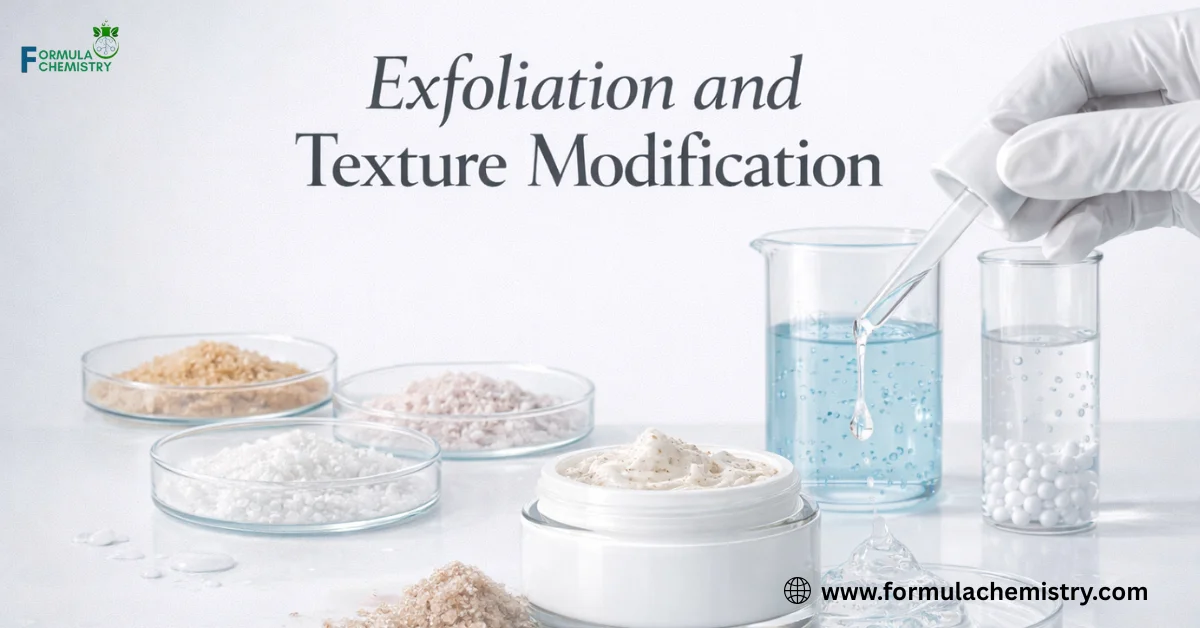
The primary reason formulators reach for Hydrated Silica is its ability to physically remove dead skin cells. The hardness of silica is sufficient to buff away the stratum corneum without being as jagged or damaging as crushed walnut shells or apricot kernels.
Manufacturers can control the particle size and shape precisely, creating spherical beads that roll over the skin rather than scratch it.In addition to scrubbing, finer grades of Hydrated Silica act as texturizers.
They can reduce the “tackiness” of heavy emulsions, giving lotions a drier, more powdery after-feel. Such sensory modification is particularly sought after in sunscreens and anhydrous balms, where a greasy residue is undesirable.
Formulating with Hydrated Silica: Effective Uses
When incorporating Hydrated Silica into a formulation, the most essential factor is suspension. Because silica particles are denser than water and insoluble, they will settle to the bottom of a low-viscosity liquid over time.
To prevent this, formulators must create a “yield stress” within the product a gel network that holds the particles in place. Common suspending agents include Xanthan Gum, Carbomers, or Acrylates Copolymer. For a standard face scrub, a yield stress modifier is essential.
The silica is typically added after the emulsification step (in creams) or dispersed into the surfactant phase (in gels) once the thickeners have been fully hydrated and neutralized.
Selecting the Correct Grade
Not all Hydrated Silica is created equal. Suppliers offer grades specifically designed for “high cleaning” (abrasive) or “high thickening” (absorption). Using a thickening grade when you want exfoliation will result in a stiff, paste-like product with no scrubbing power.
Conversely, using an abrasive grade for thickening will result in a gritty, unstable lotion. For a facial scrub, look for particles in the 100–200 micron range with a spherical morphology. For body scrubs, larger particles (300+ microns) are acceptable
. For toothpaste, a mixture of abrasive and thickening silicas is often used to clean teeth while maintaining the stripe structure of the paste.
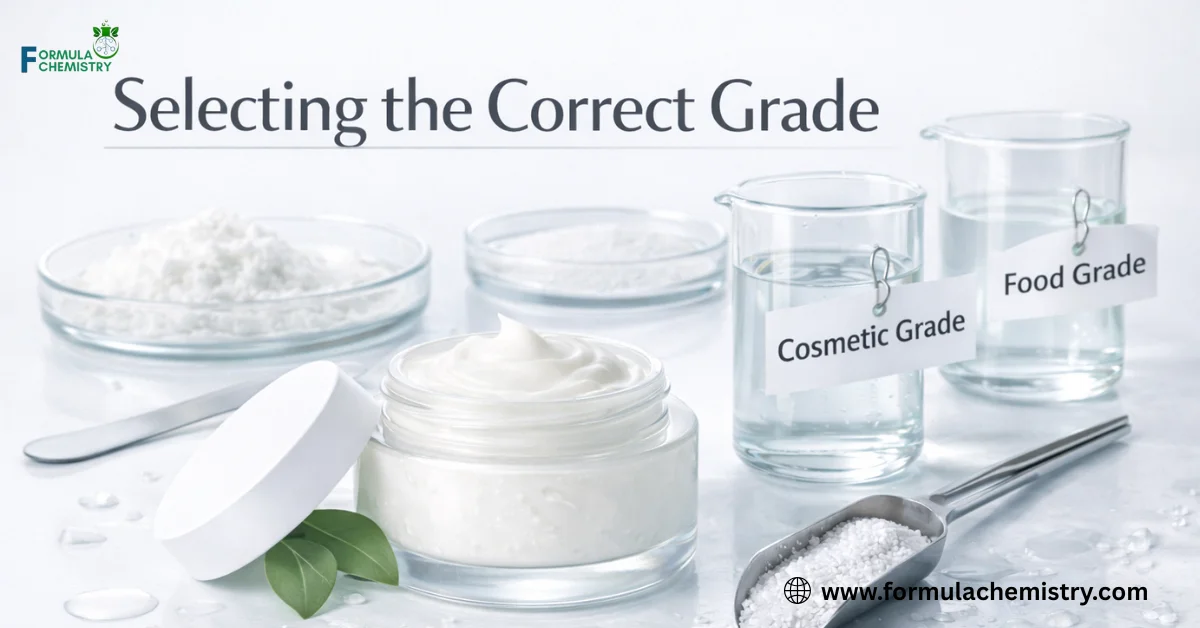
Table: Hydrated Silica vs. Other Physical Exfoliants
| Feature | Hydrated Silica | Jojoba Beads | Pumice | Sugar/Salt |
| Origin | Mineral (Synthesized) | Plant Wax (Ester) | Volcanic Rock | Food Grade Crystal |
| Hardness | Moderate | Low (Soft) | High (Hard) | Moderate (Dissolves) |
| Shape | Controlled/Spherical | Spherical | Irregular/Jagged | Cubic/Angular |
| Water Soluble | No | No | No | Yes |
| Eco-Friendly | Yes (Inert) | Yes (Biodegradable) | Yes (Natural) | Yes (Dissolves) |
| Best For | Face/Body/Teeth | Sensitive Face | Foot/Body | Body Scrubs |
Diagnosing Common Formulation Issues
Despite its chemical inertness, Hydrated Silica can present physical stability problems. One common problem is “hard settling,” where the silica forms a concrete-like layer at the bottom of the container that cannot be shaken back into suspension. This usually indicates insufficient yield value in the rheology modifier used.
Another issue is pH drift. While Hydrated Silica is generally neutral, some grades may have residual alkalinity from the manufacturing process. It is vital to check the pH of your final formulation and adjust it with Citric Acid or Lactic Acid to the skin-friendly range of pH 4.5 – 5.5 if necessary.
Common Problems and Fixes
- Problem: The scrub particles are sinking to the bottom.
- Fix: Increase the concentration of your suspending agent (e.g., Xanthan Gum or Carbomer). Ensure you are using a grade with high yield stress, not just high viscosity.
- Problem: The product feels too gritty or sharp on the skin.
- Fix: You may be using a grade with a large particle size or irregular shape meant for body use or industrial cleaning. Switch to a “micronized” or “spherical” grade designed for facial cosmetics.
- Problem: The lotion became incredibly thick and paste-like after adding Silica.
- Fix: You likely used a “thickening” grade instead of an “abrasive” grade. Check the supplier’s technical data sheet (TDS) for oil absorption capacity; lower absorption means less thickening.
- Problem: The pump dispenser is clogging.
- Fix: The particle size is too large for the pump mechanism. Switch to a tube or jar packaging, or reduce the particle size to <100 microns.
Safety and Regulatory Considerations
Hydrated Silica is widely recognized as safe (GRAS) by the FDA and is permitted in organic and natural certifications like COSMOS and ECOCERT. Unlike plastic microbeads, silica returns to the earth as harmless sand, posing no threat to marine life.
However, formulators must distinguish between amorphous silica (safe) and crystalline silica (respiratory hazard). Cosmetic grades are strictly amorphous. Even so, when handling the raw powder in the lab, always wear a dust mask to prevent inhalation irritation. Once wetted in the formula, there is no respiratory risk to the end user.
FAQ’s about Hydrated Silica in Skincare: Secret to Smooth and Radiant Skin
Is Hydrated Silica the same as silicones?
No. Hydrated Silica is a mineral derivative (silicon dioxide), similar to sand or quartz. Silicones (like Dimethicone) are synthetic polymers made of silicon, oxygen, carbon, and hydrogen. They have completely different functions; silica exfoliates or absorbs, while silicones condition and occlude.
Is Hydrated Silica safe for sensitive skin?
Generally, yes. Because it is chemically inert, it does not cause allergic reactions. However, the physical friction can irritate sensitive skin if the particle size is too large or if the user scrubs too hard. Using a fine, spherical grade is best for sensitive types.
Does Hydrated Silica clog pores?
No. Hydrated Silica is non-comedogenic. In fact, because of its high oil absorption capacity, it can help clear pores by absorbing excess sebum and mattifying the skin surface, making it excellent for acne-prone formulations.
Can I use Hydrated Silica in a daily cleanser?
Yes, provided the usage rate is low (e.g., 1% – 2%) and the particle size is small and smooth. Daily physical exfoliation can be damaging if the abrasive is too harsh, so gentle grades are essential for daily use products.
Is Hydrated Silica bad for the environment?
No. Hydrated Silica is a green alternative to plastic microbeads. It is derived from abundant mineral sources and is chemically identical to sand. It does not bioaccumulate in marine life and is considered environmentally benign.
How do I dissolve Hydrated Silica?
You cannot dissolve it in water or oil. Hydrated Silica is insoluble. It must be dispersed and suspended within the formula. If you need a soluble silicon source, you would look at specific silicone derivatives, though they function differently.
What is the difference between Silica and Hydrated Silica?
“Silica” usually refers to anhydrous silicon dioxide. “Hydrated Silica” contains water molecules within its crystal lattice. In cosmetics, Hydrated Silica is softer and less abrasive than anhydrous silica, making it better suited for toothpaste and mild skin exfoliation.
Can I use Hydrated Silica in anhydrous (water-free) products?
Yes. Hydrated Silica works well in oil-based balms and scrubs. Since it does not dissolve in oil, it remains suspended as an exfoliant. It can also help reduce the greasy feel of oils due to its absorption properties.