
Introduction
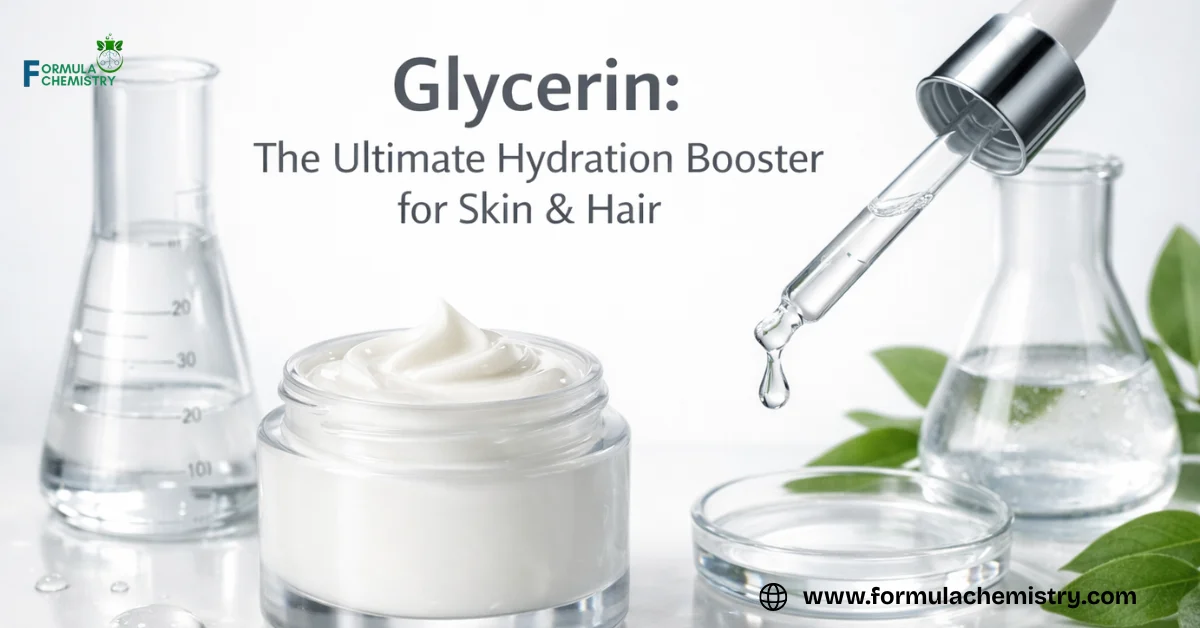
Glycerin, also known as glycerol, is a simple trihydroxy alcohol that functions as the backbone of formulation chemistry.
Being a powerful humectant, it possesses the unique ability to attract water from the atmosphere and deeper layers of the skin, locking it into the stratum corneum.
At FormulaChemistry, we recognize glycerin as one of the most reliable and versatile ingredients available to formulators and consumers alike. Its small molecular weight allows it to penetrate the skin barrier effectively, offering long-lasting hydration rather than a superficial film.
Quick Facts
- What it is: A natural, viscous, colorless, and odorless polyol (sugar alcohol).
- Who it’s for: Suitable for all skin types, especially dry, dehydrated, or compromised skin barriers.
- How to use: Must be diluted in water-based serums, creams, or hair conditioners.
- Usage range: Typically used at 2–10% in leave-on skin care and up to 5% in hair care.
- Solubility: Highly water-soluble; insoluble in oils.
- pH/Compatibility: Stable across a wide pH range (3.0–10.0) and compatible with most surfactants and actives.
- Common Mistake: Using it at 100% concentration, which can actually draw moisture out of the skin in dry environments.
- Safety Note: Always perform a patch test when using high concentrations to ensure no contact dermatitis occurs.
The Science of Humectancy
In the field of cosmetic science, glycerin is the gold standard by which all other humectants are measured.
It mimics the skin’s Natural Moisturizing Factor (NMF), helping to maintain the liquid crystal structure of the intercellular lipids. This makes sure that the skin barrier stays resilient against environmental aggressors.
FormulaChemistry provides practical formulation education and safety-forward guidance to help you understand how these molecules engage with human biology.
Beyond simple hydration, glycerin facilitates the sloughing of dead skin cells by activating proteases, leading to a smoother texture and improved elasticity over time.
What Are the Main Benefits of Glycerin for Skin and Hair?
Multi-Functional Skin Benefits
Glycerin serves as more than just a moisture magnet; it is a skin-identical ingredient that supports the desquamation process.
Sustaining optimal hydration levels allows the skin to exfoliate naturally, preventing the buildup of dry, flaky patches.
It is especially effective in treating xerosis and atopic dermatitis because it reinforces the lipid bilayer.
Common Problems and Fixes:
- Tacky/Sticky Feel: If a formula feels heavy, reduce the usage range to 3–5% or pair it with propanediol to improve the skin feel.
- Increased TEWL in Dry Climates: In humidity levels below 50%, glycerin can pull water from the dermis. Fix this by layering an occlusive (like petrolatum or squalane) over your glycerin-based serum.
- Formula Instability: Glycerin is highly stable, but ensure you include a broad-spectrum preservative in any water-based solution to prevent microbial growth.
Enhancing Hair Moisture and Elasticity
For hair care, glycerin acts as an effective conditioner that improves the “slip” and manageability of strands. It penetrates the hair shaft, drawing moisture into the cortex, which is essential for curly or high-porosity hair types that struggle to retain hydration.
When used in rinse-off products like deep conditioners, it helps prevent breakage by increasing fiber elasticity.
Those living in extremely arid (desert) climates should use glycerin-heavy hair products with caution, as they may strip moisture from the hair to hydrate the dry air. Conversely, in very high humidity, it can cause the hair shaft to swell and frizz.
Key warnings
include avoiding pure glycerin on hair, as it can cause “flash drying” if not properly formulated with water and emollients.
Formulation Guidelines and Compatibility
Optimal Usage and Concentration
Determining the correct concentration of glycerin is critical for the sensory profile of a product. While it is safe at high levels, the aesthetic “stickiness” usually limits its use in professional formulations.
For a lightweight daily facial serum, usage ranges of 2–5% are standard. For intensive body lotions or foot creams designed for cracked skin, usage ranges of 10–15% may be employed to maximize the therapeutic effect.
| Property | Specification/Detail |
| INCI Name | Glycerin |
| Physical Form | Clear, viscous liquid |
| Usage Rate | 2–10% (Typical) |
| Solubility | Water, Alcohol |
| Charge | Non-ionic |
| pH Stability | pH 3.0 to 10.0 |
| Heat Stability | Stable; can be added to the water phase before heating |
Synergy with Other Ingredients
Glycerin is a “team player” in cosmetic chemistry. It works synergistically with hyaluronic acid to provide multi-depth hydration hyaluronic acid stays closer to the surface due to its bigger molecular size, while glycerin penetrates deeper.
It also stabilizes certain active ingredients and can act as a solvent for botanical extracts (glycerites).
When formulating, remember that glycerin is non-ionic, meaning it won’t interfere with the charge of your emulsifiers or thickeners.
However, it can slightly reduce the foam volume in surfactant systems like shampoos or body washes if used at high levels (above 5%). pH notes show that while glycerin itself is chemically neutral, it remains stable even in highly acidic exfoliating toners or alkaline soaps.
Safety, Purity, and Best Practices
Understanding Source and Purity
Glycerin can be derived from animal fats (tallow), vegetable oils (soy, coconut, or palm), or synthetic petroleum sources. Most modern cosmetic-grade glycerin is vegetable-derived and must meet USP (United States Pharmacopeia) standards for purity.
This ensures the removal of impurities like diethylene glycol, which can be toxic if ingested or absorbed in massive quantities.
Formula Chemistry stresses the importance of using high-purity ingredients to avoid skin sensitization.
Who should avoid
glycerin? It is generally non-comedogenic and hypoallergenic, but individuals with a known rare allergy to glycerol should seek options such as sorbitol or butylene glycol. Always check the source if you require vegan-certified formulations.
Proper Storage and Preservation
Because glycerin is a humectant, it is hygroscopic it will literally suck moisture out of the air into its container if left open. This can dilute the product over time and introduce contaminants. Always store glycerin in a tightly sealed, cool, and dry environment.
Key warnings:
Glycerin itself does not require a preservative because it has low water activity at 100% concentration. However, as soon as you add it to a water-based formula, you MUST include a preservative system.
Glycerin provides a food source for certain microbes once diluted. Editorial responsibility at FormulaChemistry dictates that we remind all makers:
“A hydrated formula is a vulnerable formula.” Patch testing advice remains standard; apply a small amount of the diluted final product to the inner forearm for 24 hours to look for redness or itching.
FAQs about Glycerin: The Ultimate Hydration Booster for Skin & Hair
Is glycerin safe for acne-prone skin?
Yes. Glycerin is non-comedogenic, meaning it does not clog pores. It supports maintaining the moisture balance vital for skin healing without adding oil.
Can I apply pure glycerin directly to my face?
No. Direct application of 100% glycerin can cause irritation and actually dehydrate the skin by pulling water from the lower layers. Always dilute it to a maximum of 10% in a solution.
Is vegetable glycerin better than synthetic glycerin?
Chemically, they are identical. Vegetable glycerin is frequently preferred by consumers for its natural origin, but both provide the same hydration benefits.
Does glycerin cause frizz in hair?
In high humidity, glycerin can attract too much moisture to the hair, causing the cuticle to lift and frizz. In these conditions, use it sparingly or seal it with an oil.
What is the ideal pH for a glycerin serum?
Glycerin is stable across a wide range, but for skin health, a pH of 4.5–5.5 is ideal for the overall formulation to support the acid mantle.
Can glycerin replace a preservative?
No. While it has low water activity at very high concentrations, it is not an antimicrobial. You must use a dedicated preservative in any formula containing water and glycerin.
Is glycerin the same as hyaluronic acid?
No. They are both humectants, but glycerin is a smaller molecule that can penetrate deeper, whereas hyaluronic acid is a larger polymer that holds more water weight on the surface.
Who should avoid using glycerin?
Only those with a rare documented allergy to glycerol. It is otherwise one of the safest ingredients for all ages, including infants and those with sensitive skin.