
Introduction
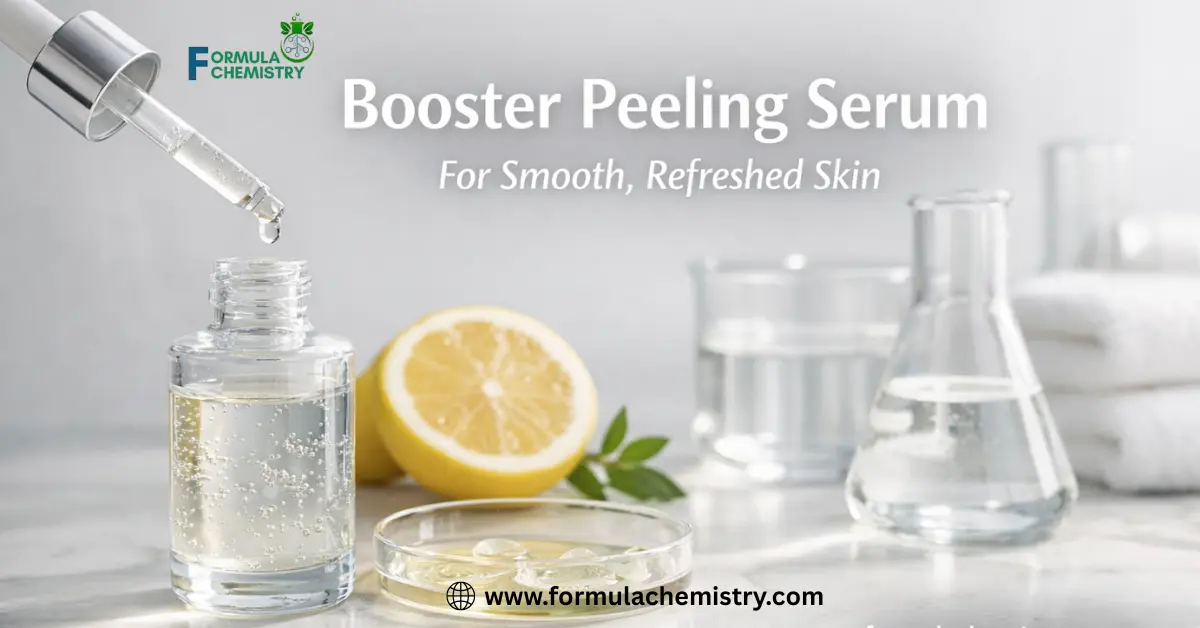
Creating a booster peeling serum is one of the most fulfilling projects for cosmetic formulators. These high-performance products are designed to accelerate cellular turnover, revealing smoother, brighter, and more refreshed skin. Unlike physical scrubs, which can cause micro-tears, chemical exfoliants dissolve the “glue” that holds dead skin cells together.
However, formulating with acids necessitates exactness. It is not simply about mixing ingredients; it entails mastering pH stability, solubility, and skin tolerance. A well-formulated booster serum balances efficacy with safety, making certain the skin barrier remains intact while delivering visible results.
This guide supplies the technical framework for creating a professional-grade peeling serum. From picking the right Alpha Hydroxy Acids (AHAs) to stabilizing the final product, we cover the essential steps to ensure your formulation is both safe and effective. Formula Chemistry provides practical formulation education and safety-forward guidance to help you deal with the complexities of cosmetic chemistry.
Quick Facts
- What It Is: A concentrated serum utilizing AHAs (like Glycolic or Lactic Acid) or BHAs (Salicylic Acid) to exfoliate the stratum corneum.
- Target Audience: Individuals with dullness, texture issues, hyperpigmentation, or congestion.
- Typical Usage Range: 5–10% for AHAs and 1–2% for BHAs in home-use products.
- Ideal pH: 3.5–4.0. A pH below 3.5 increases irritation risk; above 4.0 decreases efficacy.
- Key Compatibility: Do not use simultaneously with Retinol or strong Vitamin C serums to avoid barrier damage.
- Safety Note: Always perform a patch test prior to full application.
- Sunburn Alert: These products increase sun sensitivity. Daily SPF 30+ is mandatory during use.
- Formulation Tip: Always add acids to water, not water to acids, and use a buffer to adjust pH.
What Makes a Peeling Serum Effective?
Understanding the Mechanism of Chemical Exfoliation
To formulate a successful booster peeling serum, you must understand how chemical exfoliants interact with the skin. The main mechanism is desmolytic activity. Acids work by lowering the pH of the stratum corneum, which breaks the ionic bonds in desmosomes of the protein structures that anchor dead skin cells together.
Glycolic Acid
Derived fromsugar cane, it has the smallest molecular weight of all AHAs. This allows it to penetrate the skin rapidly, making it highly effective for texture and brightness. However, this rapid penetration can also cause irritation.
Lactic Acid:
On the other hand, it has a larger molecule and offers humectant properties, making it milder and more hydrating.
Salicylic Acid
(BHA) is oil-soluble, allowing it to penetrate into the pores to clear sebum and congestion. A comprehensive booster serum often combines these acids to target multiple skin concerns simultaneously. The goal is to achieve controlled exfoliation without inducing inflammation.
The Key Role of pH and Free Acid Value
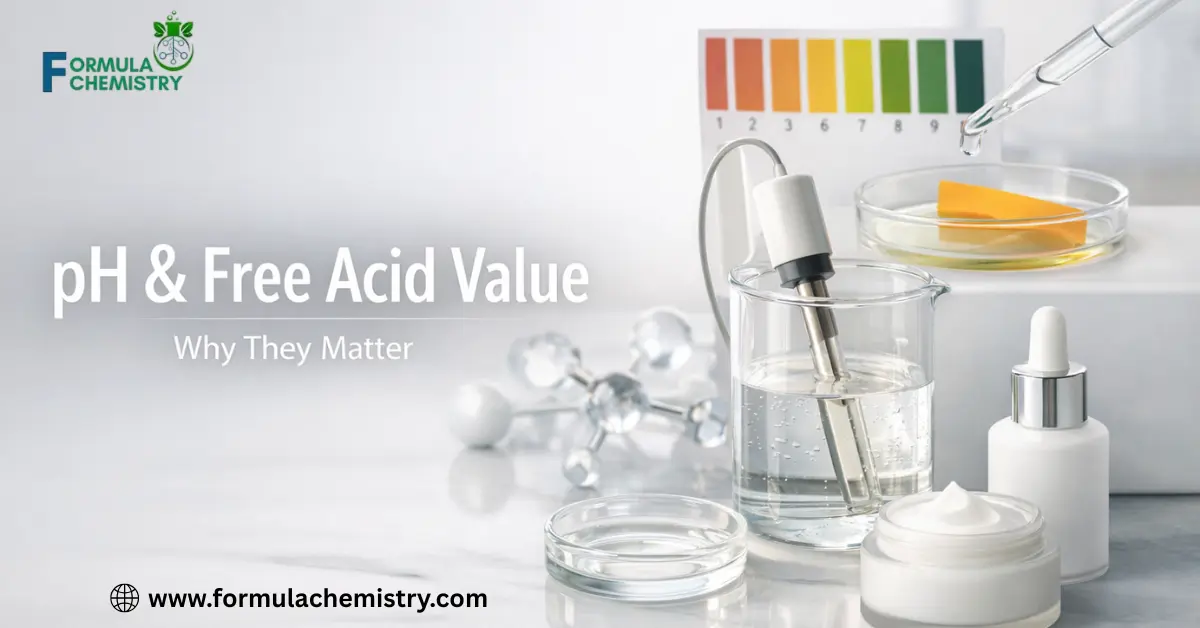
The efficacy of a peeling serum is entirely dependent on the relationship between concentration and pH. This concept is known as the Free Acid Value (FAV). If the pH of your formulation is too close to the pKa of the acid (usually around 3.8 for Glycolic Acid), only about 50% of the acid is “free” to exfoliate.
If you formulate a 10% Glycolic Acid serum but adjust the pH to 5.0, the product will be very mild but largely ineffective as a peel. Conversely, a pH of 2.0 would be incredibly potent but dangerous for consumer use.
For a safe, home-use booster, aim for a final pH of 3.5 to 4.0. This range strikes the best balance between safety and efficacy. You must use a pH meter, not litmus strips, for this degree of precision. To adjust the pH upward, a solution of Sodium Hydroxide or Arginine is typically used.
Key Ingredients for Formulation
Selecting Active Acids and Complementary Humectants
When designing your formula, the choice of acid defines the product’s character. For a “smooth and refreshed” claim, a combination of AHAs is often superior to a single acid. A common starting point is a mixture of 5% Lactic Acid (for surface hydration) and 2–3% Glycolic Acid (for depth).
Acids are drying by nature, so your water phase must contain strong humectants. Glycerin is the gold standard, usually used at 3–5%. Propanediol is also excellent in acid serums; it acts as a humectant, improves the texture (reducing stickiness), and boosts the efficacy of preservatives.
Hyaluronic Acid
(high molecular weight) is a popular addition. It forms a film on the skin surface that helps retain moisture during the exfoliation process. However, be mindful that highly acidic environments can sometimes degrade certain thickeners, so choose stability-tested grades of polymers.
Incorporating Soothing Agents and Preservatives
To reduce the “sting” associated with peeling serums, soothing agents are non-negotiable. Allantoin (used at 0.2–0.5%) is an effective anti-irritant that protects the skin barrier. Panthenol (Vitamin B5) is an additional powerhouse that reduces inflammation and accelerates healing.
Botanical extracts like Green Tea Extract or Chamomile can also be added, but make sure they are stable at a low pH. Unstable extracts can cause the serum to change color or precipitate over time.
Preservation is critical. Acidic formulations are generally less prone to bacterial proliferation than neutral ones, but mold and yeast can still thrive. You need a broad-spectrum preservative that is effective at pH 3.5–4.0. Sodium Benzoate and Potassium Sorbate are common choices for acid products, as are blends containing Phenoxyethanol.
Formulating and Troubleshooting
Best Practices for Mixing and Stability
The process of making a booster peeling serum is generally a “cold process” or a simple mix, provided all ingredients are water-soluble. Start by dissolving your humectants and soothing agents (like Allantoin) in distilled water.
Add your acids slowly. If you are using powdered acids (like Salicylic), they may require a solvent like Propanediol or a specific solubilizer before adding to the water phase. Once all actives are incorporated, measure the pH. It will likely be very low (around 1.5–2.0).
Buffer the solution by adding a base (like a 10% Sodium Hydroxide solution) drop by drop while stirring constantly. Check the pH frequently until you reach 3.5–3.8. Finally, add your preservative. Always re-check the pH after the preservative is added, as some preservatives can drift the pH.
Common Problems and Fixes
Formulating with acids presents definite challenges. The table below outlines common issues formulators face when creating peeling serums and how to resolve them.
| Problem | Potential Cause | Suggested Fix |
| Cloudiness | Salicylic Acid recrystallization or oil incompatibility. | Increase solubilizer (e.g., Propanediol or Polysorbate 20) or switch to water-soluble acids. |
| pH Drift | Inadequate buffering or interaction with packaging. | Use a buffer system (e.g., Sodium Citrate) and ensure packaging is acid-compatible (glass or PET). |
| Skin Stinging | Low pH or high Free Acid Value. | Raise pH to 3.8–4.0 or increase soothing agents like Bisabolol or Panthenol. |
| Viscosity Loss | Acid hydrolyzing the thickener (e.g., Xanthan Gum). | Use acid-stable gums (like Sclerotium Gum) or synthetic polymers designed for low pH. |
| Discoloration | Oxidation of botanical extracts or fragrance. | Add a chelator (e.g., Disodium EDTA) and keep botanical inputs low; store in opaque bottles. |
FAQ’s about Booster Peeling Serum For Smooth Refreshed Skin
How often should I use a booster peeling serum?
Beginners should start with 1–2 times per week in the evening. As the skin builds tolerance, usage can be increased to every other night. Over-exfoliation can damage the skin barrier, so listen to your skin.
Can I use this serum with Vitamin C?
It is generally not recommended to layer AHA/BHA serums directly with L-Ascorbic Acid (Vitamin C), as the combination can increase irritation. It is better to use Vitamin C in the morning and the peeling serum in the evening.
Do I need to rinse off a peeling serum?
Most booster serums are designed as “leave-on” products. However, if the concentration of acids is high (over 10%) or if your skin feels sensitive, you can rinse it off after 10–20 minutes to neutralize the activity.
What is the shelf life of a DIY peeling serum?
With proper preservation and broad-spectrum antimicrobials, a water-based serum typically lasts 3 to 6 months. Always store it in a cool, dark place and discard it if you notice any changes in smell, color, or texture.
Is this serum safe for pregnancy?
Glycolic and Lactic Acid are generally considered safe in low concentrations during pregnancy. However, Salicylic Acid (BHA) is often restricted or recommended only in very low percentages. Always consult a medical professional before use.
Why is my serum forming crystals at the bottom?
This usually happens with Salicylic Acid, which is difficult to keep dissolved in water. If crystals form, the acid is no longer in the solution, and the product should be discarded to avoid uneven application and irritation.
Can I use Retinol on the same night?
No. Using Retinol and exfoliating acids at the same time significantly increases the chance of irritation, redness, and peeling. Alternate nights: use the peeling serum one night and Retinol the next.
What should I do if my skin turns very red?
Wash the product off immediately with cool water. Apply a soothing, barrier-repair moisturizer or aloe vera. Discontinue use for at least a week and re-introduce patch testing on a less sensitive area before trying again.
- Salicyclic Acid Solubility in Glycerin, BG, and PEG-400
- Salicylic Acid Solubility in Propylene Glycol vs Ethanol
- Salicylic Acid Solubility in Water
- How to Use Salicylic Acid on Face: A Beginner’s Guide
- Salicylic Acid vs Benzoyl Peroxide Face Wash