

Introduction
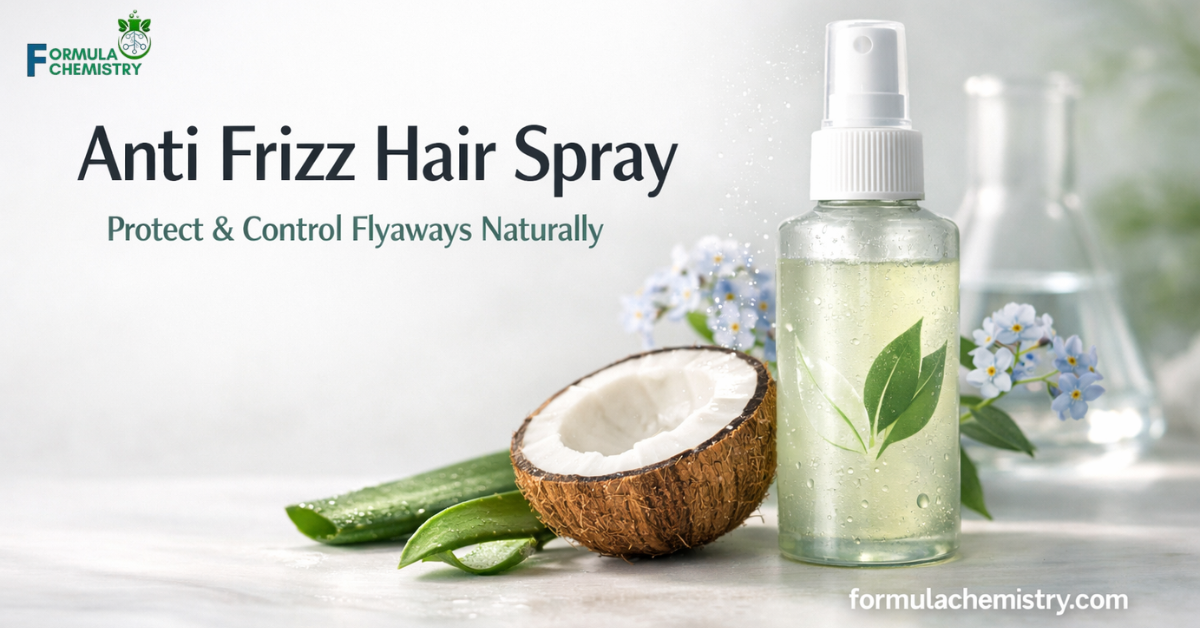
Frizz is the ultimate enemy of a polished look, caused by the hair strand reaching out to absorb moisture from the air. While commercial Hair sprays coat the hair in heavy silicones, a natural approach can effectively seal the cuticle without buildup.
By comprehending the formula chemistry of hair structure and humidity, you can create a lightweight shield that keeps strands smooth. This strategy makes certain that your hair remains breathable and healthy while staying perfectly styled.
This guide first explores the science of frizz control, then provides a DIY formula recipe using safe, natural ingredients to banish flyaways.
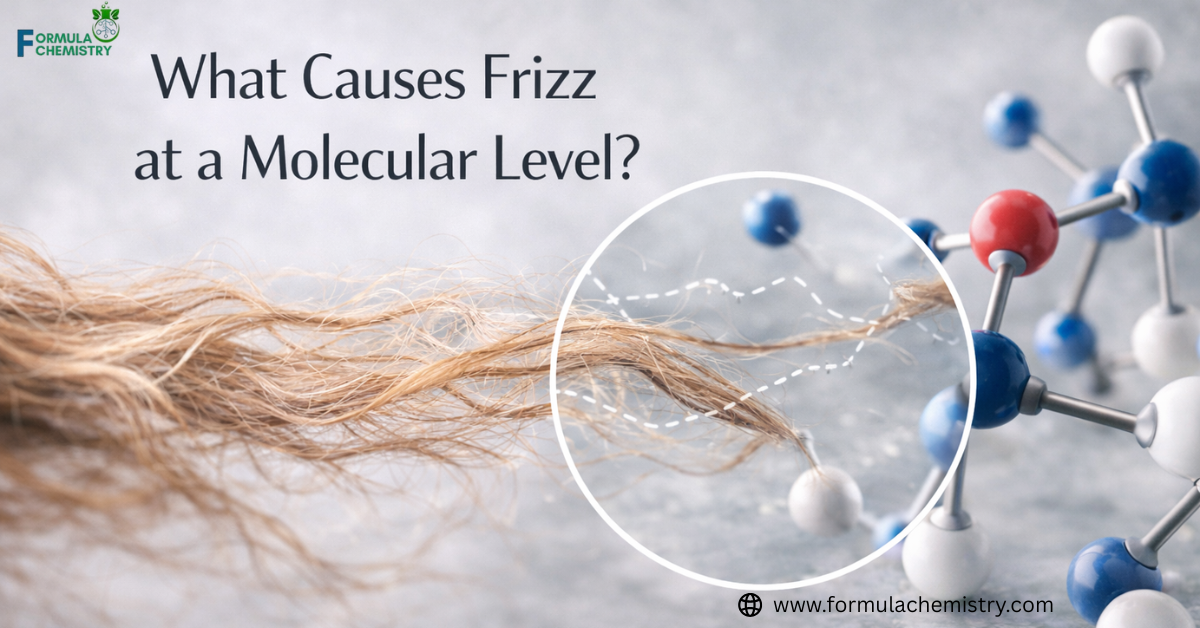
What Causes Frizz at a Molecular Level?
To stop frizz, you must first understand the microscopic reactions occurring between your hair keratin and the environment.
The Hydrogen Bond disruption
Hair is held together by various bonds, including weak hydrogen bonds. When humidity is high, water molecules in the air enter the hair shaft.
They disrupt the existing internal hydrogen bonds and form new, irregular ones. This swelling rearranges the hair structure, causing the chaotic texture we know as frizz and altering the chemical formula of your style.
The Lifted Cuticle
Healthy hair has a cuticle that lies flat, like shingles on a roof. Damaged hair has a raised cuticle.
This rough surface allows moisture to enter rapidly. A lifted cuticle also increases friction between strands, generating static electricity, which creates stubborn flyaways that refuse to lie flat.
Keep hair strong and skin healthy using Hydrolyzed Wheat Protein: Strength for Hair & Skin.
The Formula Chemistry of Frizz Control
Effective anti-frizz sprays work by creating a hydrophobic (water-repelling) film and neutralizing electrical charges.
Cationic Conditioning
Static is caused by a negative charge on the hair surface. To neutralize this, we use cationic (positively charged) ingredients.
In Formula Chemistry, ingredients like Honeyquat or certain hydrolyzed proteins carry this positive charge. They bind to the negatively charged damaged spots, neutralize static, and lay the cuticle flat immediately.
Occlusive Film Formers
To block humidity, you need a film former that seals the hair shaft.
Unlike heavy synthetic resins, natural film formers like Bamboo Bioferment or Aloe Vera polysaccharides create a flexible, breathable mesh. This mesh locks in internal moisture while keeping atmospheric moisture out.
Key Ingredients for Natural Static Guard
Formulating a spray requires selecting ingredients that deliver weightless hydration and slip without leaving the hair looking greasy.
Aloe Vera Juice
Aloe is highly effective in both Formula Chemistry skincare and haircare due to its polysaccharide content.
These sugars form a microscopic film over the hair strand. This film smooths the surface texture and provides a slight hold, keeping flyaways in place on the main body of the hair.
Hydrolyzed Wheat Protein
Proteins are too large to penetrate dry hair, but hydrolyzed versions are broken down into smaller amino acid chains.
They patch up the “holes” in a high-porosity cuticle. By filling these gaps, the protein strengthens the hair shaft and creates a smooth surface that reflects light rather than scattering it.
The Role of pH in Hair Smoothness
The acidity of your product is the “invisible hand” that determines whether the cuticle opens or closes.
The Isoelectric Point
Hair naturally has a pH of around 3.67 to 5.5. This is its isoelectric point, where it is strongest and smoothest.
Your chemical formula must be pH-balanced within this range. If the spray is too alkaline (pH above 7), it will physically lift the cuticle, increasing friction and causing frizz.
Using Apple Cider Vinegar
A tiny amount of ACV or Citric Acid is often added to DIY sprays to lower the pH.
This acidity constricts the cuticle scales, locking them down tight. A closed cuticle is the secret to high-shine, glass like hair that resists humidity.
Formula Chemistry DIY: The Ultimate Anti-Frizz Recipe
This recipe uses a biphasic approach, or a solubilized oil system, to deliver moisture and protection simultaneously.
The Base: Hydration Phase
- Distilled Water: 70%
- Aloe Vera Juice: 20%
- Vegetable Glycerin: 2% (A humectant to draw moisture into the hair, but keep low to avoid a sticky feel).
The Active: Protection Phase
- Argan Oil or Camellia Seed Oil: 3% (Lightweight lipids that imitate natural sebum).
- Polysorbate 20: 4% (A solubilizer to mix the oil into the water).
- Vitamin E: 0.5% (Antioxidant to protect the oils).
- Broad Spectrum Preservative: 0.5% (Vital for safety).
Instructions
- Mix the water, aloe, and glycerin in a beaker.
- In a separate vessel, mix the oils with Polysorbate 20 until cloudy/milky.
- Pour the oil phase into the water phase and stir gently.
- Check pH and adjust to 4.5-5.0.
Customizing the Chemical Formula for Your Hair Type
One size does not fit all; the ingredient ratio must be adjusted based on the diameter and density of your hair strands.
For Fine, Limp Hair
Fine hair is easily weighed down by oils.
Reduce the oil content to 1% or swap Argan Oil for a lighter ester, such as Isoamyl Laurate. Increase the Aloe Vera percentage to provide structure and volume without the grease.
For Thick, Coarse Curls
Coarse hair requires stronger occlusion to prevent moisture loss.
Increase the oil phase to 5% and consider adding a heavier butter, like Shea Oil. You can also increase the Glycerin to 4% for added manageability and softness.
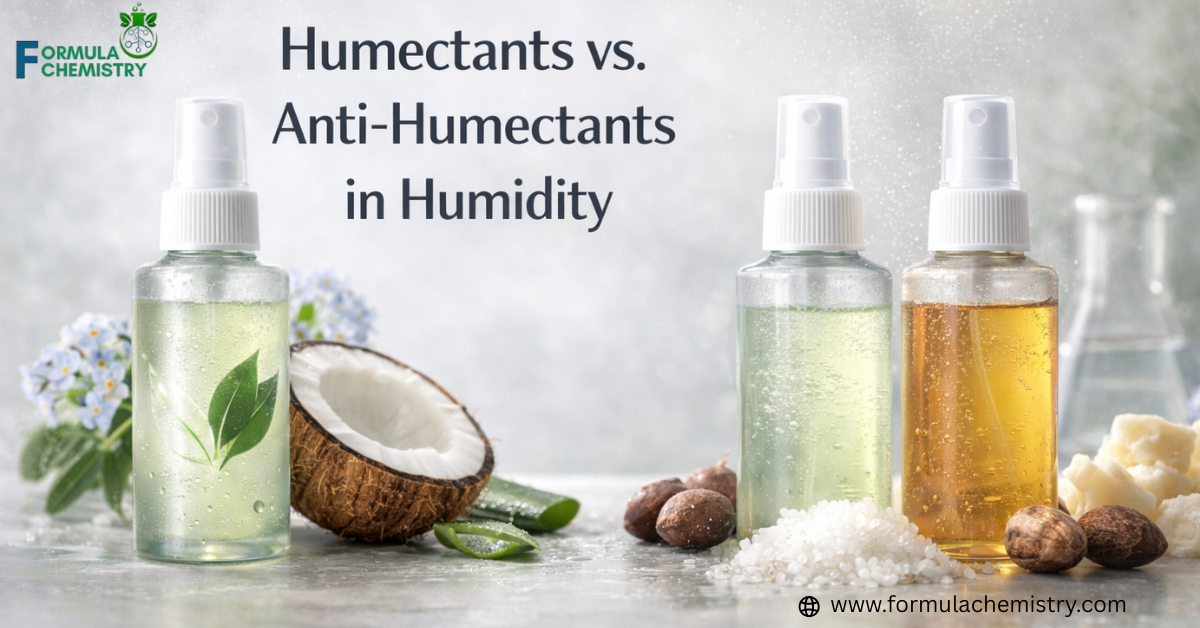
Humectants vs. Anti-Humectants in Humidity
Understanding the weather is important; using the wrong chemistry formula on a rainy day can result in a “pouf” ball.
The Glycerin Dilemma
Glycerin is a humectant, meaning it grabs water. In dry weather, it grabs water from the air and gives it to your hair (good).
In high humidity (dew point above 60°F), Glycerin grabs too much water from the air, causing the hair to swell and frizz. In these conditions, lower the humectants and increase the oils (anti-humectants).
Alternative Humectants
If you live in a humid climate, swap Glycerin for Panthenol (Vitamin B5).
Panthenol binds to the hair shaft efficiently yet is less reactive to atmospheric moisture levels, delivering a more consistent finish regardless of the weather forecast.
Style and care in one step with Nourishing Hair Wax, Strengthen & Protect with Botanical Care.
Boosting Gloss with Natural Silicones
Silicones like Dimethicone are popular because they shine, but they can build up. Nature offers eco-friendly substitutes.
Broccoli Seed Oil
Often called “nature’s silicone,” this oil is high in erucic acid.
Its unique fatty acid profile allows it to coat hair with a high-gloss sheen that mimics the slip of synthetic silicones without the environmental impact or buildup.
Bamboo Bioferment
This ingredient is derived from macerated bamboo leaves.
It provides a natural slip and creates a microscopic lattice on the hair. This is consistent with Formula Chemistry skincare principles of using fermentation to create bioavailable, effective textures.
Application Techniques for Maximum Control
How you apply the product changes how the formula chemistry interacts with the hair surface.
The “Prayer Hands” Method
Spray the product into your palms first, then rub them together.
Glide your hands over your hair in a praying motion from mid-lengths to ends. This physically smooths the cuticle while depositing the product, guaranteeing uniform distribution without saturating the roots.
Damp vs. Dry Application
Applying to damp hair locks in the water from your shower.
Applying to dry hair acts as a finishing shield. For severe frizz, use the spray on damp hair to prime, and then a tiny amount on dry hair to tame any remaining flyaways.
Safety and Preservation of DIY Sprays
Just because it is for your hair doesn’t mean you can skip the preservative; water-based sprays are prone to spoilage.
Why Vitamin E is Not Enough
Vitamin E is an antioxidant, meaning it stops oils from going rancid. It is not a preservative.
It does not kill bacteria or mold. Without a broad-spectrum preservative, for example, Liquid Germall Plus or Geogard, your DIY spray will grow dangerous microbes within a week.
Disinfection Guidelines
Always sanitize your bottles and beakers with 70% alcohol before mixing.
Use distilled water, not tap water. Tap water contains minerals and possible contaminants that are able to weaken the chemical formula and accelerate bacterial growth.
Conclusion
Creating your own anti-frizz hair spray is a perfect example of how Formula Chemistry DIY enables you to take control of your beauty routine.
By balancing cationic charges, selecting the right oils, and respecting your hair’s pH, you can formulate a product that rivals high-end salon brands.
Adopt the science of smooth hair, and say goodbye to bad hair days forever.
FAQ’s about Anti Frizz Hair Spray
Can I use fresh Aloe Vera gel from the plant?
No, fresh aloe vera contains enzymes and organic material that rot incredibly fast, even with preservatives. For a stable Formula Chemistry DIY product, always use a cosmetic-grade, refined Aloe Vera juice or powder that has been processed for stability.
Will this spray make my hair greasy?
If formulated correctly with a solubilizer (like Polysorbate 20) and lightweight oils, it should not be greasy. If you find it heavy, reduce the oil percentage in your recipe or focus application only on the ends of your hair.
Can I use this spray as a heat protectant?
While oils like Argan offer mild protection, this specific water-based formula is not a dedicated heat protectant. For heat styling (flat irons), you need a specific chemical formula containing silicones or high-heat polymers to prevent the water in your hair from boiling.
Why does my spray separate into layers?
This happens if you don’t use an emulsifier or solubilizer. Oil and water do not mix naturally. You must shake it before every use, or add Polysorbate 20 or Solubol to create a stable, homogenous mixture.
Is glycerin bad for frizzy hair?
Glycerin is good for hydration but tricky for frizz. In very humid weather, it pulls excess moisture into the hair, causing swelling (frizz). In very dry weather, it can pull moisture out of the hair. Use it in moderation or pair it with strong occlusives (oils) to seal it in.
How long will my DIY hair spray last?
If you use distilled water, sanitize your equipment, and include a broad-spectrum preservative at the correct percentage, your spray should last 3 to 6 months. Without a preservative, it must be refrigerated and used within 5-7 days.
Can I add essential oils for scent?
Yes, essential oils like Lavender or Rosemary are great additions. However, they are oils, so they must be mixed with the solubilizer before adding to the water phase to ensure they disperse safely throughout the formula.
What acts as a natural detangler in this recipe?
The Aloe Vera juice and the cationic ingredients (if you add Honeyquat or Hydrolyzed Protein) provide “slip.” This reduces friction between strands, allowing a comb to pass through easily and preventing mechanical damage that can cause future frizz.