
Introduction
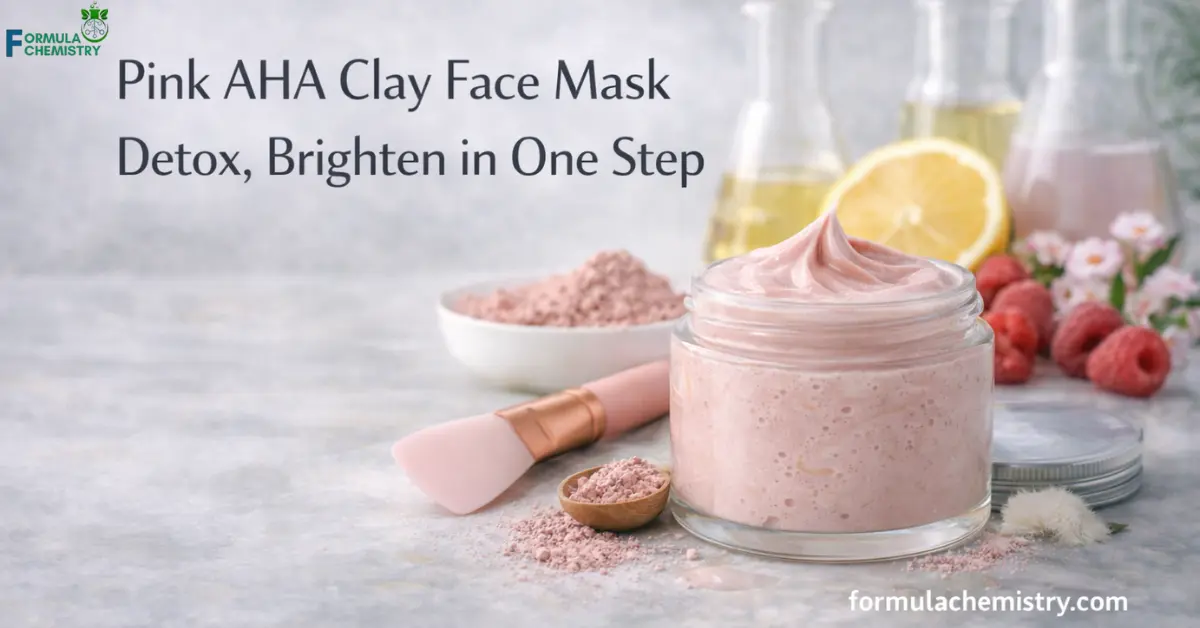
Dullness and congestion are often two sides of the same coin, yet most products treat them separately. A Pink AHA Clay Mask revolutionizes this by combining physical detoxification with chemical exfoliation in a single, elegant treatment.
By understanding the formula chemistry behind this hybrid product, you can unlock a complexion that is both deeply purified and instantly brighter. This mask relies on a delicate balance of ingredients to lift impurities while dissolving dead skin cells.
Here is your comprehensive guide to the science, benefits, and formulation secrets of the Pink AHA Clay Mask, designed to give you professional results at home.
What Defines a Pink AHA Clay Mask?
This product category combines two powerful skincare mechanisms: absorption and dissolution.
The Hybrid Mechanism
Standard clay masks absorb oil, while acid peels exfoliate. A Pink AHA Mask does both simultaneously.
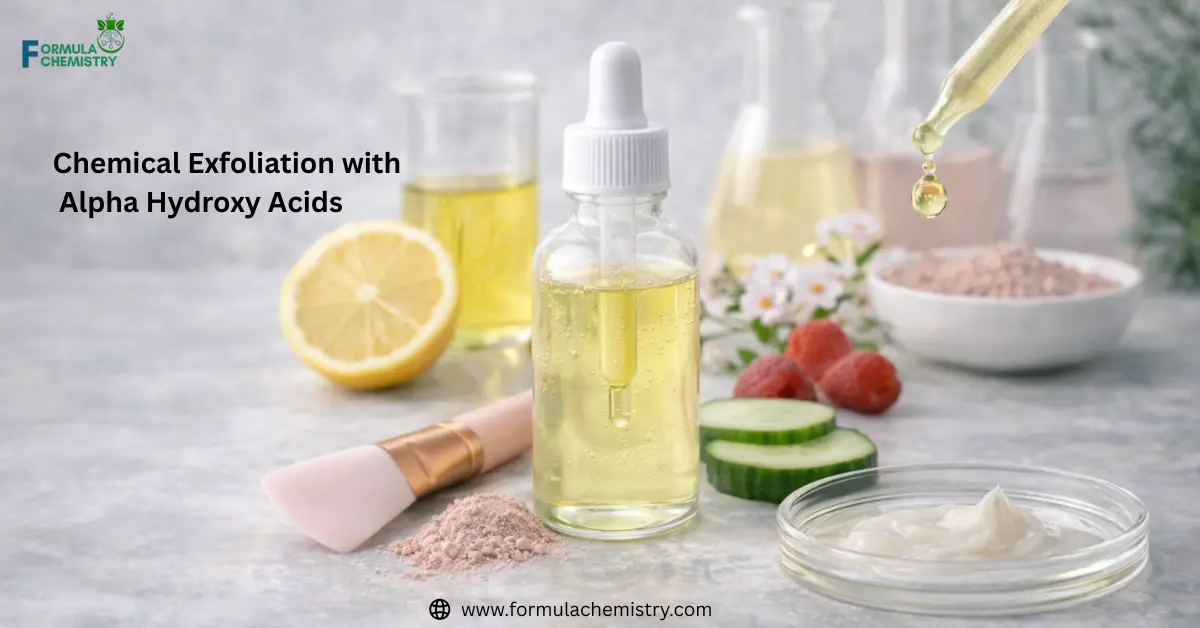
It utilizes the clay’s absorbent structure to pull debris from pores, while Alpha Hydroxy Acids (AHAs) chemically break the bonds that hold dead skin to the surface. This dual-action approach creates a smoother, more radiant canvas.
The “Pink” Component
Pink clay is typically a blend of White Kaolin and Red Iron Oxide (Illite).
In Formula Chemistry skincare, this specific blend is chosen for its gentleness. Unlike aggressive green clays, the pink variant balances its chemical formula for sensitive, dry skin types that need brightening without stripping.
The Science of Detoxification: Clay Mechanics
The “detox” claim in skincare is often marketing fluff, but clays have legitimate physical and chemical properties that can cleanse.
Adsorption vs. Absorption
Clays work through adsorption (impurities stick to the surface) and absorption (impurities are soaked into the structure).
The chemical formula of clay minerals typically carries a negative electrical charge. This acts like a magnet for positively charged toxins, heavy metals, and excess sebum, physically lifting them from the skin surface.
Ionic Exchange
When wet, the clay undergoes an ionic exchange.
It releases beneficial minerals, such as silica and calcium, onto the skin while swapping them for the impurities it traps. This mineralizing effect is crucial for strengthening the barrier during cleansing.
Chemical Exfoliation with Alpha Hydroxy Acids
To brighten the skin, we must remove the dull, dead keratinocytes that scatter light unevenly.
Dissolving the Desmosomes
AHAs, such as Lactic or Glycolic Acid, target the “glue” (desmosomes) between cells.
By temporarily lowering the skin’s pH, these acids break the ionic bonds within this glue. This allows the dead cells to slough off effortlessly when you rinse the mask away, revealing fresh tissue underneath.
Hydration via Acids
Certain AHAs, specifically Lactic Acid, act as both humectants and exfoliators.
In Formula Chemistry, this is vital. While the clay removes oil, the acid binds water to the skin cells, preventing the mask from completely drying out the face.
The Formula Chemistry Challenge: pH Balance
Formulating a clay mask with acids is chemically difficult because these two ingredients naturally oppose each other on the pH scale.
The Alkaline-Acid Conflict
Clays are naturally alkaline (pH 8-9), while AHAs need acidity (pH 3-4) to work.
Mixing clay and acids can neutralize the acid, making exfoliation ineffective. Buffering keeps pH optimal for both.
Buffering Agents
To solve this, formulators use buffers such as sodium citrate.
These ingredients stabilize the pH environment. This ensures that when you apply the mask, the AHAs remain potent enough to brighten, while the clay continues to absorb oil.
Formula Chemistry DIY: Crafting Your Own Mask
You can create a fresh, potent version of this mask at home, provided you respect the delicate balance of the ingredients.
Ingredient Selection
- Pink Clay (Kaolin/Illite): The base for gentle detox.
- Fruit Acid Complex (Liquid): A safe source of AHAs for Formula Chemistry DIY.
- Glycerin: Prevents the clay from cracking.
- Preservative: Essential for any water-containing product.
The Mixing Protocol
- Water Phase: Dissolve the fruit acids and glycerin in distilled water. Check that the pH is around 4.5.
- Clay Phase: Slowly sift the pink clay into the water phase while stirring to prevent clumps.
- Add a broad-spectrum preservative; this is essential because wet clay easily grows bacteria.
Pink Clay vs. Other Clays: Why Choose Pink?
Not all clays interact with the skin in the same way; the mineral composition determines the treatment’s intensity.
Gentleness Factor
Green Bentonite swelling clays effectively rip oil from the pores. This is great for severe acne but damaging for dull, dry skin.
Pink clay has a lower cation exchange capacity. This means its chemical formula is less aggressive, making it the superior choice for a “brightening” mask focused on radiance rather than oil control.
Iron Oxide Benefits
The red hue in pink clay comes from naturally occurring Iron Oxide.
Iron Oxides may offer mild blue light protection and boost skin barrier resilience.
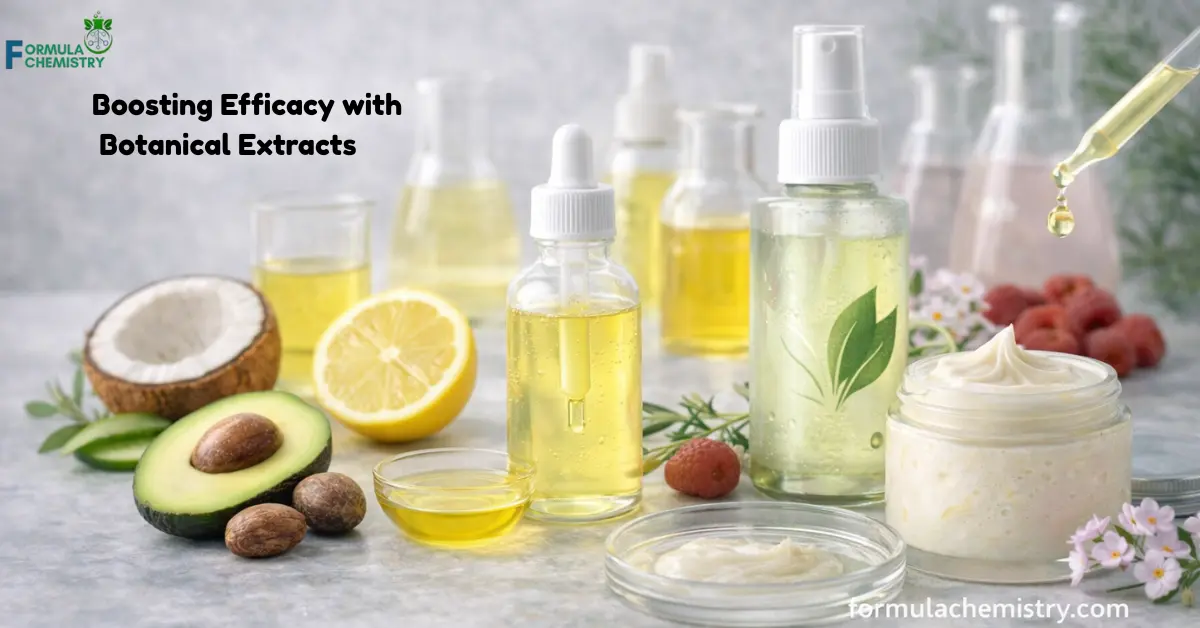
Boosting Efficacy with Botanical Extracts
To bolster the “brightening” claim, modern formulations include plant extracts that inhibit melanin production.
Licorice Root Extract
Licorice contains Glabridin, a potent tyrosinase inhibitor.
Adding this to your chemistry formula helps reduce melanin production. While the AHAs remove existing dark spots, Licorice prevents new ones from forming.
Rosehip and Hibiscus
Hibiscus is often called “nature’s Botox” and contains natural organic acids.
Rosehip oil adds trans-retinoic acid. Combined with hibiscus, these boost turnover and skin elasticity.
Preservation and Stability in Clay Formulations
One of the hardest challenges in cosmetic science is keeping a wet clay mask free from mold and bacteria.
Water Activity Management
Clay binds water, but not tightly enough to stop microbial growth.
In Formula Chemistry, we use chelating agents like Sodium Phytate. These bind the naturally occurring metal ions in clay, which would otherwise feed bacteria and destabilize preservatives.
Choosing the Right Preservative
Natural preservatives often fail in clay masks due to the high mineral content.
Robust systems like Phenoxyethanol and Ethylhexylglycerin are often required to ensure the safety of the chemical formula over a shelf life of 6 to 12 months.
How to Use for Maximum Brightening
Technique matters; letting a clay mask crack and crumble on your face actually causes dehydration and irritation.
The “Touch Dry” Rule
Remove the mask when it is sticky to the touch, not bone dry.
When clay dries completely, it starts drawing moisture out of the living skin cells (osmosis). Rinse while it is still damp to get the detox benefits without the dehydration damage.
Post-Mask Care
After rinsing, your skin is primed and slightly acidic.
Immediately apply a hydrating serum and a lipid-rich moisturizer. This seals in moisture and protects the fresh cells revealed by AHAs, completing the Formula Chemistry skincare cycle.
Safety Precautions and Sensitivity
Combining acids and clays is potent; understanding your skin’s tolerance is key to avoiding barrier damage.
Patch Testing
Always apply a small amount to your neck before using it on your face.
The AHAs in the formula can cause tingling. However, if you feel burning, the chemistry formula might have a pH that is too low for your specific skin type.
Frequency of Use
This is not a daily product.
Because it combines two forms of intensity (absorption and exfoliation), limit use to once or twice a week. Overuse disrupts the lipid barrier, leading to the opposite of the desired glow.
Conclusion
The Pink AHA Clay Face Mask is a triumph of balance, merging the earthy power of clay with the precision of chemical exfoliation.
By carefully selecting compatible ingredients and managing the pH, formula chemistry turns simple powders and acids into a spa-quality treatment.
Whether you purchase a lab-formulated tube or experiment with Formula Chemistry DIY, this pink powerhouse is the most efficient way to reset, detox, and brighten your skin in a single step.
| Ingredient | Function | Weight % | Amount (ml/g) |
|---|
⚠ Professional Lab Verification Required
- Water Percentage (q.s.): Distilled water is listed as a starting estimate. In a real laboratory batch, water is added q.s. (quantity sufficient) after all other ingredients are accurately weighed to bring the total to exactly 100%.
- pH Adjustment: Sodium hydroxide and citric acid percentages are formulation starting points only. Every real batch must be verified and corrected using a calibrated pH meter to hit the target pH range precisely.
- Preservation Efficacy: Preservative performance must be validated through Challenge Testing (PET) as per ISO 11930 before any commercial or consumer use of this formulation.
- Stability Testing: This formula requires accelerated stability testing at 4°C, 25°C, and 40°C over a minimum of 12 weeks to confirm physical, chemical, and microbiological stability before market release.
FAQ’s about Pink AHA Clay Face Mask
Can I use a Pink AHA Clay mask if I have dry skin?
Yes, Pink Clay is specifically recommended for dry or sensitive skin because it is a mix of Red and White clays, which are less drying than Green or Bentonite clays. Adding AHAs helps remove dry, flaky patches, but rinse them off before they fully dry to prevent moisture loss.
How often should I use this mask?
Due to the exfoliating nature of the AHAs, you should use this mask no more than 1 to 2 times a week. Overusing clay and acids together can strip the skin’s natural oils and disrupt the acid mantle, leading to irritation and redness.
Why does my face tingle when I apply the mask?
Tingling is a normal reaction to the Alpha Hydroxy Acids (AHAs) in the chemical formula. It indicates that the acids are penetrating the skin and lowering the pH to dissolve dead skin cells. However, if the sensation turns into a burning pain, wash it off immediately.
Can I mix raw apple cider vinegar into my DIY clay mask?
It is not recommended. Raw vinegar has an unpredictable pH and high acidity that can be too harsh when combined with the drying effects of clay. In Formula Chemistry DIY, it is safer to use standardized fruit acid extracts or lactic acid, as their concentrations are controlled.
Will this mask fade my acne scars?
Yes, over time. AHAs (such as glycolic or lactic acid) increase cell turnover, helping fade post-inflammatory hyperpigmentation (dark spots). The clay helps reduce the inflammation of active breakouts, creating a dual-action approach to clearer skin.
Do I need to use a toner after this mask?
Yes, using a hydrating, alcohol-free toner is beneficial. It helps remove any lingering clay residue and immediately restores the skin’s hydration levels. Look for soothing ingredients like Aloe or Glycerin to calm the skin after the active treatment.
Why is the pH of the mask important?
The pH determines if the acids will work. If the mask is too alkaline (common with clays), the AHAs will be neutralized, preventing exfoliation. A professionally formulated Pink AHA mask uses buffers to maintain a slightly acidic environment, ensuring the formula’s chemistry remains effective.
Can I use Vitamin C after this mask?
It is best to avoid strong actives like Vitamin C or Retinol immediately after an AHA clay mask, as this can lead to over-exfoliation and sensitivity. Instead, focus on barrier repair ingredients like Hyaluronic Acid, Ceramides, or Niacinamide to soothe and hydrate.