

Introduction
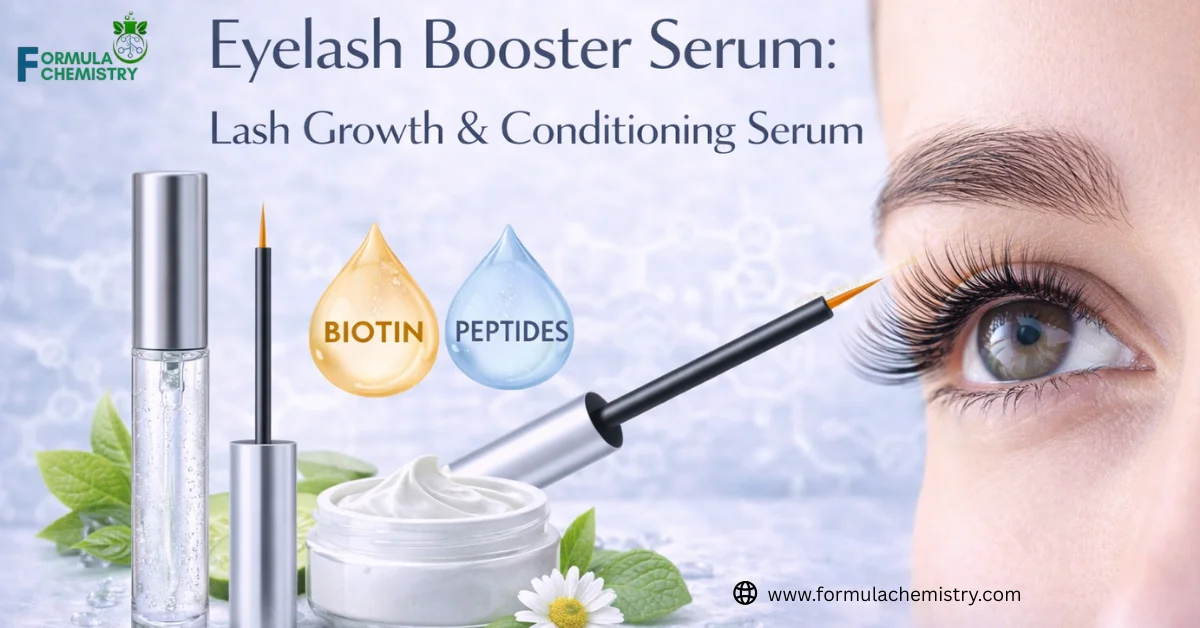
Long, fluttery lashes are a universal beauty standard, but achieving them commonly entails damaging extensions or messy glues. The modern solution lies in science-Eyelash booster serums that work with your hair’s natural growth cycle.
By comprehending the biological mechanisms of hair follicles, we can select ingredients that extend the growth phase and reinforce the hair shaft. It isn’t magic; it is a precise formula chemistry applied to the delicate eye area.
This guide examines the science behind lash enhancement, investigating the ingredients that truly work and how to formulate or choose a serum that delivers safe, dramatic results.
What Defines an Effective Eyelash Booster Serum?
To understand how a serum works, you must first understand the biological lifecycle of your eyelashes and how topical products influence it.
The Anagen Growth Phase
Your lashes go through three phases: Anagen (growth), Catagen (transition), and Telogen (resting/shedding). The goal of a growth serum is to prolong the Anagen phase.
By keeping the follicle active for a longer duration, the lash grows longer than it genetically would before falling out. This requires specific signaling molecules found in advanced Formula Chemistry skincare formulations.
Conditioning vs. Growing
There is a distinct difference between growing new lashes and preserving the ones you have.
Conditioning serums use humectants and lipids to prevent breakage. If your lashes are brittle, they snap before reaching full length. A balanced chemical formula addresses both growth stimulation and physical strength.
The Chemistry Formula of Peptide Signaling
Modern lash serums have moved away from drugs toward peptides—short chains of amino acids that act as cellular messengers.
Myristoyl Pentapeptide-17
This is the gold standard in non-prescription lash enhancement. It is a bioavailable lipo-peptide utilized to stimulate keratin genes.
Keratin is the structural protein of hair. By communicating with the follicle to produce more keratin, this chemical formula results in thicker, denser lashes without the side effects of pharmaceutical agents.
Biotinoyl Tripeptide-1
Often paired with Panthenol, this peptide targets the hair bulb to anchor the lash more firmly.
It reduces the rate of shedding. By keeping the lash anchored in the follicle longer, you naturally accumulate more lashes at once, creating a fuller, more voluminous appearance.
Conditioning Agents in Formula Chemistry Skincare
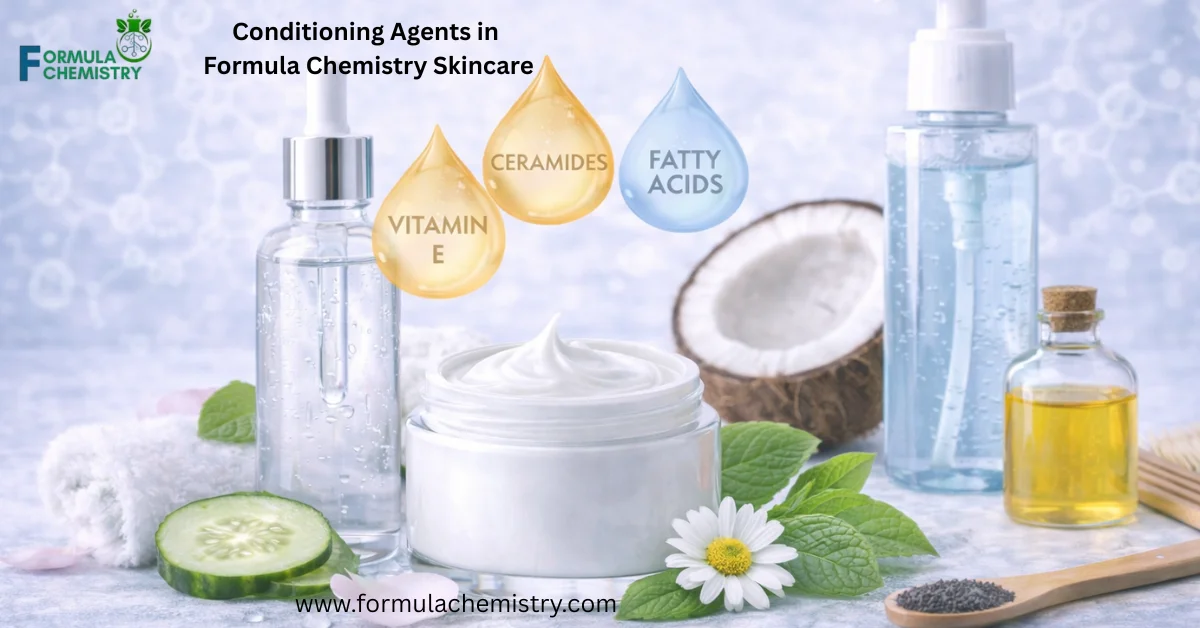
While peptides handle the growth, conditioning agents ensure the lash remains flexible, shiny, and resistant to mechanical stress.
Panthenol (Pro-Vitamin B5)
Panthenol is a humectant that penetrates the hair shaft. Once inside, it converts to Pantothenic Acid.
This improves the flexibility of the lash. In the world of formula chemistry, flexibility equals strength; a flexible lash bends under the pressure of a curler, whereas a dry lash snaps off.
Hyaluronic Acid and Glycerin
Lashes need water, scientific skincare formulations, their shape, and luster.
These humectants bind water to the keratin fibers. This hydration prevents the cuticle from lifting, guaranteeing the lash looks smooth and glossy rather than frizzy or dull.
Understanding Prostaglandin Analogues and Risks
The most potent growth serums on the market rely on prostaglandins, yet they carry a unique set of risks that every consumer must understand.
The Mechanism of Bimatoprost
Originally developed for glaucoma, prostaglandin analogues (like Bimatoprost or Isopropyl Cloprostenate) drastically extend the Anagen phase.
They alter the chemical formula of the follicle’s timing. Even though effective, they are drugs, not cosmetics, and need cautious management to prevent adverse reactions.
Potential Side Effects
Prostaglandins can cause orbital fat loss (sunken eyes) and permanent darkening of the iris.
For individuals looking for safe Formula Chemistry skincare, we generally recommend peptide-based serums. They may take longer to show results, but they carry none of the risks associated with changing eye pressure or pigmentation.
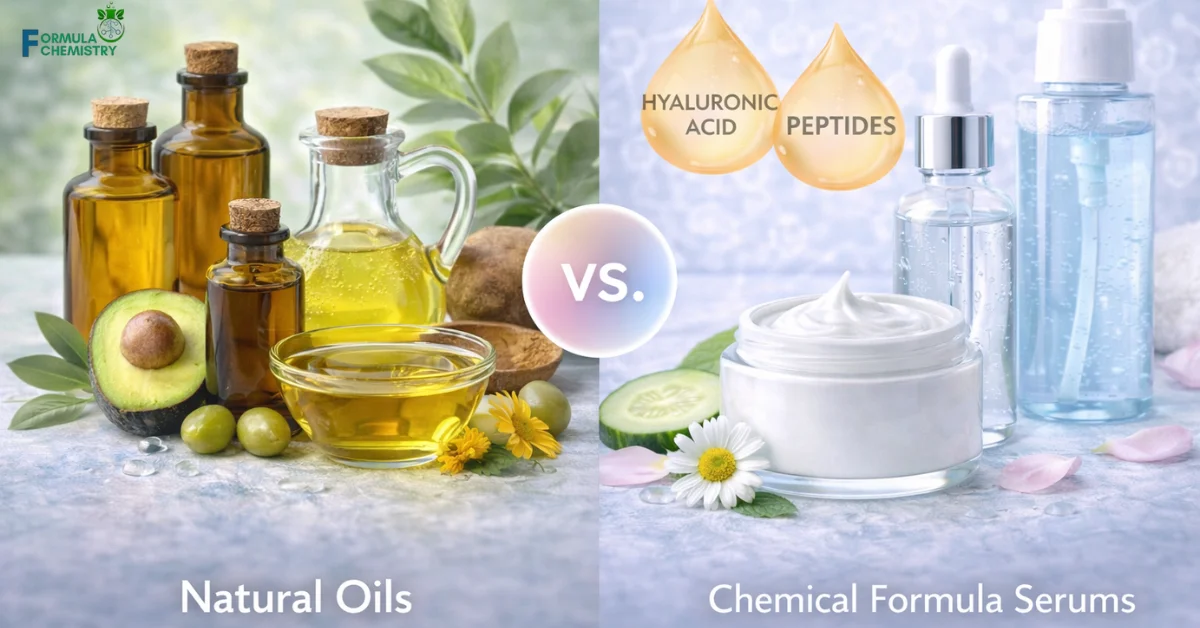
Natural Oils vs. Chemical Formula Serums
There is a persistent myth that kitchen oils can grow lashes, but the science tells a subtler story regarding their performance.
The Truth About Castor Oil
Castor oil is rich in Ricinoleic Acid, a unique fatty acid.
While it does not chemically stimulate the follicle to grow, it is an incredible occlusive. It coats the lash, retaining hydration and providing a glossy sheen that makes lashes appear thicker instantly.
Vitamin E (Tocopherol)
Vitamin E is an antioxidant that protects the hair follicle from oxidative stress caused by UV rays and pollution.
In a Formula Chemistry DIY blend, it acts as a preservative for the oils and a conditioner for the lashes, reducing brittleness and bolstering overall follicle health.
Formula Chemistry DIY: Making a Safe Lash Serum
Creating your own lash serum allows you to control the ingredients, but safety and hygiene are of utmost importance when working near the eye.
A Simple Peptide Formulation
For a high-performance DIY serum, you can purchase water-soluble peptides like Capixyl or Widelash from cosmetic suppliers.
- Base: Distilled Water (90%)
- Active: Peptide Complex (5%)
- Humectant: Glycerin (4%)
- Preservative: Liquid Germall Plus (0.5%)
The Oil-Based Alternative
For a purely conditioning treatment, an anhydrous (water-free) formula is easier and requires no preservative (though an antioxidant is recommended).
- Recipe: 50% Castor Oil + 45% Argan Oil + 5% Vitamin E.
- Function: This seals the lashes overnight, preventing breakage from friction against your pillow.
How to Apply for Maximum Absorption
The best serum will fail if it is applied to dirty skin or the wrong part of the eye; technique is everything.
Root Application
Growth serums must reach the hair bulb. Applying them to the tips of the lashes does nothing for growth.
Apply a thin line along the upper lash line, similar to eyeliner. This places the formula chemistry directly over the follicle where the active ingredients are needed.
Clean, Dry Canvas
Eye creams and oils create a barrier.
Always apply your lash serum first, immediately after cleansing and drying your face. Let it dry for 90 seconds before applying other skincare products to ensure the actives penetrate without obstruction.
Safety Procedures for Eye Area Formulations
The eye is the most sensitive mucous membrane on the body; formulating for it requires strict observance of safety standards.
pH and Tear Compatibility
The pH of human tears is approximately 7.0 to 7.4.
Any product applied near the eye needs to correspond to this neutral pH. If your Formula Chemistry DIY serum is too acidic or too alkaline, it will cause immediate stinging, watering, and possible irritation.
Preservation is absolutely essential
Mascara wands and eyeliner brushes introduce bacteria into the product each time they are used.
You must use a broad-spectrum preservative effective against bacteria and mold. Never use fresh food ingredients (like aloe gel from a plant) in an eye product, as the risk of infection is too high.
Assessing Results and Managing Expectations
Patience is required when working with the natural growth cycles of the body; hair growth is a slow biological process.
The Timeline of Growth
Peptide serums typically require 4 to 8 weeks to show visible results.
The first sign is usually less shedding. Length follows later as the Anagen phase extends. Inconsistency interferes with the chemical formula signaling, resetting the clock on your progress.
The Maintenance Phase
Once you achieve your desired length, you cannot stop using the serum.
If you discontinue use, the follicles return to their normal genetic cycle. The long lashes will eventually shed and be replaced by your natural, shorter lashes. Maintenance requires application 2-3 times a week.
Troubleshooting Sensitivity and Irritation
Even the gentlest ingredients can irritate the eye area; knowing how to react saves your skin from dermatitis.
Redness along the Lash Line
This is often caused by applying too much product.
The skin can only absorb so much. Excess serum drips into the eye or sits on the skin, causing inflammation. Use the “one dip” rule: one dip of the wand is enough for both eyes.
Darkening of the Eyelid
Prostaglandin serums can cause hyperpigmentation on the eyelid skin.
If you notice a red or brown line forming where you apply the serum, stop immediately. In most cases, this side effect reverses once the chemical formula is no longer present in the tissue.
Conclusion
An eyelash booster serum is a triumph of modern cosmetic science, delivering a minimally intrusive path to dramatic, fluttery lashes.
By choosing a product with the right combination of peptides for growth and lipids for conditioning, you respect the delicate formula chemistry of the eye area.
Whether you invest in a clinical tube or carefully create a Formula Chemistry DIY blend, consistency and safety are your best tools for achieving the lashes of your dreams.
| Ingredient | Function | Weight % | Amount (ml/g) |
|---|
⚠ Professional Lab Verification Required
- Water Percentage (q.s.): Distilled water is listed as a starting estimate. In a real laboratory batch, water is added q.s. (quantity sufficient) after all other ingredients are accurately weighed to bring the total to exactly 100%.
- pH Adjustment: Citric acid and sodium hydroxide percentages are formulation starting points only. Every real batch must be verified and corrected using a calibrated pH meter to hit the target pH range precisely.
- Eye Safety: All ingredients must be verified as ophthalmologically tested and safe for use in the periocular area. Any ingredient applied near the eye must comply with EU Cosmetics Regulation Annex III periocular restrictions.
- Preservation Efficacy: Preservative performance must be validated through Challenge Testing (PET) as per ISO 11930 before any commercial or consumer use of this formulation.
- Stability Testing: This formula requires accelerated stability testing at 4°C, 25°C, and 40°C over a minimum of 12 weeks to confirm physical, chemical, and microbiological stability before market release.
FAQ’s about Eyelash Booster Serum: Lash Growth & Conditioning Serum
Can I use lash serum with eyelash extensions?
Yes, but you must choose an oil-free serum. Oils break down the cyanoacrylate glue used to bond extensions. A water-based peptide serum is ideal as it strengthens the natural lash, helping it support the burden of the extension without causing premature shedding.
Does castor oil actually make lashes grow?
Scientifically, no. Castor oil does not contain ingredients that signal the follicle to extend the growth phase. However, it is an excellent conditioner that prevents breakage. Stopping lashes from snapping allows them to reach their full potential length, giving the illusion of growth.
Is it safe to use lash serum on my eyebrows?
Absolutely. The hair follicles in the eyebrows function similarly to eyelashes. Applying a peptide-based lash serum to sparse areas of the brows can stimulate density and help recover from over-plucking, though the skin on the brow is thicker and may require a generous application.
What happens if I stop using the serum?
Lash serums are not permanent fixes. They work by artificially extending the growth phase. Once you stop the chemical formula signal, your lashes will revert to their natural growth cycle. Over a few weeks, the long lashes will shed and be replaced by your natural length.
Can I make a lash serum with just water and vitamins?
No, vitamins alone in water will spoil within days. Water is a breeding ground for bacteria, which can cause serious eye infections. Any water-based Formula Chemistry DIY project requires a strong, broad-spectrum preservative to ensure safety.
Why do my eyes itch after applying serum?
Itching can be a sign of a mild allergic reaction or simply applying too much product. Try reducing the amount you use. If the itching persists or is accompanied by redness and swelling, you may be allergic to a preservative or the active peptide, and you should discontinue use.
How long does one tube of serum usually last?
A standard 3ml tube of lash serum should last between 3 and 4 months if used daily. You only need a tiny amount. If you are running out faster than this, you are likely over-applying, which wastes product and increases the chance of irritation.
Are peptide serums safer than prostaglandin serums?
Generally, yes. Peptide serums (like those with Myristoyl Pentapeptide-17) work by nourishing and activating the follicle naturally. Prostaglandin serums are pharmaceutical derivatives that carry risks of changing iris color and causing fat loss around the eyes, making peptides the safer choice for casual users.