
Introduction
The quest for the best skincare brand frequently seems like a moving target. In 2026, the landscape has changed from flashy “miracle” marketing toward science-backed formulations, biocompatible actives, and transparent chemistry.
Choosing a brand is no longer just about the logo on the bottle; it is about the molecular weight of the ingredients, the pH stability of the formula, as well as the ethical footprint of the manufacturing process.
Formula Chemistry provides practical formulation education and safety-forward guidance to help you chart these complex choices. Whether you are looking for medical-grade potency or cost-effective barrier repair, the “best” brand is the one whose chemistry matches your specific skin physiology. This guide breaks down the top-tier brands of 2026 based on formulation integrity, ingredient purity, and clinical efficacy.
Quick Answer
- Best Overall Brand: SkinCeuticals remains the industry gold standard for antioxidant research and patented stabilization (specifically their 15% L-Ascorbic Acid at pH <3.5).
- Best for Barrier Repair: CeraVe is unmatched for its use of MVE technology and a bio-identical ratio of Ceramides (1, 3, 6-II).
- Best Budget Science: The Ordinary offers high-potency single-molecule serums (e.g., 10% Niacinamide) with a focus on raw material transparency.
- Best for Sensitive Skin: La Roche-Posay utilizes prebiotic thermal water and formulas tested on reactive skin to minimize inflammatory response.
- Best Medical Grade: SkinMedica leads in growth factor technology and regenerative protein complexes for mature skin.
- Best K-Beauty Innovation: Round Lab and Torriden are top 2026 picks for low-molecular-weight Hyaluronic Acid and birch juice-based hydration.
- Safety Note: Always perform a patch test on the inner forearm for 24–48 hours before applying high-active formulas (like 20% Vitamin C or Tretinoin) to the face.
What Defines the Best Skincare Brand in 2026?
The criteria for excellence in skincare have evolved. Consumers and chemists now prioritize bio-availability the ability of an active ingredient to actually reach its target site in the skin. A brand is only as good as its delivery system.
In 2026, we look for encapsulated retinoids to reduce irritation and penetration enhancers (like Ethoxydiglycol) that ensure water-soluble actives cross the lipid barrier effectively.
Efficacy and Ingredient Purity
A top-tier brand must prove its potency through independent clinical trials, not just consumer perception surveys. We look for brands that disclose the percentage of actives used. For example, a “Vitamin C serum” is only effective if the L-Ascorbic Acid is present at a range of 10% to 20%.
Anything less may be ineffective; anything more significantly increases the chance of irritation and acid mantle disruption. Purity also extends to the absence of unnecessary “filler” fragrances and essential oils that can cause allergic contact dermatitis.
Formulation Stability and pH Balance
The best brands understand that chemistry is sensitive. Antioxidants such as Vitamin C and Resveratrol degrade quickly when exposed to light and air, requiring airless pump packaging or dark amber glass. Furthermore, pH balance is mandatory.
An exfoliant like Salicylic Acid (BHA) must be formulated at a pH between 3.0 and 4.0 to be “free” enough to penetrate pores. If a brand doesn’t respect these chemical constraints, the product is functionally inert.
Comparison of Leading Skincare Brands by Category
| Brand | Primary Focus | Key Active Range | Best For | Typical pH |
| SkinCeuticals | Preventative | 15% Vit C / 1% Retinol | Anti-aging | 2.5 – 3.5 |
| CeraVe | Barrier Health | 1-3% Ceramides | Dry/Sensitive | 5.0 – 6.0 |
| Paula’s Choice | Problem Solving | 2% BHA / 10% Azelaic | Acne/Texture | 3.2 – 3.8 |
| The Ordinary | Minimalist | 10% Niacinamide | Budget-conscious | Varies |
| SkinMedica | Regenerative | Growth Factors | Mature Skin | 6.0 – 7.5 |
| EltaMD | Sun Protection | 9% Zinc Oxide | All Skin Types | 7.0 – 8.0 |
Common Problems and Fixes in Brand Selection
Many users experience “brand hopping” because they don’t see results, but the issue frequently lies in formulation incompatibility rather than the brand itself.
- Problem: Pilling (Product Rolling Off). * Fix: This usually happens when a silicone-based primer is layered over a water-based serum. Check the INCI list for Dimethicone or Cyclopentasiloxane and ensure your base layers have fully dried before applying occlusives.
- Problem: Increased Sensitivity or Redness.
- Fix: You may be “over-activating.” If using a company recognized for high-potency actives (like The Ordinary or Paula’s Choice), avoid using multiple acids in the same routine. Stick to one exfoliating acid at a time.
- Problem: Product Turning Brown (Oxidation).
- Fix: This is common with L-Ascorbic Acid. If your serum changes color, the Vitamin C has oxidized and may generate pro-oxidant damage. Store these products in a cool, dark place and use within 3–4 months.
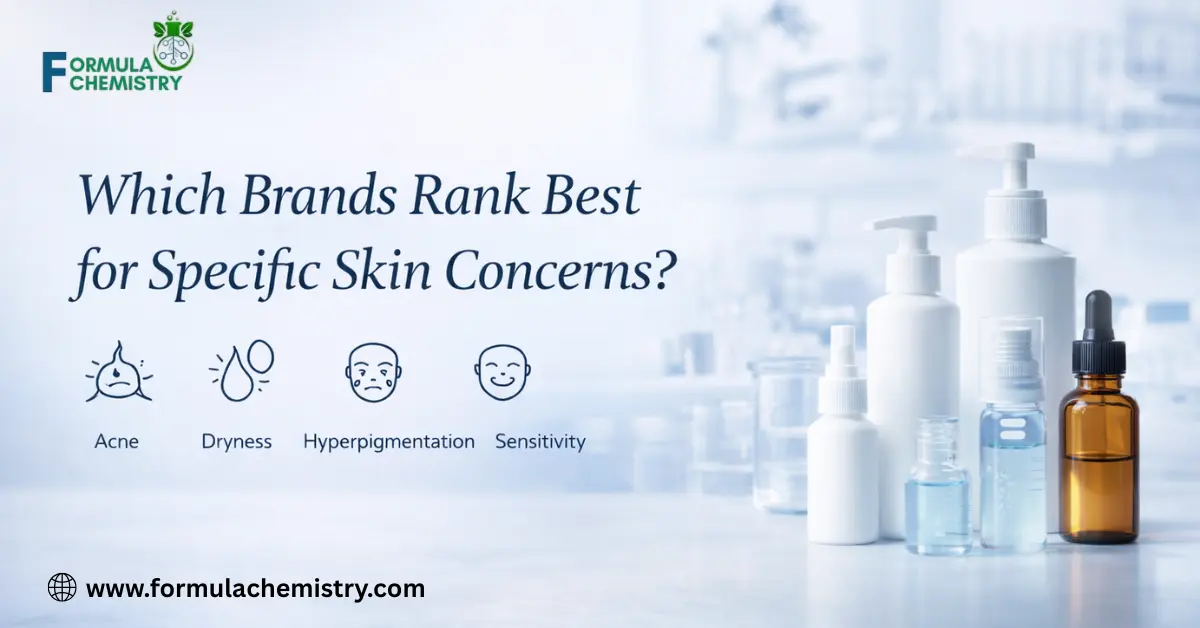
Which Brands Rank Best for Specific Skin Concerns?
Identifying the best brand requires matching its “hero” ingredients to your skin’s biological needs. In 2026, specialization is the trend; few brands excel at everything, but many dominate a specific niche.
Best for Acne and Congested Pores
Paula’s Choice remains the leader here due to its sophisticated understanding of Beta Hydroxy Acids (BHA). Unlike many drugstore brands that use harsh alcohols to deliver Salicylic Acid, Paula’s Choice uses Methylpropanediol to enhance penetration without drying the skin.
For those with hormonal acne, brands like SkinCeuticals offer specialized Silymarin (Milk Thistle) formulations that prevent oil oxidation before it turns into a blemish.
Best for Aging and Texture Repair
For deep-set wrinkles and loss of elasticity, SkinMedica and Augustinus Bader are the frontrunners. SkinMedica’s TNS Advanced+ Serum uses next-generation growth factors that mimic the skin’s natural repair signals.
Meanwhile, Augustinus Bader relies on TFC8® technology, a complex of amino acids and vitamins that directs key nutrients to the skin cells.
While these are prestige-priced, the concentration of peptides and biocompatible lipids justifies the investment by those valuing the importance of skin longevity.
Safety Warning:
High-concentration Retinoids (Vitamin A) and Alpha Hydroxy Acids (AHA) should be avoided by those with compromised barriers or active eczema. Always introduce these activities slowly—starting 1–2 times per week.
How to Evaluate a Brand’s Formulation Integrity?
As a consumer or budding formulator, you should look past the “hero” ingredient and examine the supporting cast.
The best brands use high-quality humectants, emollients, and preservatives to ensure the active performs its job safely.
The Role of Preservation and Surfactants
Any water-based product (serums, lotions, cleansers) must be properly preserved to prevent microbial growth. Look for brands that use stable systems like Phenoxyethanol or Ethylhexylglycerin.
If a brand claims to be “preservative-free” but contains water, it is a major safety risk. Additionally, look for gentle surfactants in cleansers, such as Coco-Glucoside or Sodium Cocoyl Isethionate, which clean the skin without stripping the vital acid mantle.
Transparency and Ethics
In 2026, the best brands are those that provide a full INCI breakdown and explain the purpose of each chemical.
Brands like Drunk Elephant popularized “clean” beauty, but the industry has moved toward “conscious” beauty where synthetic ingredients are accepted for their steadiness and safety, provided they are non-toxic.
Responsible procurement of Mica, Squalane (look for plant-derived), and Palm Oil derivatives is also a hallmark of a top-tier modern brand.
FAQs about What Is the Best Skincare Brand?
Is medical-grade skincare better than drugstore brands?
Medical-grade brands frequently have higher concentrations of actives and better delivery systems (penetration enhancers), but many drugstore brands like CeraVe or La Roche-Posay offer superior barrier-repair chemistry at a fraction of the cost.
What is the safest brand for sensitive skin?
Vanicream and La Roche-Posay are widely considered the safest. They avoid common irritants like fragrance, dyes, parabens, and lanolin, concentrating instead on soothing agents like Allantoin and Madecassoside.
Why are some brands so expensive?
Luxury pricing frequently reflects the cost of patented technology, clinical testing, and stabilization (keeping volatile ingredients like Vitamin C active). However, you are often also paying for brand value and custom packaging.
Can I mix products from different brands?
Yes, but be careful with active overlaps. For example, using a Niacinamide serum from Brand A and a moisturizer with high Niacinamide from Brand B can lead to flushing or irritation if the total percentage exceeds 10%.
Which brand is best for “Glass Skin”?
Korean brands like Round Lab, Anua, and Beauty of Joseon are the gold standard for the “Glass Skin” look, as they focus on multi-layer hydration and fermented ingredients like Galactomyces.
Are “natural” brands better for the skin?
Not necessarily. Many natural brands use essential oils (like Lavender or Lemon), which are highly sensitizing and can cause phototoxicity. Synthetic ingredients are often more stable and predictable in their effect on skin.
When should I avoid highly active brands?
Avoid high-potency brands (like The Ordinary or SkinCeuticals peels) if your skin is currently sunburned, peeling, or if you have a damaged skin barrier (stinging when you apply plain moisturizer).
How long should I test a brand before switching?
Skin cells take approximately 28 to 40 days to turn over. You should use a regular routine from a brand for at least 6 to 8 weeks to see visible changes in texture, tone, or fine lines.