

Introduction
Skincare is often dismissed as a mere cosmetic pursuit, yet from a cosmetic formulation perspective, it is a critical practice in maintaining the biological integrity of the body’s largest organ.
The skin serves as a complex interface between our internal systems and a harsh external environment.
Without a structured regimen, the acid mantle a fine, slightly acidic film on the skin’s surface can become compromised, leading to transepidermal water loss (TEWL) and chronic inflammation.
Understanding the “why” behind skincare requires a look at the cellular level. Every day, the skin battles UV radiation, particulate matter, and oxidative stress.
A well-designed routine doesn’t just “beautify”; it provides the necessary lipids, antioxidants, and humectants to support the skin’s natural repair mechanisms.
At Formula Chemistry, we provide practical formulation education and safety-forward guidance to help you understand the science behind every ingredient you apply.
Quick Facts
- What it is: A systematic approach to maintaining skin barrier health and preventing premature aging.
- Who it’s for: All individuals, regardless of age or skin type, seeking to prevent dermatological issues.
- How to use: Consistency is key; a basic routine involves cleansing, hydrating, and protecting.
- Usage Range: Active ingredients like Retinol should start at 0.1% to 0.3% for beginners to avoid irritation.
- pH Importance: Most facial cleansers should be formulated at a pH of 4.5 to 5.5 to match the skin’s natural acidity.
- Common Mistakes: Over-exfoliating with acids or neglecting SPF while using photosensitizing actives.
- Safety Note: Always perform a patch test on the inner forearm for 24 hours before introducing a new formula.
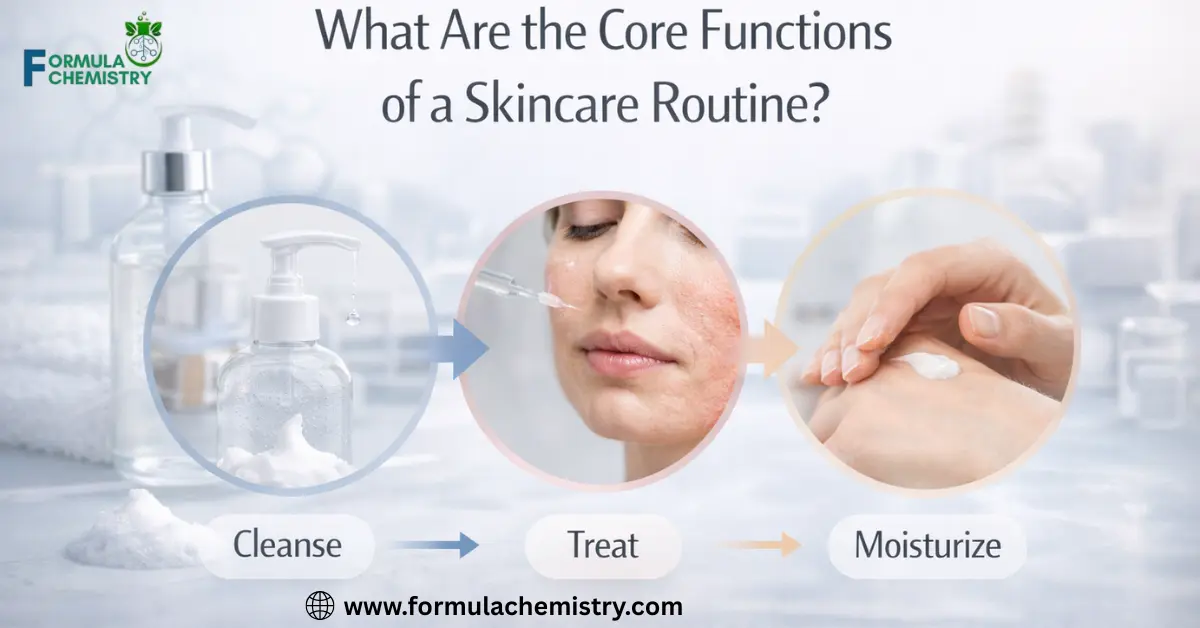
What Are the Core Functions of a Skincare Routine?
The primary goal of any skincare intervention is to support the stratum corneum, the outermost layer of the epidermis.
This layer acts as a brick-and-mortar structure where skin cells (corneocytes) are the bricks and intercellular lipids (ceramides, cholesterol, and fatty acids) are the mortar. When this structure is intact, the skin remains hydrated and resilient. When it is disrupted, pathogens and allergens can penetrate the deeper layers of the dermis.
Protection Against Environmental Aggressors
Environmental stressors, specifically UVA and UVB rays, are responsible for up to 80% of visible skin aging.
A skincare routine rich in broad-spectrum sunscreen and antioxidants (like Vitamin C or Ferulic Acid) neutralizes free radicals produced by pollution and sun exposure. Without this protection, the skin undergoes collagen degradation, leading to fine lines, loss of elasticity, and hyperpigmentation.
Maintenance of Homeostasis and Hydration
The skin must maintain a specific moisture balance to function correctly. Humectants like Glycerin and Hyaluronic Acid draw water into the skin, while occlusives like Petrolatum or Shea Butter seal it in.
This balance prevents TEWL, which is the primary cause of the “tight,” itchy sensation associated with dry skin. Maintaining homeostasis also ensures that natural desquamation (the shedding of dead skin cells) occurs at a healthy rate.
The Role of Formulation Chemistry in Skin Health
Effective skincare is not about the brand name; it is about the molecular weight, concentration, and stability of the ingredients. For example, a Vitamin C serum is useless if the L-Ascorbic Acid has oxidized due to poor packaging or an incorrect pH.
Formulators must balance efficacy with biocompatibility to ensure that the skin receives the benefits of an active ingredient without experiencing a chemical burn or contact dermatitis.
pH Balancing and the Acid Mantle
The skin’s surface is naturally acidic, typically ranging from pH 4.5 to 5.5. Using high-pH soaps (alkaline) can strip the acid mantle, leaving the skin vulnerable to Staphylococcus aureus and other harmful bacteria. Skincare products are formulated to respect or restore this pH.
If a formula’s pH is too low (below 3.5), it can cause significant stinging; if it is too high, it can lead to dryness and acne.
Ingredient Compatibility and Bioavailability
Not all ingredients play well together. From a formulation standpoint, some actives can cancel each other out or cause extreme sensitivity when layered.
For instance, using a high-strength Alpha Hydroxy Acid (AHA) simultaneously with a Retinoid can lead to a “damaged barrier” crisis.
Understanding how ingredients penetrate the skin whether they are oil-soluble or water-soluble is essential for achieving the desired results without systemic irritation.
| Category | Key Ingredient | Typical Usage Rate | pH Requirement | Compatibility Notes |
| Humectant | Hyaluronic Acid | 0.1% – 2.0% | pH 5.0 – 8.0 | Compatible with most actives. |
| Exfoliant | Salicylic Acid (BHA) | 0.5% – 2.0% | pH 3.0 – 4.0 | Best for oily/acne-prone skin. |
| Antioxidant | Vitamin C (L-AA) | 5.0% – 20.0% | pH 2.5 – 3.5 | Avoid mixing with Niacinamide at high heat. |
| Brightener | Niacinamide | 2.0% – 10.0% | pH 5.0 – 7.0 | Highly stable and versatile. |
| Preservative | Phenoxyethanol | 0.5% – 1.0% | pH 3.0 – 10.0 | Essential for water-based formulas. |
Addressing Common Problems and Fixes
Many individuals experience “purging” or irritation when starting a new routine. It is important to distinguish between a temporary adjustment period and a genuine allergic reaction.
Common issues often stem from an “more is better” mentality, where users apply too many high-potency actives at once, overwhelming the skin’s ability to recover.
Problem: Persistent Dryness Despite Moisturizing
The Fix: This is often a sign of a compromised lipid barrier or using a moisturizer that only contains humectants without occlusives.
Ensure your routine includes Ceramides or Squalane to lock in moisture. Additionally, avoid washing your face with hot water, which can melt the skin’s natural oils.
Problem: Sudden Breakouts or “Purging”
The Fix: If you have introduced a cell-communicating ingredient like Retinol or an exfoliant like Glycolic Acid, your skin may be purging.
This should last no longer than 4–6 weeks. However, if you are breaking out in areas where you don’t normally, or if the skin is red and itchy, stop use immediately. It may be an irritant contact dermatitis response rather than a purge.
Safety, Preservation, and Best Practices
In the world of DIY and professional skincare, safety is paramount. Any product containing water (aqueous phase) must include a broad-spectrum preservative to prevent the growth of mold, yeast, and bacteria.
Using “preservative-free” water-based skincare is a significant health risk. Furthermore, active ingredients must be respected; more is not always better, and higher percentages can lead to chemical sensitization.
Who Should Avoid Certain Actives?
- Pregnant/Nursing Individuals: Often advised to avoid Retinoids and high-strength Salicylic Acid.
- Sensitive/Rosacea-Prone Skin: Should avoid high concentrations of L-Ascorbic Acid and harsh physical scrubs.
- Sun-Exposed Individuals: Must avoid using AHAs or Retinoids in the morning, as they increase photosensitivity.
When Not to Use a Product
Never apply skincare to broken, oozing, or severely sunburned skin unless specifically formulated for wound care.
If a product has changed color (e.g., a Vitamin C serum turning dark orange) or developed an unusual odor, the formula has likely oxidized or become contaminated and should be discarded immediately.
FAQs about Why Is Skincare Important?
Why is skincare important for aging?
Skincare is vital for aging because it slows the degradation of collagen and elastin. By using SPF and Retinoids, you can mitigate the formation of wrinkles and “age spots” caused by cumulative UV damage and cellular slowdown.
Can I skip moisturizer if I have oily skin?
No. Oily skin still requires hydration. Skipping moisturizer can lead to dehydrated skin, which may actually trigger your sebaceous glands to produce more oil to compensate for the lack of water.
How long does it take to see results?
Most skincare products require at least 28 to 45 days to show visible results. This is because it takes approximately one month for new skin cells to form at the base of the epidermis and travel to the surface.
What is the most important skincare step?
Sunscreen is the most important step. Without protection from UV radiation, the benefits of other expensive treatments (like serums and peels) are largely neutralized by ongoing solar damage.
Is a patch test really necessary?
Yes. A patch test identifies potential allergic reactions before you apply a product to your entire face. Apply a small amount to the inner arm and wait 24 hours to check for redness, itching, or blistering.
Can skincare products expire?
Yes. Most products have a Period After Opening (PAO) symbola small open jar icon with a number (e.g., 12M). Using expired products can lead to infection or skin irritation due to ingredient degradation.
Why does my skin sting when I apply lotion?
Stinging usually indicates a disrupted skin barrier or micro-tears in the stratum corneum. If stinging persists, wash the product off and use a simple, fragrance-free occlusive until the skin heals.
Are natural ingredients better for the skin?
Not necessarily. “Natural” does not mean “safe.” Many essential oils are potent allergens, and some synthetic ingredients are engineered to be more stable and less irritating than their botanical counterparts.