
Introduction
Transforming a daily shower from a mundane chore into a spa-like ritual often comes down to one thing: the product you use. For those with dry, sensitive, or thirsty skin, standard shower cream or gels can feel stripping and harsh.
This is where a well-formulated shower cream steps in as a game-changer for your daily routine. A shower cream is more than just a cleanser; it is a hybrid between a moisturizer and a body wash.
Understanding the formula chemistry behind these rich textures allows you to choose or create products that truly nourish the skin. It balances effective cleansing with deep conditioning to leave skin soft and hydrated.
What Distinguishes a Shower Cream from a Standard Body Wash?
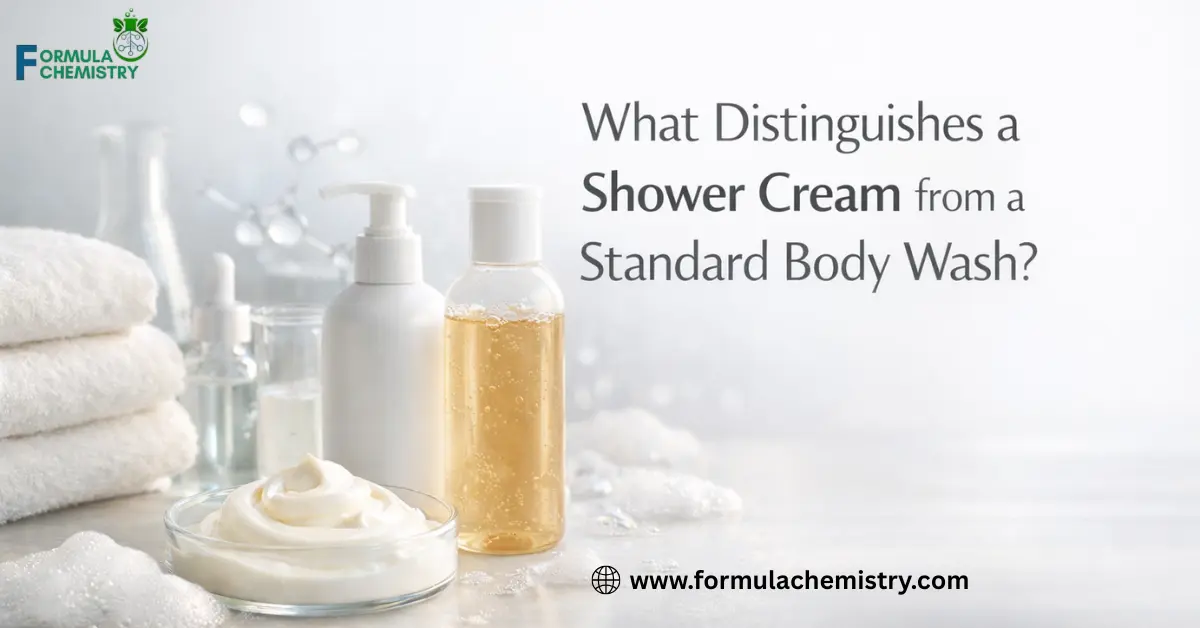
To understand the unique benefits of a shower cream, we must look at its structural composition compared to gels. A standard body wash is typically a surfactant-based system thickened with salt or gums. It is designed primarily to remove dirt and oils, often leaving the skin feeling “squeaky clean.” While effective, this can disrupt the skin barrier in dry skin types.
A shower cream, however, is technically an emulsion. In Formula Chemistry skincare, this means it contains both water and oil phases held together by an emulsifier, much like a face lotion. The high content of oils, butters, and fatty acids gives it that opaque, pearlescent appearance. This structure allows it to cleanse gently while depositing a thin, protective layer of moisture on the skin.
The Core Chemistry Formula: Surfactants in Cream Cleansers
The heart of any cleanser is the surfactant system, but in a shower cream, the choice is critical for skin health. You cannot use harsh stripping agents like Sodium Lauryl Sulfate (SLS) effectively in a cream base because they are too aggressive and destabilize the oils. Instead, a luxurious chemical formula relies on mild, amphoteric, or non-ionic surfactants.
These gentle surfactants work synergistically with lipids to clean without stripping:
- Sodium Cocoyl Isethionate (SCI): Often called “baby foam,” this creates a dense, creamy lather that feels velvety on the skin.
- Cocamidopropyl Betaine: An amphoteric surfactant that reduces irritation and boosts foam stability.
- Decyl Glucoside: A sugar-derived mild cleanser that is biodegradable and incredibly gentle.
By combining these, formulators achieve a “flash foam” that cleanses effectively but leaves the skin soft. This careful balance is the hallmark of advanced formula chemistry.
Essential Lipids for Nourishing Formula Chemistry Skincare
What makes a shower cream “nourishing” is its lipid phase, which provides the conditioning effect. Unlike gels which might contain trace amounts of oil, a shower cream can hold a significant percentage of oils and butters (often 10-20% or more). This requires a robust emulsification system to prevent the oil from separating.
When designing your own product, consider these lipids for their specific benefits:
| Ingredient | Benefit | Skin Feel |
| Shea Butter | Deeply moisturizing, rich in vitamins A & E | Rich and protective |
| Cocoa Butter | High occlusion, smells delicious | Hard, thick barrier |
| Sunflower Oil | High in linoleic acid, repairs barrier | Light and absorbed |
| Sweet Almond Oil | Soothes irritation and softens | Medium weight, silky |
| Caprylic/Capric Triglyceride | Lightweight ester, non-greasy | “Dry oil” feel |
Incorporating these into your Formula Chemistry DIY projects ensures that the product doesn’t just wash away dirt but actively conditions the skin.
Enhancing Texture with Thickeners and Polymers
The sensory experience of a shower cream is achieved through specific thickeners that stabilize the high oil content. Since high oil content can sometimes kill foam or make a product runny, the chemistry formula must include stabilizers.
- Fatty Alcohols (Cetyl or Cetearyl Alcohol): These are not drying alcohols. They are waxy solids that thicken the emulsion and add a luxurious, conditioned feel to the skin.
- Guar Hydroxypropyltrimonium Chloride: A cationic polymer derived from guar gum. It is positively charged and adheres to negatively charged skin (and hair), providing a “conditioning” effect.
- Xanthan Gum: A natural sugar polymer used to stabilize the water phase and improve viscosity.
Using cationic polymers is a secret trick in Formula Chemistry skincare to make a rinse-off product feel like a leave-on moisturizer.
Formula Chemistry DIY: Designing Your Own Shower Cream
Creating a shower cream at home is slightly more complex than a gel but incredibly rewarding for formulators. It requires heating and emulsification. Below is a professional-grade framework for a Formula Chemistry DIY shower cream.
The Phases for Production:
- Heated Water Phase: Distilled water, Glycerin (humectant).
- Heated Oil Phase: Emulsifying Wax NF, Shea Butter, Oils, Cetyl Alcohol.
- Surfactant Phase: Sodium Cocoyl Isethionate (solid), Cocamidopropyl Betaine (liquid).
- Cool Down Phase: Preservative, Fragrance, pH adjuster.
The Step-by-Step Process:
Melt the solid surfactants into the water or oil phase depending on solubility. Heat both the oil and water phases to 70-75°C. Combine them using high-shear mixing (stick blender) to form a stable white emulsion. Once the emulsion forms, gently fold in the liquid surfactants to avoid excessive foaming.
The Critical Role of pH in Body Care Formulas
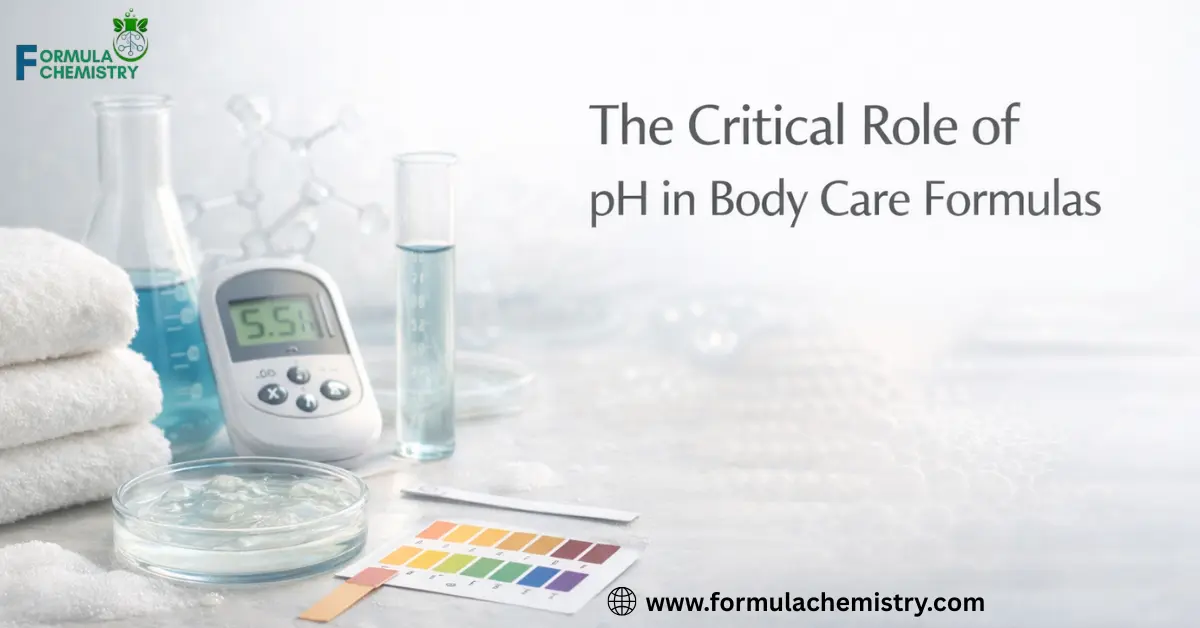
Just like facial cleansers, the pH of your body wash matters significantly for maintaining a healthy barrier. The skin on your body has an acid mantle that protects it from bacteria and dehydration. A high pH product destroys this mantle, leading to dryness.
In formula chemistry, we aim for a pH between 5.0 and 5.5 for shower creams. This range aligns with the skin’s natural physiology.
- Testing: Use a calibrated pH meter.
- Adjusting: If the pH is too high, use a Citric Acid solution. If too low, use a Sodium Hydroxide solution.
Maintaining this balance ensures the structural integrity of the thickeners and the effectiveness of the preservative system.
Preserving Your Luxurious Creation from Contamination
Because a shower cream contains water, lipids, and botanical ingredients, it is highly susceptible to microbial growth. Mold and bacteria thrive in shower environments due to the heat and humidity. A robust preservative system is non-negotiable in Formula Chemistry DIY.
“Natural” preservatives like Vitamin E are antioxidants, not preservatives. For safety, use broad-spectrum options like Liquid Germall Plus or Euxyl PE 9010. Always add the preservative when the product has cooled below 45°C to prevent degrading the active components.
Troubleshooting Common Shower Cream Issues
Even experienced formulators encounter issues with shower creams due to the complex interaction of ingredients. The interaction between surfactants (which want to separate oil and dirt) and emulsifiers (which want to keep oil and water together) can be tricky.
- Separation: If oil pools on top, your emulsion fails. This is often due to insufficient heat or low shear mixing.
- Thin/Runny Texture: Not enough fatty alcohol or gum was used. Try increasing the Cetyl Alcohol by 1-2%.
- Graininess: If using Shea Butter, rapid cooling prevents crystallization and graininess.
Understanding these variables is the essence of mastering the chemical formula of cosmetic products.
Sustainability and Eco-Friendly Choices in Formulation
Modern Formula Chemistry is increasingly focused on sustainability. When selecting ingredients for your shower cream, consider their environmental footprint.
- Biodegradability: Choose surfactants like Glucosides and Glutamates that break down easily.
- Palm-Free: Look for RSPO-certified or palm-free fatty alcohols derived from coconut.
- Upcycled Ingredients: Use exfoliant particles from fruit seeds instead of plastic microbeads.
Creating a product that is luxurious for you and safe for the planet is the gold standard of modern skincare formulation.
FAQ’s about Shower Cream vs. Body Wash: The Luxurious Nourishing Cleanser Guide
What is the difference between shower cream and shower gel?
Shower gels are typically clear, water-based formulas focused on cleansing and foaming. Shower creams are emulsions containing oils and butters, appearing opaque and creamy. They focus on moisturizing and conditioning the skin while cleansing, making them ideal for dry skin.
Can I use a shower cream on my face?
While shower creams are gentle, they are formulated for the body skin, which is thicker and less prone to clogging than facial skin. The high concentration of rich butters like cocoa butter might be comedogenic (pore-clogging) for the face, potentially causing acne.
Why does my DIY shower cream separate?
Separation usually happens because the emulsion wasn’t stable. This can be caused by not heating the oil and water phases to the same temperature (70°C+) before mixing, using too little emulsifier, or adding cool ingredients too quickly. High-shear mixing is essential for stability.
Is shower cream good for oily skin?
It can be too heavy for very oily or acne-prone body skin (like on the back or chest). The extra lipids might contribute to breakouts. A lighter shower gel or a shower cream with non-comedogenic oils (like grapeseed oil) would be a better choice for oily skin types.
How long does homemade shower cream last?
Without a preservative, it lasts only a few days in the fridge. With a proper broad-spectrum preservative like Liquid Germall Plus used at the correct percentage, a DIY shower cream can last 3 to 6 months. Always look for changes in smell or color.
Can I add essential oils to my shower cream?
Yes, essential oils can add scent and therapeutic benefits. However, they are potent allergens. In Formula Chemistry skincare, it is recommended to keep essential oil usage below 0.5% – 1% for rinse-off body products to avoid irritation or sensitization.
Do shower creams lather as much as gels?
Generally, no. The high oil content in shower creams suppresses foam because oils naturally “kill” bubbles. However, using surfactants like Sodium Cocoyl Isethionate can still produce a rich, dense, creamy lather that feels luxurious, even if it’s not as bubbly as a gel.
What makes a shower cream “nourishing”?
The “nourishing” aspect comes from the inclusion of emollients (lipids) and humectants. Ingredients like Shea Butter, Glycerin, and fatty alcohols penetrate the upper layers of the skin or form a protective barrier, preventing the dryness that usually occurs after washing with soap.