
Introduction
The first step in any skincare routine is often the most critical. While many cleansers focus on stripping away every trace of oil, a truly sophisticated formula understands that the goal is balance, not sterilization. Cleansing cream is a good cream.
A cleansing cream offers a luxurious alternative to foaming gels. It is designed to purify the skin while simultaneously respecting the delicate lipid barrier. This approach makes certain that your face feels soft and supple, never tight or squeaky.
In this guide, we explore the formula chemistry of cream cleansers. We will dissect the difference between emulsions and soaps, the role of gentle surfactants, and how to create a cleansing ritual that supports your skin’s natural microbiome.
What is a Cleansing Cream and How Does It Work?
Unlike a gel that relies heavily on detergents, a cleansing cream is an emulsion, a mixture of oil and water held together by an emulsifier.
The “Like Dissolves Like” Principle
Oil dissolves oil. The lipid phase of a cleansing cream binds to the sebum, sunscreen, and makeup on your skin.
Because these impurities are lipophilic (oil-loving), the cream melts them down effectively without the need for harsh scrubbing. This makes it an incredibly efficient way to remove daily grime while soothing the skin.
Mechanical Action vs. Chemical Stripping
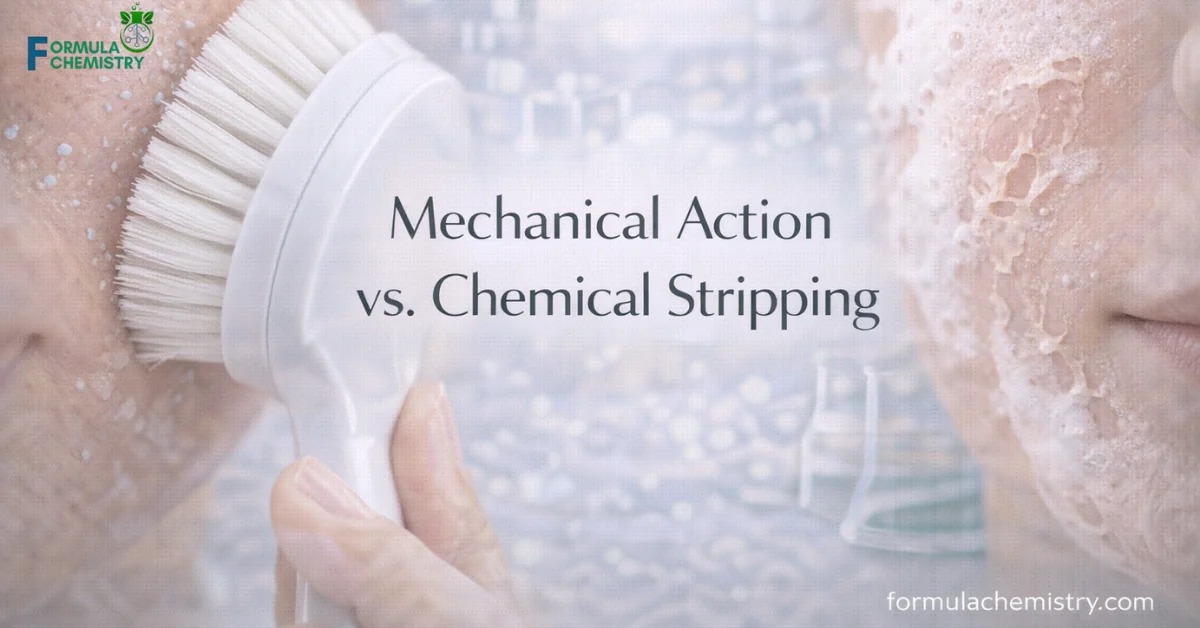
Foaming cleansers often use chemical force to lift dirt, which can damage proteins in the skin.
Cream cleansers rely more on the mechanical action of massage. The rich texture allows you to work the product into the pores, physically lifting debris while cushioning the surface. This reduces the risk of micro-tears and inflammation.
The Chemistry Formula of Gentle Cleansing Agents
Even creamy cleansers need agents to rinse clean, but the choice of these ingredients is what sets a nourishing product apart.
Non-Ionic Surfactants
We avoid anionic (negatively charged) surfactants like sulfates because they are aggressive.
Instead, Formula Chemistry skincare utilizes non-ionic surfactants such as Decyl Glucoside or Cetearyl Glucoside. These molecules have no charge, meaning they do not bind to the skin’s keratin. They simply emulsify the dirt so it can be washed away with water.
Co-Emulsifiers as Cleansers
Many cream cleansers use ingredients like Glyceryl Stearate SE.
This is an emulsifier that also has mild cleansing properties. It allows the oil phase of the cream to turn into a milky fluid when mixed with water. This “rinsability” is the key factor that prevents a cleansing cream from leaving a greasy residue.
Nourishing Lipids: Restoring While Cleaning
The “nourishing” aspect comes from the high percentage of oils and butters that remain on the skin even after rinsing.
The Role of Carrier Oils
Ingredients like Sweet Almond Oil, Sunflower Oil, or Sesame Oil act as solvents for dirt but also as conditioners.
They penetrate the upper layers of the stratum corneum during the massage. This replenishes the lipids lost during the day, preventing the dryness that often follows face washing.
Fatty Alcohols
Cetyl Alcohol and Stearyl Alcohol are not drying alcohols; they are fatty waxes derived from plants.
They provide the thick, velvety texture of the cream. In terms of formula chemistry, they act as emollients, smoothing down rough skin cells and leaving a soft, protective film that locks in hydration.
Formula Chemistry DIY: The Rose & Honey Cleanse
You can create a beautiful, spa-quality cleansing cream at home using gentle, natural ingredients.
The Emulsified Recipe
This formula creates a lotion-like cleanser that rinses off cleanly.
- Phase A (Oil): 15% Almond Oil, 4% Shea Butter, 5% Emulsifying Wax NF.
- Phase B (Water): 65% Rose Water (Hydrosol), 5% Glycerin.
- Phase C (Cool Down): 5% Decyl Glucoside (Surfactant), 1% Preservative, 0.5% Vitamin E.
Why It Works
The almond oil dissolves makeup, the shea butter conditions, and the rose water soothes inflammation. The small amount of Decyl Glucoside makes certain that when you splash your face with water, the cream lifts away effortlessly, leaving no greasy film just soft, clean skin.
Who Should Use a Cleansing Cream?
Even though beneficial for many, this texture is a major advantage for specific skin types.
Dry and Sensitive Skin
If your skin feels tight or itchy after washing, your current cleanser is too strong.
A cleansing cream repairs the barrier while cleaning. It is essential for those with eczema, rosacea, or naturally dry skin that produces insufficient sebum.
Mature Skin
As we age, oil production slows down.
Using a foaming gel can strip the little oil you have, accentuating wrinkles. A cream cleanser effectively replaces these lost lipids, plumping the skin immediately and making fine lines less visible.
Proper Application for Maximum Benefit
Using a cleansing cream requires a slightly different technique than using a bar of soap.
Apply to Dry Skin
For the best results, massage the cream onto dry skin.
Water acts as a barrier to the oils. By applying it dry, you allow the lipophilic ingredients to latch onto the makeup and dirt directly. Massage for at least 60 seconds to fully break down surface debris.
The Emulsification Step
Before rinsing, wet your hands and massage your face again.
You will see the cream turn into a thin, white milk. This step activates the surfactants and emulsifiers, encapsulating the dirt so it can be washed away. Rinse with lukewarm water (never hot) to preserve the moisture barrier.
The Microbiome Connection
Your skin is home to billions of beneficial bacteria that protect you from acne and pathogens; your cleanser affects them directly.
pH Balance
Healthy skin has a pH of roughly 5.0.
Traditional soaps are alkaline (pH 9-10), which kills good bacteria. A well-formulated cleansing cream is pH-balanced (4.5-5.5). This acidity preserves the acid mantle, keeping the microbiome thriving and your skin clear.
Preservative Safety
Because cream cleansers contain water, they must be preserved.
However, harsh preservatives can irritate. Formula Chemistry skincare favors broad-spectrum, gentle preservative systems (like Geogard ECT) that keep the product safe without wiping out the skin’s natural flora.

Conclusion
A Cleansing Cream is the epitome of gentle, effective skincare, proving that you don’t need harsh foam to be clean.
By applying the science of emulsions and non-ionic surfactants, these formulas remove impurities while depositing the essential nutrients your skin craves.
Whether you buy a high-end tube or whip up a Formula Chemistry DIY rose blend, switching to a cream cleanser is often the single most effective change you can make for balanced, healthy skin.
FAQ’s about Biolumin C Eye Serum: Hydrate & Defend the Delicate Eye Area
Can cleansing cream remove heavy makeup?
Yes, cleansing creams are excellent at dissolving makeup because they are oil-based. However, for waterproof mascara or heavy foundation, you may want to use the cream on dry skin, wipe it off, and then perform a second cleanse or use a dedicated eye makeup remover first.
Will a cream cleanser clog my pores?
Not if formulated correctly. While they contain oils, the emulsifiers ensure these oils rinse away. If you have acne-prone skin, look for creams using non-comedogenic oils like Squalane, Hemp Seed, or Grapeseed Oil rather than Coconut Oil.
Do I need a toner after using a cleansing cream?
It is not strictly necessary if the cleanser is pH balanced, but a toner can ensure all traces of the cream are removed. If you have hard water, a toner is helpful to remove mineral deposits that might cling to the cream residue.
Is this suitable for oily skin?
Oily skin types can use cleansing creams, but they often prefer the “fresh” feel of a gel. If you have oily but dehydrated skin (oily surface, tight underneath), a cleansing milk (lighter than a cream) is a perfect compromise to restore hydration without heaviness.
Why doesn’t my cleansing cream foam?
It isn’t supposed to! Foam is created by high levels of surfactants and air. Cleansing creams rely on emulsions (oils) to clean. The lack of foam is actually a positive sign that the product is gentle and not stripping your natural lipids.
Can I use a cleansing cream in the morning?
Absolutely. In fact, it is the best morning cleanser. You don’t have heavy grime to remove in the am, just sweat and night cream. A gentle cream cleanse refreshes the skin without drying it out before you start your day.
How do I know if I’m allergic to a cleansing cream?
Signs of allergy include redness, itching, or small bumps (contact dermatitis) immediately or within 24 hours of use. Always patch test new products on your inner arm. Common allergens can include fragrances, essential oils, or certain preservatives.
Can I use a muslin cloth with cleansing cream?
Yes, using a warm muslin cloth or flannel is a great way to remove cleansing cream. The fabric provides a very mild physical exfoliation and makes sure that all the product is lifted from the skin, leaving it polished and clean.