
Introduction
Ceteareth-20 is a high-performance, nonionic surfactant and emulsifier widely used in the cosmetic industry. Chemically, it is the polyethylene glycol ether of Cetearyl Alcohol, serving as a strong universal emulsifier for oil-in-water (O/W) formulations.
From lightweight lotions to heavy body butters, this ingredient makes certain that oil and water phases mix seamlessly and remain stable over time.For formulators, Ceteareth-20 is rarely used in isolation.
It is most famous for being the “active” emulsifying component in commercially available Emulsifying Wax NF, usually paired with Cetearyl Alcohol. Its high Hydrophile-Lipophile Balance (HLB) allows it to drag oil droplets into water, creating a smooth, white, and glossy cream structure.
Quick Facts
- INCI Name: Ceteareth-20
- Function: Nonionic Emulsifier, Solubilizer, Surfactant, Gelling Agent.
- HLB Value: 15.2 (Highly Hydrophilic / Water-Loving).
- Typical Usage Rate: 1% – 3% in emulsions; 15% – 30% in hair gels/edge controls.
- Solubility: Soluble in water and alcohol; dispersible in oils.
- pH Stability: Excellent stability spanning a broad range, typically pH 3.0 – 10.0.
- Compatibility: Compatible with anionic, cationic, and nonionic systems.
- Key Synergy: Works best when paired with Cetearyl Alcohol (fatty alcohol).
- Safety Note: Do not use on broken skin; ensure supplier data confirms low 1,4-dioxane levels.
What is Ceteareth-20 and How Does it Work?
Ceteareth-20 is created through a process called ethoxylation, where Cetearyl Alcohol (a mixture of cetyl and stearyl fatty alcohols) is reacted with ethylene oxide. The number “20” indicates the average number of ethylene oxide molecules added to the fatty alcohol chain. This addition transforms a hydrophobic (oil-loving) waxy solid into a highly hydrophilic (water-loving) molecule.
Because it has a high HLB value of 15.2, Ceteareth-20 acts as the primary hydrophilic emulsifier in a system. It orients itself at the interface between oil and water, with its fatty tail buried in the oil droplet and its ethoxylated head extending into the water phase. This steric effect prevents oil droplets from coalescing, effectively “locking” the emulsion in place.
The Science of Liquid Crystal Networks
When Ceteareth-20 is combined with a low-HLB fatty alcohol like Cetearyl Alcohol or Stearyl Alcohol, magic happens. They do not just surround oil droplets; they form a lamellar gel network or liquid crystal structure.
This network absorbs water, thickening the external phase of the emulsion and supplying substantial viscosity and stability. This structure is what gives creams their “body” and rich sensory profile. Without the fatty alcohol partner, Ceteareth-20 would simply create a thin, milk-like emulsion.
The combination creates a shear-thinning fluid that applies easily but holds its shape in the jar. This specific synergy is why “Emulsifying Wax” is such a beginner-friendly ingredient it pre-blends these two components in the optimal ratio.
High-Concentration Gelling for Hair
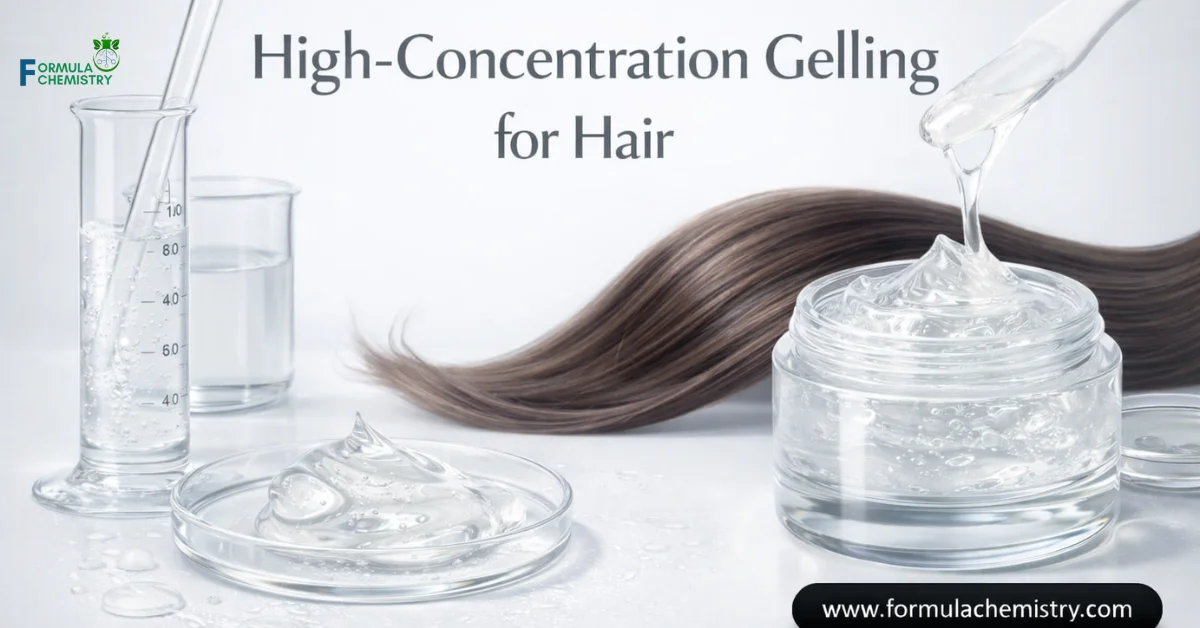
While usually used at low percentages in creams, Ceteareth-20 exhibits a completely different performance at high concentrations. When used at 20% to 30% in water, it forms a stiff, clear, ringing gel.
This property is the foundation of modern “edge control” glues and heavy-hold pomades. In these formulations, Ceteareth-20 is not emulsifying a large oil phase. Instead, it forms a dense micellar structure that traps humectants and a small amount of oil.
The result is a product that provides immense hold for hair without the flaking associated with PVP-based gels. However, formulating these needs precise temperature control, as the gel sets quickly upon cooling.
Formulating with Ceteareth-20: Best Practices
To get the most out of Ceteareth-20, it is typically added to the oil phase of your formulation. Although it is water-soluble, melting it with your carrier oils, butters, and fatty alcohols makes certain that it is evenly dispersed before the emulsification step.
The oil phase should be heated to approximately 70°C – 75°C to ensure the Ceteareth-20 (which has a melting point around 40-45°C) is fully liquefied and homogenous.For standard lotions, a ratio of 4:1 (Fatty Alcohol : Ceteareth-20) is a good starting point.
For example, using 4% Cetearyl Alcohol and 1% Ceteareth-20 creates a stable, medium-viscosity cream. If you need a thinner lotion, you can reduce the fatty alcohol or lower the total emulsifier blend.
Usage Rates by Product Type
The versatility of Ceteareth-20 allows it to function through multiple product categories. The table below outlines typical usage ranges and pairing recommendations.
Table: Ceteareth-20 Usage Guidelines
| Product Type | Usage Rate | Recommended Partner | Function |
| Facial Lotion | 0.5% – 1.0% | Cetearyl Alcohol (2-3%) | Lightweight emulsion stabilizer |
| Body Butter | 1.0% – 3.0% | Stearic Acid / Cetyl Alcohol | Rich, thick emulsification |
| Cream Cleanser | 1.0% – 2.0% | Coco-Glucoside | Emulsifier & thickener |
| Edge Control Gel | 20% – 30% | PEG-7 Glyceryl Cocoate | Primary gelling agent |
| Micro-Emulsion | 5.0% – 10% | Oils / Active Ingredients | Solubilizer for actives |
The “Soaping” Effect and How to Fix It
One common drawback of high-HLB ethoxylated emulsifiers like Ceteareth-20 is the “soaping” effect. This is when a cream turns white and streaks on the skin during application, taking a long time to rub in.
This happens because the emulsion is so stable that it resists breaking down upon contact with skin salts and friction. To reduce this, avoid using Ceteareth-20 in excess. Keep it at the minimum effective percentage (usually 1% or less for lotions).
Adding Dimethicone (0.5% – 2%) or light esters like Isopropyl Myristate can also help reduce surface tension and eliminate the whitening effect. Soapiness is purely aesthetic and does not indicate a failed product, but it can negatively impact the user experience.
Fixing Common Formulation Issues
Despite its reliability, Ceteareth-20 can cause challenges, notably concerning texture and ingredient compatibility. Stability testing is essential. If you observe separation within 24 hours (creaming or oil pooling), it is often a sign that your HLB calculation is off or your ratio of thickeners to emulsifiers is unbalanced.
Because Ceteareth-20 is nonionic, it is technically compatible with cationic ingredients (like Behentrimonium Methosulfate). However, mixing anionic thickeners (like Xanthan Gum) with high levels of ethoxylated emulsifiers may sometimes lead to a stringy or slimy texture. Adjusting your rheology modifier to a carbomer or hydroxyethylcellulose frequently resolves this.
Common Problems and Fixes
- Problem: The cream is too thin or runny.
- Fix: Increase the Fatty Alcohol (Cetearyl or Cetyl), not the Ceteareth-20. The fatty alcohol supplies the structure; Ceteareth-20 just holds the oil and water together.
- Problem: The edge control gel is cloudy/opaque.
- Fix: Ensure you are heating the water and Ceteareth-20 to at least 85°C – 90°C and mixing gently to avoid air bubbles. Cloudiness can also result from too much oil.
- Problem: The lotion feels waxy or draggy.
- Fix: Reduce the total emulsifier load. Replace some Cetearyl Alcohol with a lighter thickener or reduce Ceteareth-20 to 0.5%.
- Problem: Micro-foaming or bubbles in the jar.
- Fix: Ceteareth-20 is a surfactant and can foam. Avoid high-shear mixing at the very end of the cool-down phase (below 40°C).
- Problem: Skin irritation or stinging on application.
- Fix: Ensure the product is pH balanced. If using high levels (like in gels), ensure the formula is not applied to broken skin.
Safety and Sensitivity Considerations
Ceteareth-20 is safe for use in cosmetics, but it has a checkered reputation in the “clean beauty” community due to the ethoxylation process. This process can leave trace amounts of 1,4-dioxane, a potential carcinogen, and ethylene oxide.
However, modern manufacturing processes include vacuum stripping to remove these byproducts to safe, non-detectable levels.Reliable suppliers provide a Certificate of Analysis (CoA) verifying the purity of their Ceteareth-20.
As a formulator, you should always request this document. Furthermore, products containing ethoxylated ingredients should not be used on damaged or compromised skin barriers, as they can increase penetration of other ingredients, and may lead to sensitization.
FAQ’s about Ceteareth-20: Versatile Emulsifier for Stable Cosmetic Formulations
Is Ceteareth-20 natural?
No, Ceteareth-20 is a synthetic ingredient. While the fatty alcohol portion can be derived from natural plant oils (like coconut or palm), the ethoxylation process includes petrochemicals. It is generally not allowed in organic certified products like COSMOS or Ecocert.
Is Ceteareth-20 safe for sensitive skin?
Generally, yes, when used at standard concentrations (1-3%). However, people with highly reactive skin or eczema may find ethoxylated emulsifiers slightly irritating. Always patch test. In leave-on products, it is considered safe by the CIR Expert Panel.
Can I use Ceteareth-20 alone?
For creams and lotions, no. It produces a thin, unstable emulsion if used without a fatty alcohol or thickener. For edge control gels, yes, it is used as the primary structural agent, but at very high percentages (20%+).
What can I substitute for Ceteareth-20?
For a natural alternative, consider Glyceryl Stearate SE, Cetearyl Olivate (and) Sorbitan Olivate (Olivem 1000), or Polyglyceryl-3 Dicitrate/Stearate. These are non-ethoxylated and accepted in natural formulating standards.
Does Ceteareth-20 contain alcohol?
It is chemically an ether, not an alcohol in the drying sense (like ethanol). It is derived from fatty alcohols, which are moisturizing waxy solids. It does not dry out the skin; in fact, it helps retain moisture by forming emulsions.
Why is my Ceteareth-20 gel turning white?
In edge control gels, whiteness often occurs if the product is disturbed while cooling or if the oil load is too high for the amount of surfactant. It can also happen upon application if the hair is wet or contains incompatible products.
Is Ceteareth-20 comedogenic?
It is rated moderately comedogenic (often a 2 or 3 on a 5-point scale). This depends heavily on the total formulation. In a wash-off cleanser, it is not an issue. In a heavy face cream, it might clog pores for acne-prone individuals.
Does Ceteareth-20 require a preservative?
Yes. Ceteareth-20 itself is not susceptible to mold, but any formulation containing water (which Ceteareth-20 is almost always used in) requires a broad-spectrum preservative system to prevent microbial growth.