
Introduction
Sodium Stearoyl Glutamate is a powerful yet gentle anionic surfactant and emulsifier sourced from natural origins. It creates elegant, high-performance emulsions that serve the modern demand for “clean” and “green” beauty.
By combining stearic acid (a fatty acid) with glutamic acid (an amino acid), this ingredient connects the gap between effective stabilization and skin barrier compatibility. For cosmetic formulators, this ingredient offers a distinct advantage: it creates liquid crystal structures that mimic the skin’s natural lipid organization.
In contrast to traditional ethoxylated emulsifiers that can strip the skin, Sodium Stearoyl Glutamate conditions while it emulsifies. It is widely used in sensitive skin formulations, baby products, and high-end facial lotions due to its hypoallergenic nature.
Quick Facts
- INCI Name: Sodium Stearoyl Glutamate
- Function: O/W Emulsifier, Surfactant, Skin Conditioning Agent
- Source: Vegetable-derived (usually coconut/palm oil and fermented sugar)
- Charge: Anionic (Negatively charged)
- Typical Usage Rate: 0.5% – 3.0% (up to 5% for cleansing powders)
- Solubility: Soluble in hot water; dispersible in oil.
- Optimal pH Range: Stable across pH 5.0 – 8.0; tolerant of weak acids.
- Compatibility: Excellent with nonionic and other anionic ingredients; avoid strong cationics.
- Safety Note: extremely mild and hypoallergenic, but ensure proper preservation as it is biodegradable.
Discover how Ceteareth-20: Versatile Emulsifier for Stable Cosmetic Formulations helps create reliable skincare.
What Makes Sodium Stearoyl Glutamate an Excellent Option?
The primary distinction of Sodium Stearoyl Glutamate resides in its chemical structure. As an amino acid-based emulsifier, it is built upon glutamic acid, which is naturally abundant in the human body and acts as a moisturizing factor.
This structural similarity allows the ingredient to merge seamlessly with the skin’s stratum corneum, reducing the chance of irritation often caused by harsher surfactants like SLS or traditional emulsifying waxes.
This electrostatic stabilization is highly effective, permitting the formation of stable, low-viscosity milks and sprays that would struggle with nonionic emulsifiers alone. It is a “smart” ingredient which adapts to the skin’s needs, maintaining hydration without leaving a heavy, waxy occlusive film.
Sensory Profile and Texture Benefits
One of the most praised attributes of Sodium Stearoyl Glutamate is the sensory profile it imparts to finished products. Traditional ethoxylated emulsifiers (like Polysorbate 60) may occasionally feel sticky, tacky, or “soapy” during application.
In contrast, Sodium Stearoyl Glutamate provides a powdery, soft after-feel that is highly desirable in luxury skincare. This “powdery” sensation makes it ideal for matte-finish moisturizers, primers, and sunscreens. It reduces the perceived greasiness of high-oil formulations, making even rich night creams feel lighter and more elegant.
Additionally, it helps reduce the “whitening” or “soaping” effect (micro-foaming) that occurs when rubbing a lotion into the skin, allowing a quick and invisible absorption.
Lamellar Gel Network Formation
Beyond simple emulsification, Sodium Stearoyl Glutamate acts as a promoter of lamellar liquid crystals. When combined with fatty alcohols like Cetearyl Alcohol or Glyceryl Stearate, it organizes the water and oil phases into alternating layers (lamellae).
This structure serves as a reservoir for water, greatly enhancing the moisturizing capacity of the lotion.This lamellar network likewise enhances the stability of active ingredients.
By trapping actives within these lipid layers, the emulsion can guard sensitive compounds from oxidation while improving their penetration into the skin. This makes Sodium Stearoyl Glutamate a top choice for delivering vitamins, peptides, and botanical extracts effectively.
Formulating with Sodium Stearoyl Glutamate
When designing a formula with Sodium Stearoyl Glutamate, it is typically added to the oil phase or the water phase, depending on the specific supplier’s grade and your process.
However, adding it to the hot water phase (70°C – 80°C) is a common and reliable method, since it ensures the powder fully dissolves and hydrates before interacting with the oil. Because it is a powerful emulsifier but not a strong thickener, it must be paired with consistency factors.
Using it alone will result in a very thin, milk-like consistency. To achieve a cream or lotion texture, you must incorporate 2% – 5% of fatty alcohols (like Cetyl Alcohol or Behenyl Alcohol) or varying levels of gums (like Xanthan Gum or Sclerotium Gum) to build the chassis of the formulation.
pH Stability and Electrolyte Tolerance
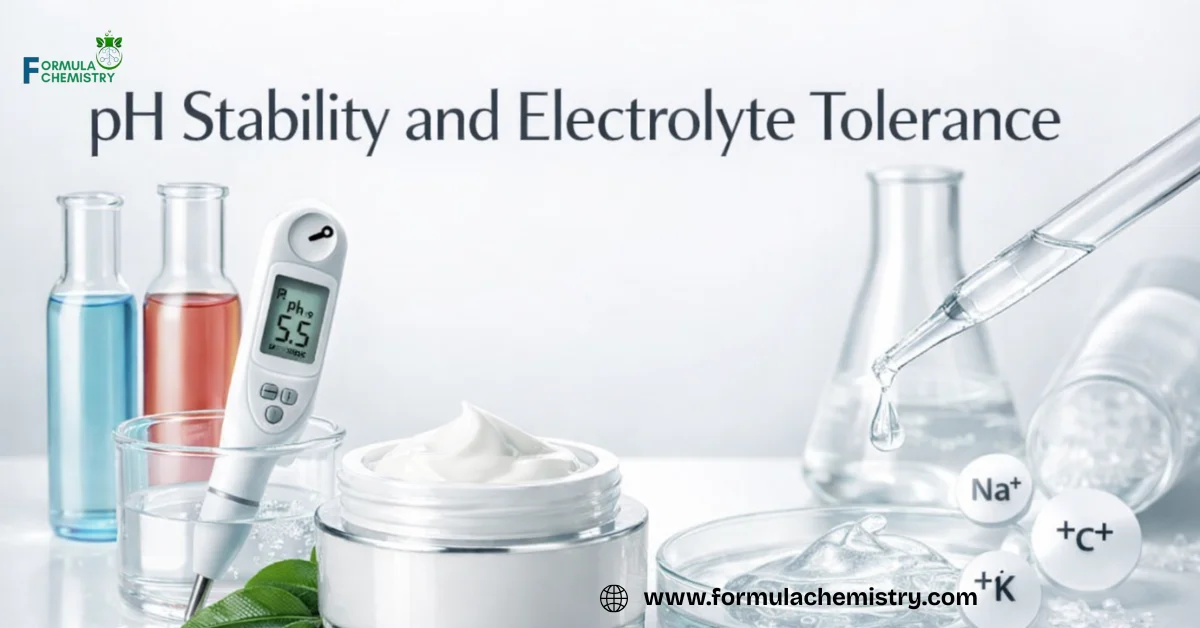
Sodium Stearoyl Glutamate is remarkably robust regarding pH. Unlike true soaps (which require high pH) or some sensitive esters, this ingredient remains stable in slightly acidic environments, making it compatible with the skin’s natural pH of 5.5.
It can typically handle a pH range of 5.0 to 8.0 without hydrolysis or separation.However, being anionic, it is sensitive to high loads of electrolytes (salts). High concentrations of salt (Sodium Chloride, Magnesium Sulfate) or charged actives (like Zinc PCA or certain acidic exfoliants) are able to disrupt the electrical double layer that stabilizes the emulsion.
If you must use electrolytes, add a polymeric stabilizer like Carbomer or a natural gum to reinforce the physical stability of the emulsion.
Troubleshooting Viscosity and Stability
Formulators often panic when their emulsion looks water-thin immediately after mixing. This is normal for amino acid emulsifiers. The viscosity in these systems builds up as the lamellar gel network sets, which can take 24 to 48 hours.
Do not judge the final thickness of the product right out of the beaker.If the product remains too thin after 48 hours, it indicates a lack of structure. Sodium Stearoyl Glutamate effectively lowers surface tension but does not build bulk.
Increasing your fatty alcohol content or adding a rheology modifier like Hydroxyethylcellulose is the standard fix. Do not add cationic conditioning agents (like Behentrimonium Methosulfate) directly to the same phase, as they will react with the anionic glutamate and cause precipitation.
Table: Common Problems and Fixes with Sodium Stearoyl Glutamate
| Problem | Potential Cause | Recommended Fix |
| Emulsion Separation | Insufficient homogenization | High-shear mix at 75°C for 2-3 minutes. |
| Water-Thin Texture | Lack of thickeners | Add 2-4% Cetearyl Alcohol or 0.3% Xanthan Gum. |
| Graininess | Incomplete dissolution | Ensure water phase reaches 80°C before mixing. |
| pH Drift | Bacterial growth or instability | Add a buffer (Citric Acid/Sodium Citrate) and check preservative. |
| Incompatibility | Presence of Cationics | Avoid strong cationic surfactants (Quats) in the same formula. |
Common Problems and Fixes
Although versatile, Sodium Stearoyl Glutamate has quirks that can frustrate new formulators. One common problem is “soaping” or micro-foaming, though it is less prone to this than other emulsifiers. If you notice white streaks when rubbing the product on the skin, it usually means the emulsifier percentage is too high relative to the oil load.
Reducing the usage rate to 0.5% – 0.75% and supplementing with a low-HLB co-emulsifier like Glyceryl Stearate usually eliminates this effect. Dimethicone (at 1-2%) or isoamyl laurate can also help “kill” the foam and improve the rub-in speed.
Addressing Hard Water Sensitivity
Because it is anionic, Sodium Stearoyl Glutamate can interact with calcium and magnesium ions found in hard water, potentially forming insoluble scums (similar to soap scum, though much milder). This is rarely an issue in leave-on products made with distilled water, but it can be a factor in wash-off cleansers.
To prevent this, always include a chelating agent like Disodium EDTA or Sodium Phytate (0.1% – 0.2%) in the water phase. This simple step captures the metal ions, protecting the emulsifier and guaranteeing the texture keeps smooth and the stability uncompromised over time.
Preservative Compatibility
Sodium Stearoyl Glutamate is generally compatible with most preservative systems, including Phenoxyethanol, Ethylhexylglycerin, and organic acids like Sodium Benzoate/Potassium Sorbate. Because it is essentially “food” for bacteria (being amino acid and fatty acid-based), a strong, broad-spectrum preservative is mandatory.
When using organic acid preservatives (like Benzyl Alcohol & DHA), ensure the final pH does not drop below the stability limit of the emulsifier (usually around pH 5.0). If the pH drops too low (below 4.5), the glutamic acid portion may protonate, causing the emulsion to lose its charge and potentially separate.
FAQ’s about Sodium Stearoyl Glutamate: Emulsifying Made Gentle
Is Sodium Stearoyl Glutamate natural?
Yes, it is considered naturally derived. It is produced by the condensation of glutamic acid (an amino acid from fermented sugar) and stearic acid (a fatty acid from vegetable oils like palm or coconut). It is approved by Ecocert and COSMOS standards.
Is Sodium Stearoyl Glutamate safe for sensitive skin?
Yes, it is known for being extremely mild and hypoallergenic. Its structure resembles to the skin’s natural moisturizing factors, reducing the chance of irritation. It is frequently used in products designed for eczema-prone skin and baby care.
What is the HLB of Sodium Stearoyl Glutamate?
While the HLB system is less accurate for ionic surfactants, Sodium Stearoyl Glutamate behaves like a high-HLB emulsifier (estimated HLB ~20-22). It is hydrophilic and best suited for oil-in-water (O/W) emulsions.
Can I use Sodium Stearoyl Glutamate without a co-emulsifier?
It is possible, but not recommended for creams. Used alone, it creates very thin, milk-like fluids. To create a stable, thick lotion, it should be paired with fatty alcohols (Cetearyl Alcohol) or low-HLB emulsifiers (Glyceryl Stearate).
Does Sodium Stearoyl Glutamate clog pores?
No, it is generally considered non-comedogenic. It is used in low percentages and does not form an occlusive film that traps bacteria. Its “powdery” finish is excellent for acne-prone skin formulations.
Is it vegan?
Yes, Sodium Stearoyl Glutamate is typically vegan. The stearic acid is almost exclusively sourced from plants (palm, coconut, or soy), and the glutamic acid is fermented from plant sugars. Always check manufacturer statements to be 100% sure.
Why is my lotion thin when using this emulsifier?
Sodium Stearoyl Glutamate does not thicken the water phase on its own. It stabilizes the oil droplets. You must add viscosity builders like gums, fatty alcohols, or waxes to achieve a cream consistency.
Can I use it in a low pH toner?
It is stable down to roughly pH 5.0. Below that, it may lose its emulsifying capability as the molecule protonates. For very acidic products (like AHAs at pH 3.5), non-ionic emulsifiers are a better choice.