

Introduction
Hair styling often comes at a cost, with traditional products relying on harsh petrochemicals that strip moisture and cause breakage over time. A nourishing hair wax changes this story, functioning as both a high-performance styling tool and a deep conditioning treatment.
By understanding the chemical formulae of botanical ingredients, we can create a product that provides a flexible hold while structurally repairing the hair shaft.
This manual examines the science behind formulating a hair wax that protects from environmental stress, strengthens the cuticle, and delivers a healthy, natural shine.
What Defines a Nourishing Hair Wax in Formula Chemistry?
A nourishing wax is defined by its ability to provide mechanical hold without jeopardizing the biological integrity of the hair fiber.
The Balance of Hold and Health
Traditional waxes often coat hair with impermeable plastic. In contrast, a nourishing wax utilizes natural fatty acids and esters.
These ingredients penetrate the cuticle to reinforce the hair’s internal structure. In the world of formula chemistry, this combined function turns a basic styling product into a leave-in treatment that actively improves hair quality each time it’s applied.
Breathable Protection
Unlike synthetic silicones, botanical waxes form a breathable mesh over the hair shaft.
This allows moisture to enter and exit naturally while blocking humidity. This regulation of water content is important for preventing frizz and maintaining the chemical structure of a healthy, hydrated strand.
The Chemistry Formula of Natural Waxes
The mainstay of any hair wax is the solid lipid phase, which determines the product’s hardness, melting point, and hold strength.
Beeswax: The Structural Architect
Beeswax is a complex mixture of esters, fatty acids, and hydrocarbons. Its elevated melting point (around 62-64°C) provides the primary structure.
It creates a plasticizing effect, allowing it to bend without breaking. This allows you to restyle your hair throughout the day without the flaking associated with synthetic polymers.
Candelilla Wax: The Gloss Enhancer
Derived from the Candelilla shrub, this wax is harder than beeswax and provides a superior shine.
Its chemical formula is rich in hydrocarbons, which create a smooth, light-reflective surface on the hair. It is essential to add gloss and firmness to the formulation without making it feel heavy or greasy.
Carnauba Wax: The Hardener
Known as the “Queen of Waxes,” Carnauba has the highest melting point of natural waxes (around 82-86°C).
In Formula Chemistry DIY, we use this sparingly to increase the hold factor. It guarantees the wax remains solid in warm weather and provides a “crunch-free” durability to the look.
Selecting Botanical Oils for Strength
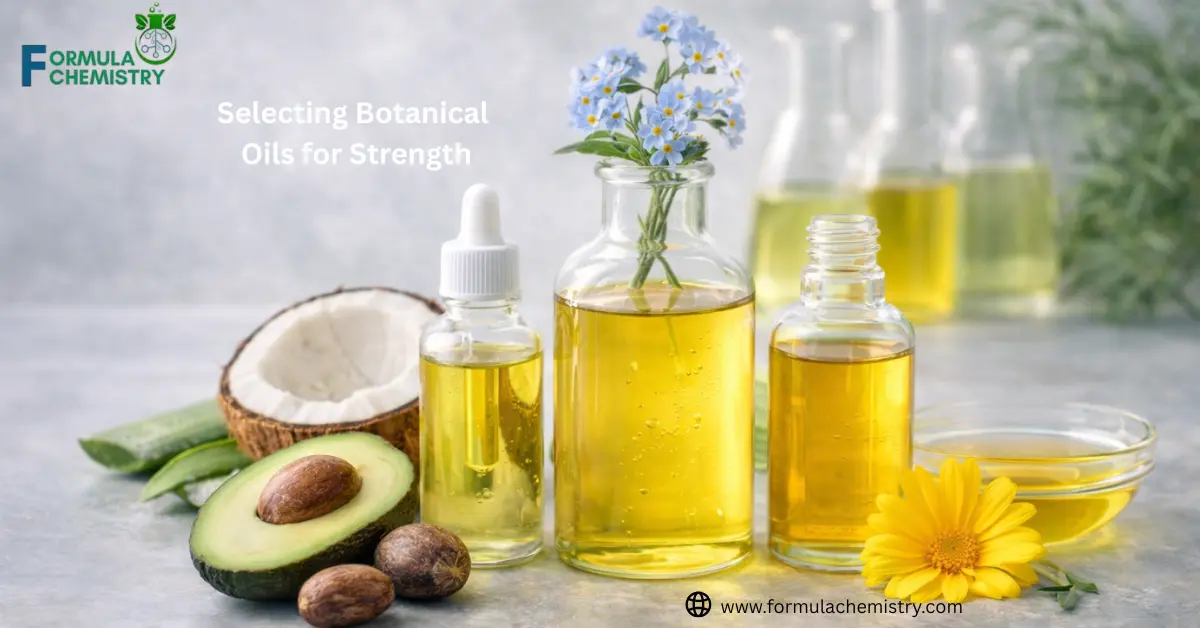
The liquid phase of the wax softens the hard waxes and delivers the “nourishing” aspect of the product directly to the hair cortex.
Castor Oil: The Strengthening Agent
Castor oil is unique due to its high concentration of Ricinoleic Acid. This fatty acid is extremely viscous and polar.
It draws moisture to the hair and creates a thick, protective coating. Its density adds weight to the formula, making it excellent for controlling thick, unruly hair and smoothing the cuticle.
Jojoba Oil: The Sebum Mimic
Jojoba is technically a liquid wax ester, not an oil. Its molecular structure is nearly identical to human sebum.
This allows it to dissolve into the wax and merge effortlessly. It balances the product’s chemical formula, ensuring it absorbs into the hair rather than sitting on the surface as a greasy residue.
Shea Butter: The Elasticity Booster
Rich in Stearic and Oleic acids, Shea Butter is a soft solid that melts at body temperature.
It provides “slip” during application. More importantly, it deeply moisturizes the hair shaft, improving elasticity and preventing the snapping and breakage often caused by mechanical styling stress.
Discover simple steps for strong, shiny locks in Best Haircare Practice for Healthy, Gorgeous Hair.
Formula Chemistry DIY: Creating Your Own Hair Wax
Making your own hair wax lets you customize the hold and scent, ensuring a product perfectly suited to your hair type.
The Melting Phase
Begin by combining your solid waxes (Beeswax, Carnauba) and butters (Shea) in a heat-resistant beaker.
Use a double boiler to melt them gently. High heat can degrade the antioxidants in unrefined butters, so taking your time is essential to protecting the botanicals formula chemistry.
The Liquid Integration
Once the solids are melted, remove from heat and stir in your liquid oils (Castor, Jojoba).
The temperature will drop rapidly. This is the critical moment to add essential oils for scent and Vitamin E for stability. Stirring constantly prevents the waxes from crystallizing unevenly.
Cooling and Setting
Pour the mixture into a tin while it is still warm and fluid.
Let it cool at room temperature. Rushing this process in the fridge can cause “blooming” (white spots) or cracking in the center, disrupting the professional appearance of your creation.
Understanding the Role of Emulsifiers in Wax
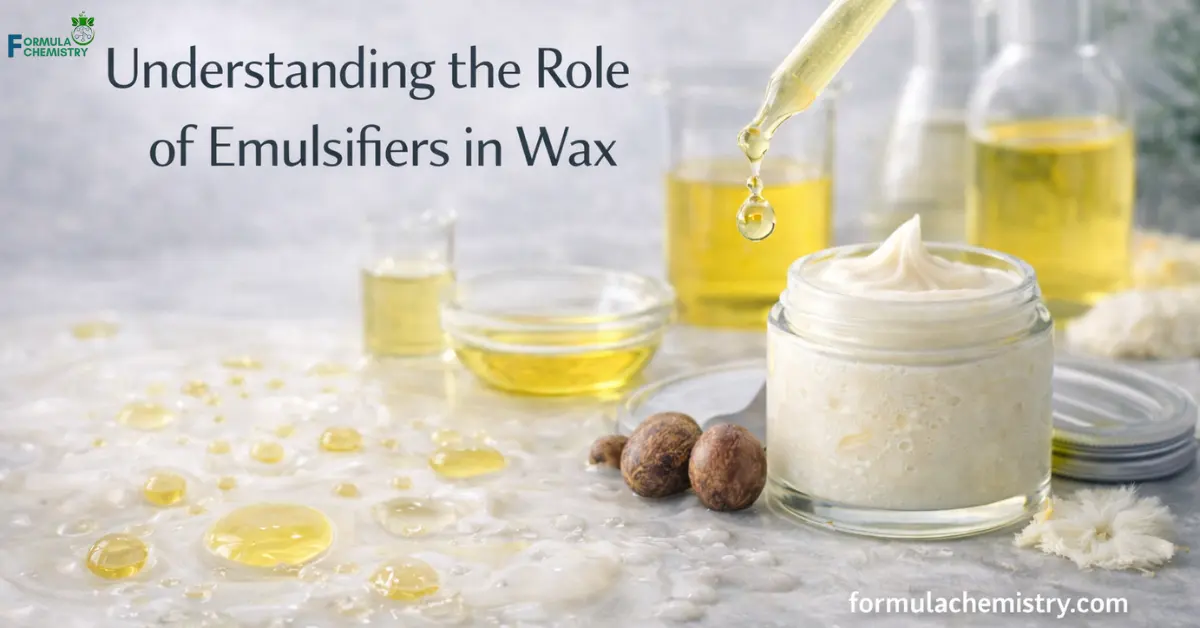
While traditional waxes are anhydrous (water-free), adding an emulsifier helps the product wash out easily with water.
Polysorbate-80
This is a non-ionic surfactant and solubilizer often used in balms and oils.
Adding a small percentage (1-2%) to your wax allows the oils to interact with water in the shower. This modification to the chemistry formula prevents buildup and secures a clean rinse.
Ceteareth-25 for Edge Control
For clear, gel-like waxes (often called “edge controls”), Ceteareth-25 is the industry standard.
It creates a dense, ringing gel when mixed with water. It provides extreme hold and creates a glass-like finish, bridging the divide between traditional wax and modern styling gel.
Formula Chemistry Skincare Principles for the Scalp
We often forget that hair products end up on the scalp; treating this area with the same care as your face is vital for healthy growth.
Non-Comedogenic Waxes
Just like face cream, hair wax may block pores (folliculitis).
Using Formula Chemistry’s skincare principles, we select non-comedogenic ingredients such as Jojoba and Hemp Seed Oil. These ensure that the product nourishes the roots without blocking the follicle openings.
Scalp Wellness and Inflammation
Heavy styling products can trap bacteria and sweat against the scalp.
Incorporating anti-inflammatory ingredients like Chamomile extract or Tea Tree Oil into the wax helps preserve a healthy scalp microbiome and prevents itchiness and dandruff.
Improving the Chemical Formula with Actives
To truly strengthen the hair, we can add oil-soluble active ingredients that work progressively over time.
Vitamin E (Tocopherol)
Vitamin E is vital in stopping the oxidation of the oils in your wax (rancidity).
Beyond preservation, it is an antioxidant for the hair. It protects the hair shaft’s lipid layer from UV degradation, keeping colored hair vibrant and preventing brittleness.
Phytosterols
Found in ingredients like Avocado Oil, phytosterols help repair the barrier of the skin and hair.
They have a high moisture-binding capacity. Adding them to the formula improves the “barrier function” of the hair cuticle, reducing the impact of environmental aggressors like pollution and wind.
Panthenol (Pro-Vitamin B5)
While typically water-soluble, oil-soluble variations or dispersions exist.
Panthenol penetrates the hair shaft to improve flexibility. It acts as a humectant within the wax, pulling moisture from the air to keep the hair pliable and soft throughout the day.
Troubleshooting Common Wax Issues
Formulating wax is an art; small variances in temperature or ratios can drastically change the texture.
Fixing Graininess
If your wax feels gritty, it means the Shea Butter cooled too slowly, or the high-melt waxes crystallized.
Remelt the entire batch and hold it at the temperature for 20 minutes. Then, cool it rapidly in a freezer for 10 minutes to force a smooth, rapid solidification of the chemical formula.
Adjusting Greasiness
If the product leaves your hair looking oily rather than shiny, you have too many liquid oils.
Increase the percentage of harder waxes (Carnauba) or add a dry-touch agent like Arrowroot Powder or Silica microspheres to absorb excess oil and provide a matte finish.
Increasing Hold
If the wax offers no control, the ratio of structural wax is too low.
Increase the Beeswax content. Alternatively, add a resin like Hydrogenated Rosin, which provides “tack” and stickiness, important for defying gravity in shorter hairstyles.
Application Techniques for Maximum Benefit
The effectiveness of hair wax relies heavily on how it is manipulated and applied to the strands.
Warming the Product
Natural waxes are solid at room temperature.
You must scrape a small amount out and rub it vigorously between your palms. That rubbing generates heat, melting the chemistry formula temporarily so it can coat the hair evenly before setting back into a solid hold.
Layering for Texture
Start with a tiny amount on the ends of the hair.
Apply in thin layers. This prevents weighing the hair down and allows you to build volume and definition gradually. Focus on the mid-lengths to ends, avoiding the roots unless you are aiming for a slicked-back look.
Scenting Your Wax: The Safety of Fragrance
Hair wax stays on all day, so the fragrance profile must be pleasant but safe for prolonged inhalation and contact.
Essential Oil Limits
Essential oils are potent chemicals.
In leave-on products like hair wax, keep the concentration below 1%. Citrus oils (Bergamot, Lemon) can be photosensitizing, so ensure they are steam-distilled or used in moderation to maintain a safe chemical formula.
Synthetic Fragrances
If using synthetic fragrance oils, ensure they are phthalate-free.
These are often more stable than essential oils and offer a wider range of scents (like tobacco, leather, or vanilla) that appeal to different tastes without the volatility issues of naturals.
Conclusion
A nourishing hair wax is the perfect marriage of elegance and efficacy, providing a method to shape your look while investing in the long-term health of your hair.
By utilizing the principles of formula chemistry, you can select waxes and oils that reinforce the cuticle, lock in moisture, and protect against damage.
Whether you purchase a high-quality botanical blend or experiment with Formula Chemistry DIY in your kitchen, the result is hair that is strong, protected, and impeccably styled.
| Ingredient | Function | Weight % | Amount (ml/g) |
|---|
⚠ Professional Lab Verification Required
- Water Percentage (q.s.): This is an anhydrous wax-based formula. No water phase is present. All percentages are fixed and must total exactly 100% by weight.
- pH Adjustment: Not applicable for this anhydrous wax system. However ingredient compatibility and wax blend melting point must be verified at lab scale before production.
- Preservation Efficacy: Preservative performance must be validated through Challenge Testing (PET) as per ISO 11930 before any commercial or consumer use of this formulation.
- Stability Testing: This formula requires accelerated stability testing at 4°C, 25°C, and 40°C over a minimum of 12 weeks to confirm physical, chemical, and microbiological stability before market release.
FAQ’s about Nourishing Hair Wax
What is the difference between hair wax and hair gel?
Hair wax is oil-based (anhydrous) and provides a pliable, reworkable hold with a natural or matte finish. Hair gel is water-based, usually containing polymers that dry to form a hard, “crunchy” shell that locks hair in place but can cause dryness.
Will hair wax make my hair look greasy?
It can if applied incorrectly or if the formula is too heavy on liquid oils. To avoid a greasy look, use a pea-sized amount, warm it thoroughly in your hands, and apply it to dry hair. Choose a formula with clays or arrowroot powder for a matte finish.
Does natural hair wax wash out easily?
Natural waxes like beeswax are hydrophobic (water-repelling), so they can be difficult to wash out with water alone. Look for waxes containing an emulsifier like Polysorbate-80, or use a clarifying shampoo to fully remove the product residue.
Can I use hair wax on fine hair?
Yes, but you need a lightweight formula. Heavy waxes such as Shea Butter or Castor Oil can weigh fine hair down. Look for products based on lighter ingredients like Jojoba Oil or Candelilla Wax, or use a “matte paste” which contains clay to add volume.
Is hair wax good for curly hair?
Absolutely. Hair wax is excellent for defining curls and sealing in moisture, which prevents frizz. It works by smoothing the cuticle and clumping curls together for better definition without the “crunch” of a gel or mousse.
Can I leave hair wax overnight?
It is generally recommended to wash styling products out before bed to keep your scalp healthy. However, because nourishing waxes are made of conditioning oils, leaving them in occasionally acts like a deep conditioning treatment, provided they don’t clog your scalp pores.
How long does a DIY hair wax last?
Since anhydrous (water-free) hair waxes do not contain water, they are not prone to microbial proliferation and can last 6 to 12 months. However, adding Vitamin E (Tocopherol) is important for preventing the oils from oxidizing and smelling rancid over time.
Does hair wax cause hair loss?
No, the wax itself does not cause hair loss. However, aggressive application (pulling on hair) or failing to wash the scalp properly can lead to buildup and folliculitis, which hinders growth. Adhering to Formula Chemistry skincare principles for the scalp prevents this.