
Introduction
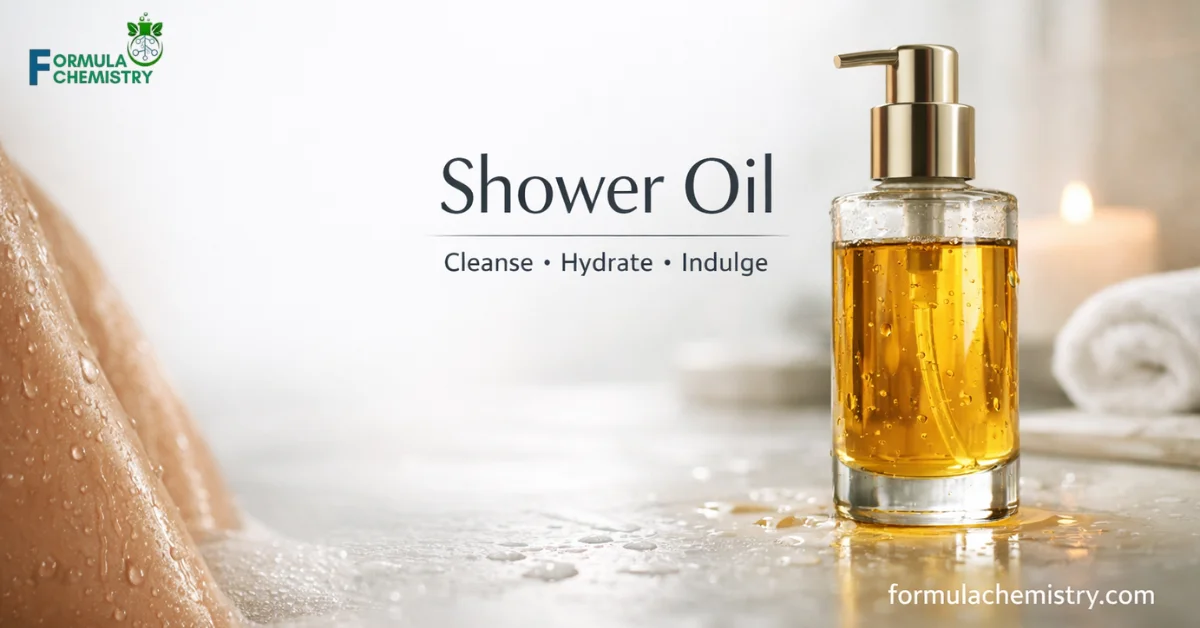
For those who suffer from dry, itchy skin, the daily shower may have mixed effects: necessary for hygiene yet devastating to the lipid barrier. A shower oil delivers a refined solution, turning a routine procedure into a therapeutic ritual.
Unlike harsh soaps that strip the skin, shower oils utilize the principle of “like dissolves like.” They melt away dirt and sweat while simultaneously replenishing the skin’s natural oils. This is formula chemistry at its finest, cleaning without stripping.
This guide examines the unique science behind shower oils. We will decode how they emulsify, the benefits of their lipid-rich structure, and how to use them to achieve skin that is soft, hydrated, and perfectly balanced.
What Is a Shower Oil and How Does It Work?
A shower oil is a hybrid cleanser that combines high concentrations of plant oils with specialized surfactants, creating a product that cleanses and moisturizes in one step.
The Emulsification Process
In the bottle, the product looks like pure oil. However, when it touches water, it transforms into a milky emulsion.
This is due to the presence of emulsifiers (like MIPA-Laureth Sulfate or Polyglyceryl esters). These ingredients lower the surface tension, allowing the oil to mix with water and rinse away dirt without foaming aggressively.
Protecting the Lipid Barrier
Traditional gels use anionic cleansing agents to strip grease. Shower oils work differently.
Because they are primarily oil (often 40-70%), they dissolve surface impurities while leaving a thin, breathable layer of lipids on the skin. This preserves the chemical formula of the acid mantle, preventing the tightness regularly encountered after a hot shower.
The Chemistry Formula of Key Ingredients
The efficacy of a shower oil depends on the quality of its lipid phase and the gentleness of its surfactant system.
Plant Oils: The Base
High-quality shower oils use plant oils rich in triglycerides, such as Almond, Grapeseed, or Soybean oil.
These oils are biocompatible with human skin. They penetrate the upper layers of the epidermis to soften the rough texture. In Formula Chemistry skincare, we choose oils high in linoleic acid for barrier repair and oleic acid for deep nourishment.
Surfactants: The Cleansers
You won’t find harsh SLS in a true shower oil.
Instead, formulators use oil-compatible surfactants like Laureth-4 or Polysorbate 80. These molecules are unique because they are soluble in oil but dispersible in water, enabling the “oil-to-milk” transformation that distinguishes this product category.
Benefits for Dry and Sensitive Skin
For those with eczema, psoriasis, or chronic dryness, switching to a shower oil is often the single most impactful change in a routine.
Reducing Transepidermal Water Loss (TEWL)
Hot water evaporates moisture from the skin instantly.
A shower oil acts as an occlusive shield during the wash. It coats the skin in a protective film that traps water within the cells, greatly decreasing TEWL even after you towel off.
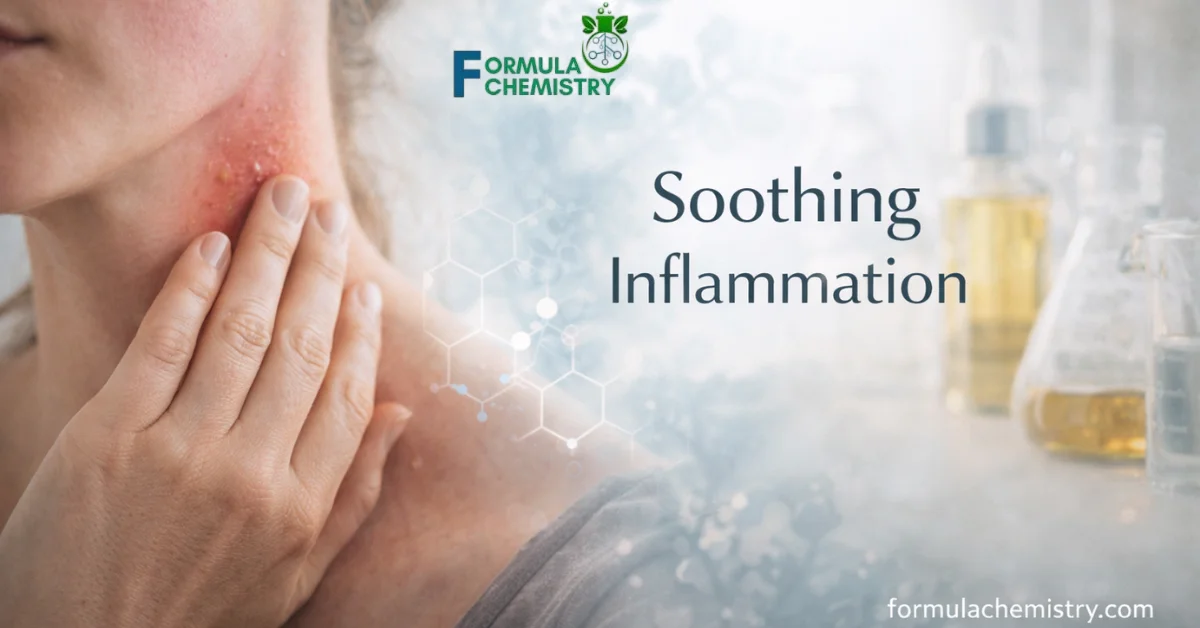
Soothing Inflammation
Dry skin is often inflamed and itchy.
Oils like Jojoba and Oat Oil have natural anti-inflammatory properties. When delivered in a shower oil format, they soothe the nerve endings during the cleansing process, breaking the “itch-scratch” cycle that damages the barrier.
Formula Chemistry DIY: Making Your Own Shower Oil
Creating a custom shower oil is one of the simplest and most fulfilling endeavors for a home formulator.
The Basic Ratio
A standard shower oil consists of approximately 85% Carrier Oils and 15% Emulsifier/Surfactant.
- Oil Phase: 50% Sweet Almond Oil + 35% Grapeseed Oil.
- Emulsifier: 14% Polysorbate 80 or Cromollient SCE.
- Scent/Active: 1% Vitamin E and Essential Oils.
- Method: Simply mix all ingredients in a bottle. The Polysorbate allows the oil to rinse off clean with water.
Customizing for Needs
- For Dry Winter Skin: Add 5% Castor Oil for a thicker, more protective film.
- For Sensitive Skin: Infuse the almond oil with Calendula petals before mixing to boost the soothing formula chemistry.
How to Use Shower Oil for Best Results
While it seems intuitive, using a shower oil requires a slightly different technique than using a bar of soap.
Apply to Damp Skin
Unlike gel, which needs water to foam, apply the oil to damp (not soaking wet) skin.
Massage it in with your hands. The friction warms the oil, helping it dissolve sebum and sunscreen. Then, step under the water stream to emulsify it into milk before rinsing.
Shaving with Shower Oil
The high lipid content provides incredible slip, making it the perfect shaving medium.
It lubricates the razor blade, preventing friction burn and nicks. Plus, because it moisturizes while you shave, you don’t need to apply lotion immediately afterwards.
Comparing Shower Oil vs. Body Wash vs. Bar Soap
Understanding where shower oil fits in the cleansing spectrum helps you decide if it’s the right choice for you.
Bar Soap (pH 9-10)
highly alkaline. excellent at removing grease but destroys the acid mantle (pH 5.5), resulting in dryness and bacterial imbalance.
Body Wash (pH 5-6)
Water-based and usually pH-balanced. Good for general cleaning, but frequently depends on foaming agents that can be drying over time.
Shower Oil (Anhydrous)
Contains little to no water. pH isn’t applicable until mixed with water. It offers the lowest stripping potential and the highest moisturization, making it the best option for barrier health in Formula Chemistry skincare.
Common Myths About Shower Oils
There are misconceptions that keep people from trying oils, primarily regarding residue and breakouts.
Myth: It will cause me to break out
Fact: Most body acne is caused by friction and bacteria, not moisture.
If formulated with non-comedogenic oils like Grapeseed or Sunflower, a shower oil cleanses pores effectively without clogging them. In fact, by keeping sebum fluid, it can prevent congestion on the back and chest.
Myth: It Leaves the Tub Dangerous
Fact: A well-formulated shower oil emulsifies completely.
Because it turns into milk upon contact with water, it rinses down the drain rather than sitting on the tub floor. However, always rinse the tub with hot water after use as a precaution.
Environmental and Shelf-Life Considerations
Since shower oils contain natural lipids and no water, their preservation needs are unique.
Water-Free Preservation
Bacteria need water to grow. Since shower oils are anhydrous, they don’t strictly require a potent preservative if kept dry.
However, since water can enter the bottle in the shower, adding a preservative like Phenonip is a smart safety measure in professional formula chemistry.
Oxidation Risks
Plant oils can go rancid.
Ensure your shower oil contains an antioxidant like Vitamin E (Tocopherol). Store it away from direct sunlight coming through the bathroom window to maintain the freshness of the lipids.
| Ingredient | Function | Weight % | Amount (ml/g) |
|---|
⚠ Professional Lab Verification Required
- Water Percentage (q.s.): This is an anhydrous self-emulsifying oil formula. No water phase is present in the bottle — emulsification occurs on contact with water during shower use. All percentages are fixed and must total exactly 100% by weight.
- Self-Emulsifying System: The PEG-based emulsifier system activates on contact with water to create a milky lather. Emulsifier ratio must be verified at lab scale to ensure complete emulsification and clean rinse-off without greasy residue.
- Preservation Efficacy: Preservative performance must be validated through Challenge Testing (PET) as per ISO 11930 before any commercial or consumer use of this formulation.
- Stability Testing: This formula requires accelerated stability testing at 4°C, 25°C, and 40°C over a minimum of 12 weeks to confirm physical, chemical, and microbiological stability before market release.

Conclusion
A shower oil is a game-changing product that corresponds to cleansing with care. It respects the biology of the skin barrier, using the power of lipids to clean without stripping.
Through understanding the formula chemistry of emulsification, you can turn your daily shower into a hydrating treatment that leaves your skin soft, supple, and glowing.
Whether you purchase a luxury bottle or mix your own almond-scented creation, the switch to oil-based cleansing is a decision you will appreciate.
FAQ’s about Shower Oil: Cleanse, Hydrate, and Indulge in One Silky Step
Does shower oil replace body lotion?
For many people with normal skin, yes. The thin film of lipids left behind by the shower oil provides enough hydration that you can skip lotion. However, if you have extremely dry skin or eczema, you should still apply a moisturizer afterwards to seal in the hydration fully.
Can I use shower oil on my face?
Generally, yes, especially as a first cleanse to remove makeup. However, body formulations often contain fragrance or heavier oils that might irritate sensitive facial skin. Check the label or use a dedicated facial cleansing oil for the best results.
Will shower oil clog my drain?
A properly formulated shower oil contains emulsifiers that allow the oil to mix with water and wash away. It behaves like a milky liquid in the pipes, not a solid grease. It poses no more risk to plumbing than a standard creamy body wash.
Is shower oil good for sunburn?
Yes, it is excellent for sunburned skin. Harsh soaps can irritate the burn, while the lipids in a shower oil soothe the inflammation and prevent peeling by keeping the damaged skin flexible and hydrated.
Does shower oil foam?
Most true shower oils do not foam, or they produce a very low, creamy lather. Foam is created by high-surfactant loads and trapped air; shower oils prioritize moisture over bubbles. If your product foams a lot, it is likely a water-based gel with a drop of oil, not a true shower oil.
Can I use shower oil if I have oily skin?
Yes. Oily skin often overproduces sebum because it is stripped and dehydrated. Using a shower oil can rebalance the skin’s oil production. Look for lighter oils like Grapeseed or Hemp Seed oil in the ingredient list.
How long does a bottle last?
Because shower oils are concentrated (no water filler), you need very little product about a tablespoon for the whole body. A standard 200ml bottle typically lasts longer than an equivalent size of water-based body wash.
Can I add perfume to my DIY shower oil?
Yes, shower oils are excellent carriers for fragrance. Because they stay on the skin slightly, the fragrance lingers longer than with soap. Ensure you use skin-safe fragrance oils or essential oils at safe usage rates (typically 1-2%).
- DIY Barrier Repair Cream Formula: Ceramide-Based Recipe
- DIY Skincare for Acne-Prone Skin That Won’t Overdry It
- Skincare Formulation for Sensitive Skin: The pH Mistake
- Ayurvedic Skincare Formulation: Stabilizing Ancient Herbs
- Cruelty-Free Cosmetic Formulation: Not the Same as Vegan