
Introduction
Chronic redness and dull, uneven skin tone are often treated as separate issues, requiring multiple harsh products that can overwhelm a compromised barrier. However, the most sophisticated approach to sensitivity involves merging soothing agents with strengthening actives. Anti-Redness Toner is the solution.
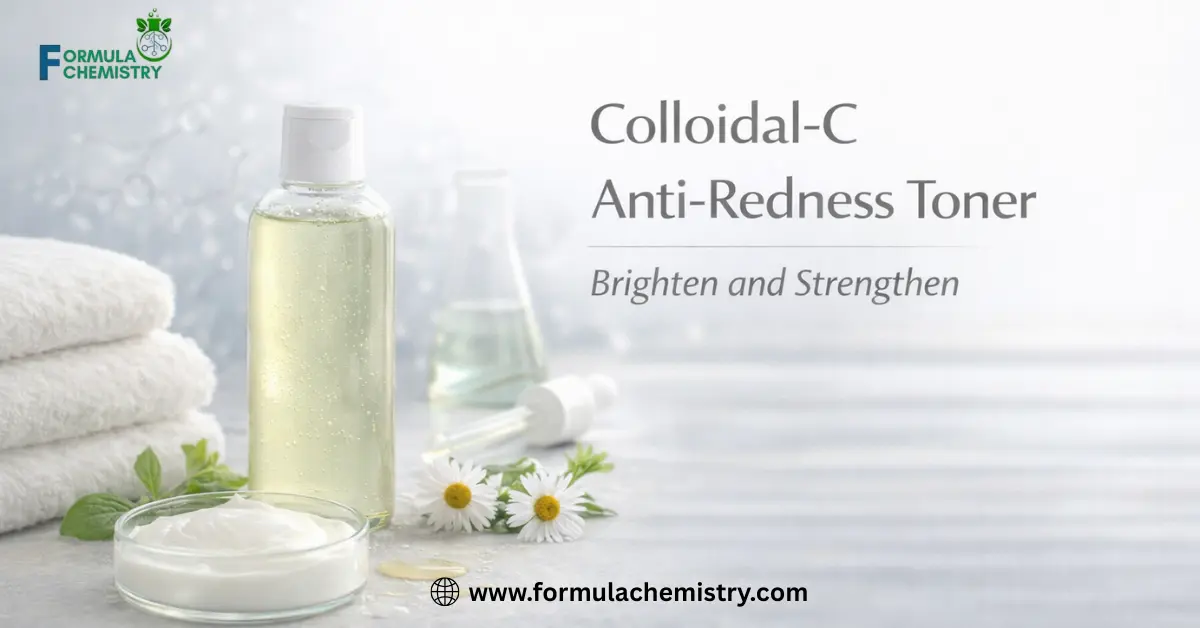
A Colloidal-C Anti-Redness Toner represents the pinnacle of hybrid formula chemistry, combining the immediate calming effects of oats with the long-term structural benefits of Vitamin C.
This guide explores the science behind this dual-action solution. We will decode how to stabilize these ingredients together and how this specific chemical formula works to hush inflammation while illuminating your complexion.
What Defines a Colloidal-C Anti-Redness Toner?
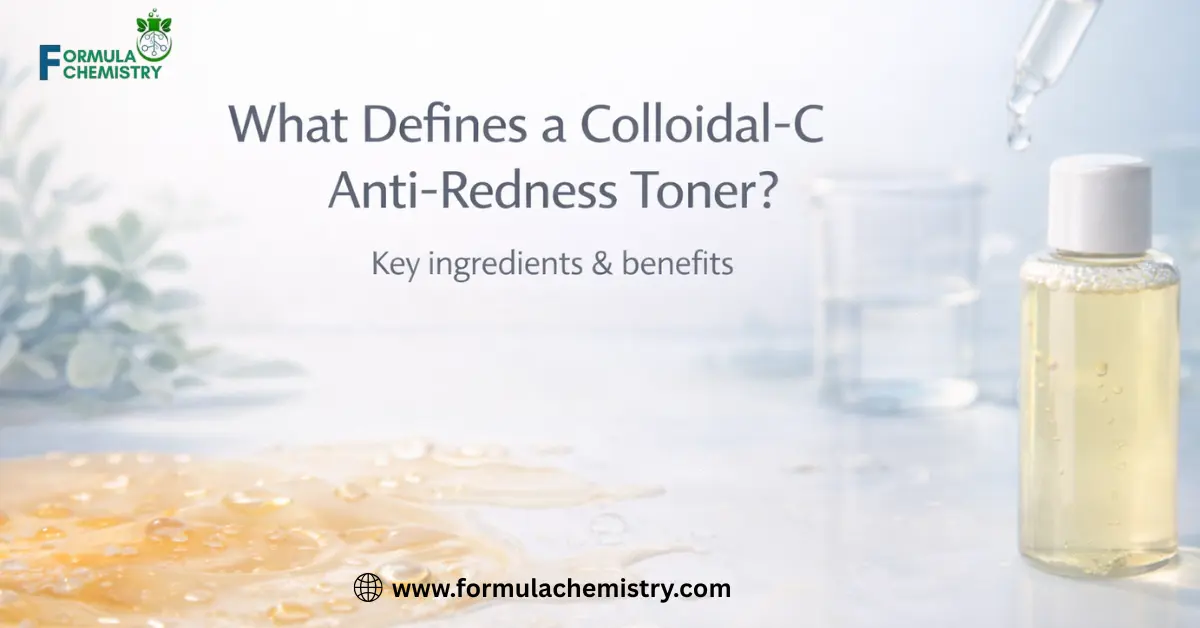
This toner is not a simple astringent; it is a suspension system designed to deliver solids and solubles simultaneously for a multi-functional effect.
The Hybrid Suspension
Most toners are clear solutions. A Colloidal-C toner is often slightly milky or hazy.
This is because it contains colloidal Oatmeal micro-particles of oats suspended in the liquid. These particles do not dissolve; they disperse. This physical presence allows the toner to form a microscopic, breathable mesh over the skin that traps moisture and blocks irritants.
The “C” Factor
The “C” stands for Vitamin C, but not just any form.
In Formula Chemistry skincare, mixing acidic Vitamin C with soothing oats can be chemically tricky. Therefore, these toners typically utilize stable, pH-neutral derivatives like Sodium Ascorbyl Phosphate. This ensures the product brightens pigmentation without stinging or causing the “flush” that sensitive skin types fear.
The Formula Chemistry of Colloidal Oatmeal
To understand the “Anti-Redness” claim, we must look at the bioactive compounds found within the oat kernel.
Avenanthramides: The Biological Antihistamine
Oats contain a group of phenolic alkaloids called Avenanthramides.
These compounds actively inhibit the release of pro-inflammatory cytokines and histamines. When you apply this toner, the chemistry formula effectively tells your skin’s immune system to stand down, resulting in an immediate reduction of itching and heat.
Beta-Glucans and Barrier Repair
Oats are rich in Beta-Glucans, large sugar molecules that penetrate the intercellular matrix.
They stimulate the immune cells (Langerhans cells) and attract water deep into the tissues. This hydration reduces the appearance of fine lines and fortifies the barrier against environmental triggers like wind and pollution.
Vitamin C: Strengthening Capillaries
Redness is often caused by weak capillary walls that dilate and leak; Vitamin C is the structural engineer that fixes this foundation.
Collagen Synthesis
Vitamin C is a necessary cofactor for the enzymes that produce collagen.
By increasing collagen production, you thicken the dermis. A thicker dermis provides better support for the delicate blood vessels underneath, making them less prone to dilation and reducing the visual intensity of persistent redness or rosacea.
Antioxidant Protection
Free radicals from UV light attack the skin’s lipids, leading to inflammation.
The Vitamin C in this formula chemistry acts as an electron donor. It neutralizes these oxidative threats before they can trigger the inflammatory cascade, keeping the skin calm and preventing the formation of future dark spots.
The Challenge of Formulation: pH Balance
Creating a product that contains both oats and Vitamin C requires precise chemical maneuvering to ensure stability and efficacy.
The Acidity Conflict
Pure L-Ascorbic Acid requires a low pH (below 3.5) to penetrate. However, low pH can irritate red, sensitive skin.
Colloidal Oatmeal performs best at a near-neutral pH (5.5 – 6.5). If the environment is too acidic, the proteins in the oat can denature, reducing their soothing capability.
The Derivative Solution
To solve this, formulators use Vitamin C derivatives like Magnesium Ascorbyl Phosphate (MAP).
These ingredients remain stable and active at a pH of 6.0-7.0. This allows the Formula Chemistry skincare product to harbor the soothing benefits of the oats while still delivering the brightening power of the vitamin, all in a gentle, non-stinging base.
Formula Chemistry DIY: Making Your Own Colloidal-C Toner
You can create a fresh, preservative-free version of this toner in your kitchen, though it must be used quickly.
The 3-Ingredient Soothing Recipe
This simple recipe focuses on calming and hydrating using accessible ingredients.
- Base: 90ml Distilled Water (or Chamomile Hydrosol for extra calming).
- Soothing Agent: 2g Colloidal Oatmeal (Must be micro-fine cosmetic grade, not breakfast oats).
- Brightening Active: 3g Sodium Ascorbyl Phosphate (Water-soluble Vitamin C powder).
- Preservative: 1g Broad Spectrum Preservative (Essential if keeping for more than 3 days).
Instructions
- Dissolve the Vitamin C powder in the distilled water; stir until clear.
- Add the Colloidal Oatmeal. It will not dissolve; it will create a milky suspension.
- Add the preservative.
- Pour into a spray bottle. Shake well before every single use to redistribute the chemical formula.
Synergistic Ingredients for Redness Relief
A great toner relies on a team of ingredients to support the primary actives; look for these additions on the label.
Allantoin
Derived from comfrey root, Allantoin is a keratolytic and skin soother.
It increases the water content of the extracellular matrix and promotes cell proliferation. In a redness toner, it acts as a buffer, ensuring that the active Vitamin C does not cause even a moment of irritation.
Licorice Root Extract
Licorice helps with both redness and brightening.
It contains Glabridin, which inhibits tyrosinase (pigment) and reduces inflammation. Pairing Licorice with Vitamin C creates a dual-pathway approach to fading acne marks and calming the skin simultaneously.
Application Techniques: The Press and Pat
Because this toner contains suspended particles, how you apply it drastically changes its effectiveness.
Shake to Wake
The “Colloidal” part of the name implies suspension.
The beneficial oat lipids and proteins will settle at the bottom. You must shake the bottle vigorously to ensure the formula chemistry is uniform before dispensing.
The Pressing Method
Do not rub this toner with a cotton pad, as the friction can irritate red skin.
Dispense a small amount into your palms. Press, do not rub the liquid into your face. The warmth of your hands helps the Vitamin C penetrate, while the pressing motion deposits the oat film evenly across the barrier.

Benefits for Rosacea and Eczema-Prone Skin
This specific type of toner is a holy grail for those who usually cannot tolerate “brightening” products.
Breaking the Inflammation Cycle
Rosacea is a cycle of inflammation leading to weakened vessels.
By using a Colloidal-C toner, you interrupt the inflammation with the oats. Simultaneously, you strengthen the vessels with the Vitamin C. It is a preventative and corrective strategy unique to this chemical formula.
Hydration Without Heaviness
Eczema-prone skin needs moisture but hates heavy, occlusive grease during a flare-up.
The water-based delivery of beta-glucans provides deep hydration that relieves the itch instantly, without trapping heat or feeling heavy on the face.
| Ingredient | Function | Weight % | Amount (ml/g) |
|---|
⚠ Professional Lab Verification Required
- Water Percentage (q.s.): Distilled water is listed as a starting estimate. In a real laboratory batch, water is added q.s. (quantity sufficient) after all other ingredients are accurately weighed to bring the total to exactly 100%.
- pH Adjustment: Citric acid and sodium hydroxide percentages are formulation starting points only. Every real batch must be verified and corrected using a calibrated pH meter to hit the target pH range precisely.
- Colloidal Silver Compliance: Colloidal Silver (Silver Citrate) used in cosmetics must comply with EU Cosmetics Regulation Annex III restrictions. Silver as a cosmetic ingredient is permitted at controlled levels as an antimicrobial agent. Always verify supplier CoA and regulatory status before use.
- Preservation Efficacy: Preservative performance must be validated through Challenge Testing (PET) as per ISO 11930 before any commercial or consumer use of this formulation.
- Stability Testing: This formula requires accelerated stability testing at 4°C, 25°C, and 40°C over a minimum of 12 weeks to confirm physical, chemical, and microbiological stability before market release.
Storage and Stability of the Formula
Both Vitamin C and natural oat proteins are sensitive to their environment; proper storage protects your investment.
Oxidation Indicators
If your milky white toner turns brown or dark orange, the Vitamin C has oxidized.
This means it is no longer an antioxidant; it is a pro-oxidant. Discard immediately. To prevent this, store the bottle away from direct sunlight and heat.
Refrigeration
Keeping a Colloidal-C toner in the fridge is highly recommended.
The cold temperature slows down the degradation of the active ingredients. Furthermore, applying a cold toner causes vasoconstriction, physically shrinking blood vessels and reducing redness upon contact.
Conclusion
A Colloidal-C Anti-Redness Toner is a triumph of modern cosmetic formulation, proving that you do not have to sacrifice potency for comfort.
By respecting the pH requirements of both ingredients, formula chemistry allows us to brighten dullness and strengthen the barrier in one gentle step.
Whether you rely on a high-end lab formulation or shake up a fresh Formula Chemistry DIY batch, this milky tonic is the key to calm, resilient, and luminous skin.
FAQ’s about Colloidal-C Anti-Redness Toner: Brighten and Strengthen
Can I use this toner with Retinol?
Yes, but be careful with timing. If you have sensitive skin, use the Colloidal-C toner in the morning to protect and brighten, and use your Retinol at night. The colloidal oats in the toner can actually help soothe the skin and offset the dryness caused by Retinol use.
Will the colloidal oats clog my pores?
No, colloidal oatmeal is generally considered non-comedogenic. The particles are too large to penetrate the pore; they sit on the surface to form a breathable mesh. However, ensure the product doesn’t contain other pore-clogging oils like coconut oil if you are acne-prone.
Why is my toner cloudy?
Cloudiness is the hallmark of a “colloidal” product. It indicates that microscopic particles of the oat kernel are suspended in the liquid. This is not a defect; it is visual proof of the chemistry formula and the presence of the soothing solids.
Is Vitamin C safe for Rosacea?
Pure L-Ascorbic Acid (low pH) can be stinging for Rosacea. However, the derivatives used in these toners (like Sodium Ascorbyl Phosphate) are formulated at a neutral pH and are anti-inflammatory, making them safe and beneficial for strengthening rosacea-prone skin.
How often should I use this toner?
You can use it twice daily. In the morning, Vitamin C provides antioxidant protection against the day’s sun and pollution. At night, the colloidal oatmeal helps repair the barrier and soothe the skin from daily stress.
Can I make this without a preservative?
Only if you make a fresh batch every single morning. Water mixed with oat protein is a perfect food source for bacteria and mold. If you want to keep a bottle in your bathroom for more than 24 hours, a broad-spectrum preservative is non-negotiable for safety.
Does this toner help with acne?
Yes. Vitamin C helps fade post-acne marks (PIH), and Colloidal Oatmeal soothes the redness of active breakouts. Furthermore, Sodium Ascorbyl Phosphate (a specific Vitamin C derivative) has been shown to have antimicrobial properties against acne-causing bacteria.
What is the difference between colloidal oats and regular oats?
Colloidal oatmeal is made from whole oat kernels that have been ground into a microscopic powder. This process ensures the particles remain suspended in water and release their active chemical formula (beta-glucans and lipids) effectively. Regular kitchen oats are too coarse and will sink or clump.