
Introduction
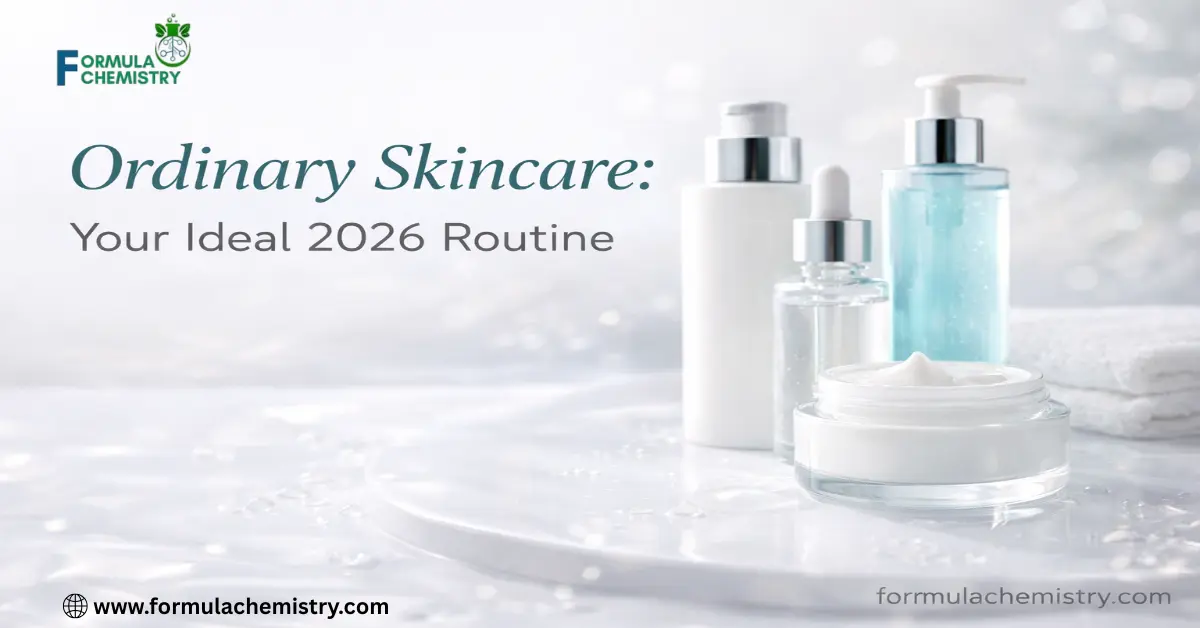
The era of expensive, mystery creams is fading; 2026 is the age of transparency and ingredient-focused regimens. “Ordinary” skincare doesn’t mean average; it means using clinical formulations with integrity, stripping away marketing fluff to reveal the raw power of science.
To truly master this minimalist approach, one must understand the basic formula chemistry behind the bottles lining the shelf. By knowing how specific molecules interact with your biology, you can construct a routine that is both affordable and highly effective.
Before diving in, it’s important to connect how each upcoming section of this guide builds your routine, step by step. This guide outlines the ideal 2026 routine, teaching you how to layer, mix, and optimize simple ingredients using the principles of Formula Chemistry skincare.

What Defines an Ordinary Skincare Routine in 2026?
This approach prioritizes high concentrations of single active ingredients over complex, diluted blends found in luxury products.
The Rise of Clinical Transparency
Modern skincare is defined by honesty regarding the chemical formula. Brands are now listing percentages and pH levels directly on the packaging.
This allows consumers to act like chemists, selecting products based on molecular weight and concentration rather than vague promises of “radiance” or “youth.”
Building on transparency
Rather than a ‘magic potion’ with fifty ingredients, an ‘ordinary’ routine uses targeted serums.
Whether it is 10% Niacinamide or 100% Squalane, knowing the specific chemistry formula helps you target concerns like acne or dehydration with laser precision.
The Chemistry of Cleansing: Prepping the Canvas
A successful routine starts with a clean slate, but the science lies in removing dirt without disrupting the skin’s acid mantle.
Squalane Cleansers and Lipophilic Action
Oil dissolves oil. A squalane based cleanser uses lipophilic (oil-loving) chains to bind to sebum and makeup.
This Formula Chemistry skincare method ensures that impurities are emulsified and rinsed away without stripping essential lipids from the barrier.
The Importance of pH Balance
Your skin is naturally acidic (pH 4.5–5.5). Using alkaline soaps disrupts this balance, encouraging bacterial growth.
An ideal cleanser in 2026 maintains this acidity, preserving the microbiome and preparing the skin to accept water-based serums.
Water-Based Serums: The Formula Chemistry of Hydration
Hydration is the foundation of healthy skin, and it requires humectants that draw water from the environment into the epidermis.
Hyaluronic Acid 2% + B5
Hyaluronic Acid is a sugar molecule found naturally in the body. Its chemical formula allows it to hold 1000 times its weight in water.
In 2026, look for multi-molecular weight formulas. Low-molecular-weight penetrates deeply to hydrate, while high-molecular-weight sits on top to smooth the surface.
Amino Acids and NMF
Natural Moisturizing Factors (NMF) are components that keep the outer layer of the skin protected and well-hydrated.
Supplementing with amino acids strengthens the barrier. They are the building blocks of peptides and proteins, essential for maintaining skin elasticity.
Active Treatments: Leveraging Chemical Formulas
This stage is where you address specific skin concerns using potent active ingredients derived from clinical science.
Niacinamide 10% + Zinc 1%
Niacinamide (Vitamin B3) is a powerhouse for regulating sebum and reducing inflammation.
The addition of Zinc creates a synergistic formula chemistry that inhibits 5-alpha reductase activity, making it the ultimate weapon against blemishes and congestion.
Salicylic Acid 2% Solution
For active acne, beta-hydroxy acids (BHAs) like Salicylic Acid are non-negotiable.
Its oil-soluble nature allows it to enter the pore and dissolve the keratin plug. Unlike physical scrubs, this chemical exfoliation prevents micro-tears and irritation.
Direct Acids: Exfoliation and Brightening
Exfoliating acids remove dead skin cells to reveal fresh tissue, but they must be used with a deep understanding of pKa and pH values.
Glycolic Acid 7% Toning Solution
Glycolic Acid has the smallest molecular size of all alpha-hydroxy acids (AHAs).
This allows it to penetrate rapidly. It breaks the bonds that hold dead skin cells together, effectively resurfacing the skin and fading hyperpigmentation.
Lactic Acid 10% + HA
For those with sensitive skin, Lactic Acid is a milder alternative. It is a larger molecule that penetrates more slowly.
Beyond exfoliation, Lactic Acid also draws moisture into the skin while it works, embodying the smart principles of Formula Chemistry skin care.
Formula Chemistry DIY: Customizing Your Potions
One of the benefits of using single-ingredient products is the ability to mix and match, essentially performing Formula Chemistry DIY in your bathroom.
Vitamin C Powder Mixing
L-Ascorbic Acid is unstable in water. By buying 100% L-Ascorbic Acid powder, you can mix it fresh daily.
Dissolve a scoop into a serum or moisturizer. This way,s you get the full antioxidant effect before oxidation.
Boosting with Oils
You can turn a light moisturizer into a rich night cream by adding a few drops of 100% Rosehip or Marula Oil.
Adjust the lipid content of your routine as needed by adding a few drops of oil based on the weather or skin dryness.
Locking It In: Occlusives and Moisturizers
All the hydration in the world is useless if it evaporates. You need an occlusive layer to seal the deal.
Natural Moisturizing Factors + HA
A good basic moisturizer shouldn’t be greasy; it should mimic the skin’s outer layer.
Ingredients such as ceramides, fatty acids, and triglycerides help repair the barrier. They act as the mortar between your skin cells, preventing Transepidermal Water Loss (TEWL).
100% Plant-Derived Hemisqualane
For a lighter touch, Hemisqualane is a non-comedogenic emollient.
Its low viscosity and high spreadability make it perfect for 2026 routines, providing a dry-touch finish that seals in moisture without clogging pores.
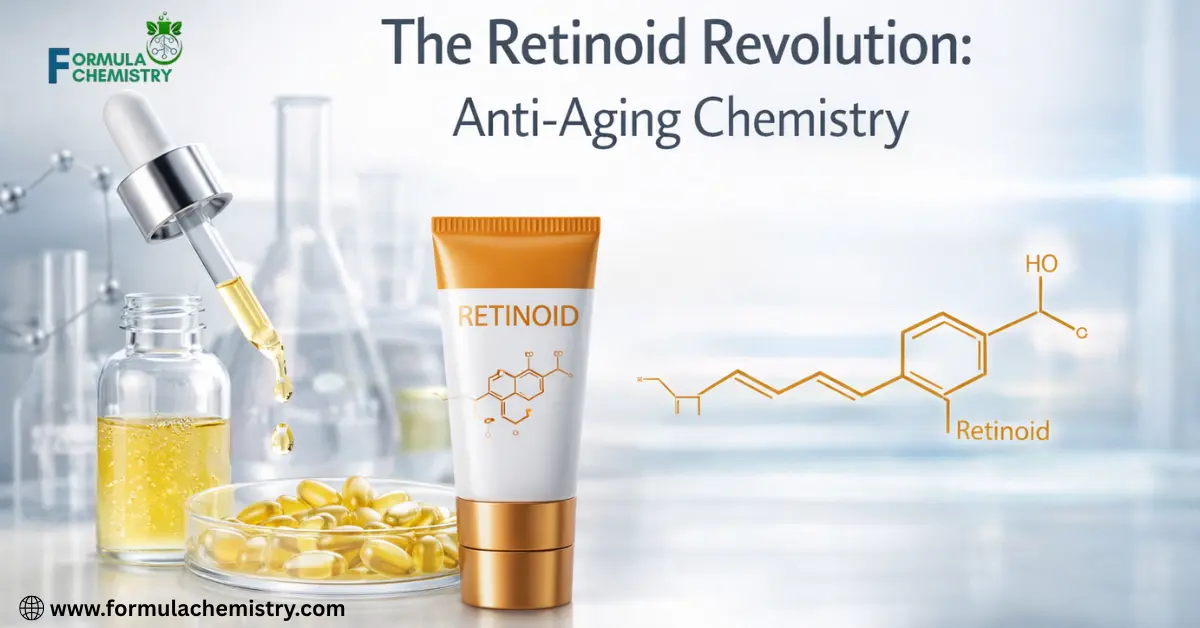
The Retinoid Revolution: Anti-Aging Chemistry
Vitamin A derivatives are the gold standard for reversing signs of aging, but stability is often an issue in formulations.
Granactive Retinoid 2% Emulsion
Traditional Retinol can be irritating. Granactive Retinoid is a next-generation complex.
It provides better wrinkle-reducing results with significantly less irritation, demonstrating how modern formula chemistry surpasses older standards.
Retinol in Squalane
For those who prefer the classic, Retinol in a Squalane base buffers the irritation.
The oil base slows down the absorption of the Retinol, reducing the “retinoid burn” while nourishing the skin with lipids.
Peptide Support: Signaling Cellular Repair
Peptides are short chains of amino acids that act as messengers, telling your skin to produce more collagen.
Buffet + Copper Peptides 1%
“Buffet” serums combine multiple peptide technologies. Copper peptides, in particular, focus on skin health and immune function.
They give the serum a natural blue tint, a visual indicator of the active chemistry formula working to restore firmness and density.
Matrixyl 10% + HA
Matrixyl is a specific peptide composition known for reducing static and dynamic wrinkles.
It works by stimulating the fibroblasts in the dermis. Regular use mimics the skin’s natural repair mechanism, plumping fine lines from within.
Suncare: The Final Chemical Shield
No routine is complete without protection from UV radiation, the primary cause of premature aging and degradation of active ingredients.
Mineral UV Filters
Formulations containing Zinc Oxide or Titanium Dioxide reflect UV rays.
Modern micronized versions eliminate the white cast, offering broad-spectrum protection that sits comfortably over your layered skincare.
Antioxidant Support
Pairing sunscreen with an antioxidant serum (like Pycnogenol or Resveratrol) boosts protection.
These molecules scavenge the free radicals that manage to bypass your SPF, adding a secondary line of defense to your Formula Chemistry skincare regimen.
Conclusion
The “Ordinary” skincare routine of 2026 is extraordinary in its simplicity and scientific grounding.
By understanding the formula chemistry of each bottle, from the pH of your acid toner to the stability of your Vitamin C, you empower yourself to build a regimen that actually works.
Whether you rely on store-bought clinical brands or dabble in DIY Formula Chemistry mixing, the key to the ideal routine is knowledge, consistency, and a respect for your skin’s biology.
FAQ’s about Ordinary Skincare
Can I mix Niacinamide with Vitamin C?
Yes, this is a common myth. In modern, stable formulations, Niacinamide and Vitamin C can be used together without issues. However, if you are using pure L-Ascorbic Acid powder, it is often better to use it at different times (AM/PM) to avoid potential flushing due to temporary pH shifts.
What is the correct order to layer these products?
The general rule of formula chemistry is “thinnest to thickest.” Start with water-based serums (like Hyaluronic Acid), follow with anhydrous (water-free) solutions or oils, and finish with heavy creams or suspensions. Sunscreen always goes last in the morning.
Why does my product pill or roll off the skin?
Pilling occurs when incompatible film-formers clash (e.g., mixing silicone-heavy primers with water-based serums) or when too much product is applied. To prevent this, let each layer absorb for a minute, and patch-test combinations to ensure the chemistry and texture formulas align.
How often should I use exfoliating acids?
Start slow. Even though a label says “daily,” your skin might only tolerate glycolic or lactic acid 2-3 times a week. Over-exfoliation compromises the barrier, leading to redness and breakouts rather than the “glow” you are seeking.
Is it safe to use Retinol with Salicylic Acid?
Using them together can cause severe dryness and irritation. It is best to alternate nights, using Salicylic Acid in the morning (if tolerated) and Retinol at night. Prioritize barrier health over aggressive treatment.
Do I need to keep my serums in the fridge?
Most clinical formulations are stable at room temperature. However, products with unstable ingredients, such as pure Vitamin C (L-Ascorbic Acid) or Retinoids, benefit from refrigeration to slow oxidation and extend shelf life.
What does “Buffet” mean in skincare terms?
“Buffet” refers to a multi-technology peptide serum. Instead of focusing on a single peptide, it combines Matrixyl, Argireline, and Syn-Ake to target multiple signs of aging simultaneously. It is an all-in-one solution for those who don’t want to layer five different bottles.
Why is the percentage of ingredients important?
The percentage tells you the strength of the active ingredient. A 0.1% Retinol is mild, while 1% is strong. Understanding these numbers helps you choose the right Formula Chemistry DIY intensity for your skin’s tolerance level, avoiding burns or inefficacy.