
Introduction
Within the competitive world of haircare formulation, achieving that elusive “salon-smooth” finish often comes down to a single class of ingredients: cationic surfactants. Among these, Behentrimonium Chloride (often abbreviated as BTAC) is considered a gold standard for detangling, softening, and frizz control.
Unlike standard emulsifiers that simply mix oil and water, Behentrimonium Chloride possesses a positive charge that allows it to substantively bond to hair strands. This unique mechanism transforms rough, damaged cuticles into a sleek, hydrophobic surface.
For formulators, learning this ingredient is necessary for creating products that offer immediate, tangible results to consumers struggling with unmanageable hair.
Formula Chemistry provides practical formulation education and safety-forward guidance, making sure you understand not just how to use ingredients like BTAC, but why they function the way they do. Whether you are developing a rinse-out conditioner or a leave-in treatment, comprehending the specific processing requirements of this ingredient is vital for stability and safety.
Quick Facts
- INCI Name: Behentrimonium Chloride
- Function: Cationic Surfactant, Hair Conditioning Agent, Antistatic Agent
- Charge: Positive (Cationic)
- Typical Usage Rate: 0.5% – 3.0% (Leave-in), 1.0% – 5.0% (Rinse-off)
- Solubility: Soluble in hot water or oil phase (depending on the specific raw material blend).
- Optimal pH Range: Most effective and stable at pH 3.5 – 5.5.
- Compatibility: Excellent with nonionic and cationic ingredients; incompatible with anionic surfactants (like SLS).
- Key Benefit: Provides superior “slip” and wet combing capability.
- Safety Note: Can be irritating to eyes and skin in raw form or high concentrations; always formulate within recommended limits and preserve water-based products.
Learn what actually helps with thinning hair in Hair Loss Remedies 2026: What Really Works?
What is Behentrimonium Chloride and Why Does Hair Love It?
Behentrimonium Chloride is a quaternary ammonium compound (quat) derived from colza oil (canola oil). Chemically, it features a long carbon chain (C22), which distinguishes it from shorter-chain conditioners. This long alkyl chain is highly lipophilic (oil-loving), allowing it to lubricate the hair surface effectively, while the cationic head group anchors it to the hair shaft.
This structure makes BTAC a potent anti-static agent. Dry and damaged hair typically carries a negative surface charge. Because opposites attract, the positively charged Behentrimonium Chloride molecules adsorb (cling) to the negatively charged hair surface. This neutralization prevents static electricity the main culprit behind “flyaways”—and lays the cuticle flat, bringing about significant shine and smoothness.
The Mechanism of Adsorption and Substantivity
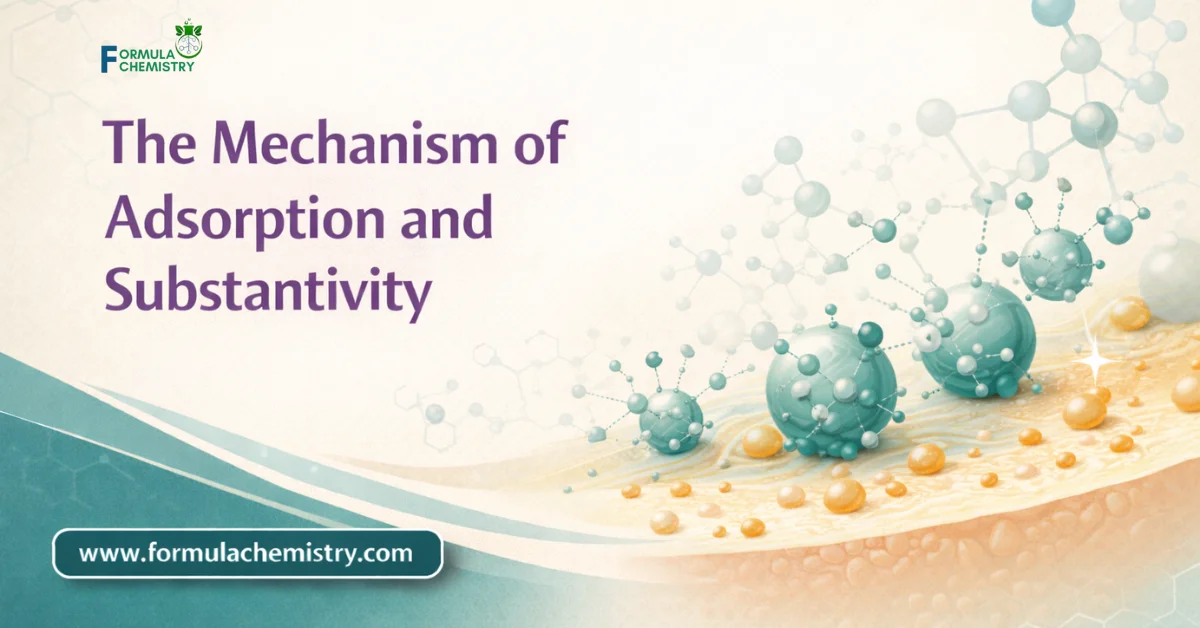
The effectiveness of Behentrimonium Chloride consists in its substantivity—its ability to remain on the hair even after rinsing. When applied, the cationic head groups bind electrostatically to the damaged sites on the hair keratin. This creates a thin, invisible film that fills in porosity and cracks in the cuticle layer.
This film does two things: it reduces the friction between hair strands (improving wet combability) and renders the hair hydrophobic (water-repelling). Hydrophobic hair dries faster and is less prone to frizz caused by environmental humidity. Because the bond is physical rather than chemical, it provides conditioning without any permanent alteration of the hair structure, rendering it ideal for daily use conditioners.
Behentrimonium Chloride vs. Other Cationic Agents
Formulators often debate between using Behentrimonium Chloride (BTAC), Behentrimonium Methosulfate (BTMS), or Cetrimonium Chloride (CETAC). While they are all quats, their performance differs based on their carbon chain length and salt composition. BTAC generally offers a heavier, waxier feel compared to the lighter CETAC, making it better for coarse or curly hair types.
BTMS is often cited as being milder, but BTAC provides a stronger detangling “slip.” Below is a comparison to help you choose the right agent for your formula:
Table: Comparison of Common Hair Conditioning Agents
| Ingredient | Carbon Chain | Feel/Texture | Best Application |
| Behentrimonium Chloride | C22 (Behenyl) | Waxy, high slip, rich | Deep conditioners, masks, coarse hair |
| Behentrimonium Methosulfate | C22 (Behenyl) | Powdery, dry finish, mild | Leave-ins, sensitive scalp formulas |
| Cetrimonium Chloride | C16 (Cetyl) | Lightweight, liquid | Detangling sprays, fine hair, co-wash |
| Stearamidopropyl Dimethylamine | C18 (Stearyl) | Conditioning but requires acid | “Natural” conditioners, silicone replacement |
Keep your hair vibrant and healthy with Best Haircare Practice for Healthy, Gorgeous Hair.
Formulating High-Performance Conditioners with BTAC
Working with Behentrimonium Chloride requires specific processing steps to ensure a stable emulsion. It is typically sold as pellets or flakes containing alcohol (often Isopropyl Alcohol) to aid in manufacturing. Because it is not a complete self-emulsifying wax in the traditional sense, it relies on structural partners to build viscosity.
To create a thick, creamy conditioner, BTAC must be paired with fatty alcohols like Cetyl Alcohol, Stearyl Alcohol, or Cetearyl Alcohol. These fatty alcohols stabilize the emulsion through the formation of a lamellar gel network. Without them, a BTAC-based formula will likely remain thin and fluid, failing to provide the rich sensory sensation consumers expect from a hair mask.
Optimal Usage Rates and Processing Tips
For a standard rinse-out conditioner, a usage rate of 1.0% to 3.0% active Behentrimonium Chloride is usually sufficient. If you are formulating a deep treatment mask for Type 4 hair, you may push this to 4.0% or 5.0%. Keep in mind that raw BTAC pellets are often 80% active (check your supplier’s CoA), so you must calculate the actual active matter in your formula.
Processing Steps:
- Heat Phase: Add BTAC to the oil phase along with your fatty alcohols. Heat to approx 75°C – 80°C. It has a high melting point and needs to be fully liquefied.
- Water Phase: Heat the water phase to the same temperature.
- Emulsification: Combine phases and mix with high shear.
- Cooling: Agitate gently while cooling to protect the lamellar structure.
Common Problems and Fixes
Formulators new to cationic surfactants often encounter stability issues or unforeseen textures. Here are the most common challenges and how to resolve them:
- Problem: The conditioner is too thin or runny.
- Fix: You likely need more fatty alcohol. A common ratio is 1 part BTAC to 3 parts Fatty Alcohol. If you use 2% BTAC, try using 6% Cetearyl Alcohol to build body.
- Problem: The product is grainy or has white specs.
- Fix: The BTAC did not melt completely. Ensure your oil phase reaches at least 80°C and is held there until the pellets are fully transparent before mixing.
- Problem: The formula separated after a few days.
- Fix: Incompatibility with anionic ingredients. Check if you added any anionic thickeners (like Xanthan Gum types that are anionic) or additives. Switch to nonionic thickeners like Hydroxyethylcellulose (HEC) or cationic guar.
- Problem: Use of “natural” preservatives failed.
- Fix: Cationics can deactivate certain preservatives or be hard to preserve. Ensure your preservative is broad-spectrum and compatible with cationic systems.
Safety, Compatibility, and Regulatory Guidelines
While Behentrimonium Chloride is highly effective, it is a powerful chemical that must be handled with care during the manufacturing process. In its raw, concentrated pellet form, it is classified as a skin irritant and can cause serious eye damage. Proper Personal Protective Equipment (PPE), including gloves and eye protection, is mandatory when weighing and handling the raw material.
Once formulated into a finished product at appropriate concentrations (typically under 5%), it is considered safe for consumer use. However, because it is substantive, it can build up on fine hair over time if not cleansed properly. Formulators should advise users on proper usage instructions for the specific hair type the product targets.
The Importance of pH in Cationic Formulas
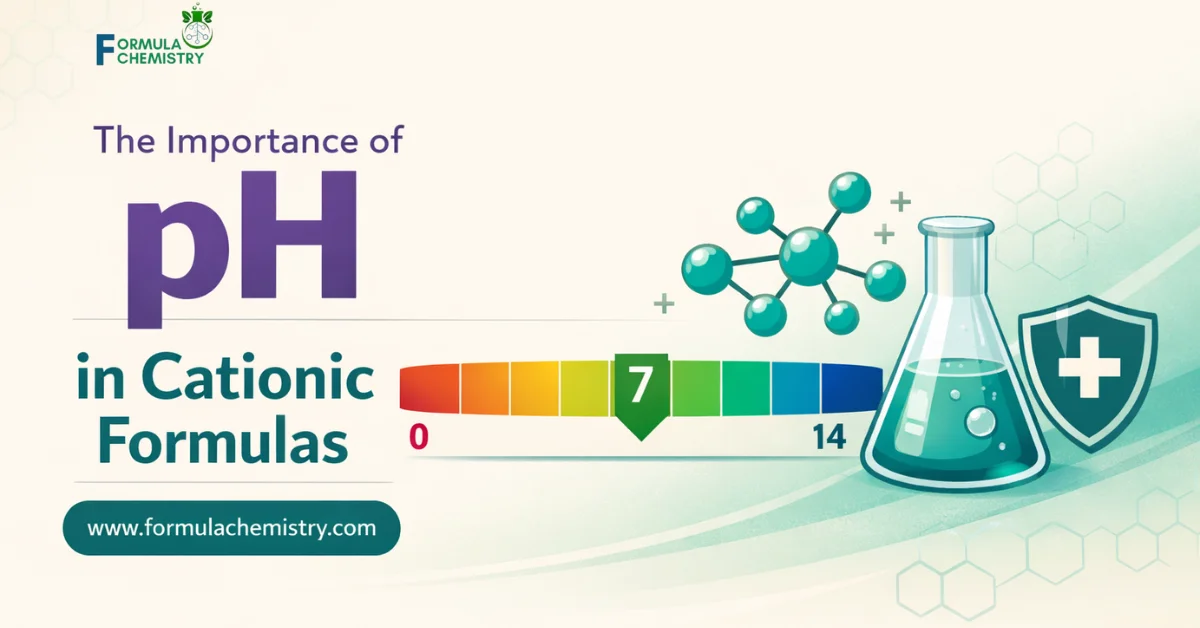
The performance of Behentrimonium Chloride is heavily dependent on pH. Cationic conditioners perform best in an acidic environment, typically between pH 3.5 and 5.5. At this pH level, the cuticle scales of the hair are sealed flat, and the positive charge of the BTAC is maintained, ensuring maximum adsorption.
If the pH is too high (above 6 or 7), the conditioning effect diminishes, and the risk of bacterial growth increases. Always use Citric Acid or Lactic Acid to adjust the pH of your final formulation down to the optimal range.
Compatibility Alerts: What Not to Mix
The most critical rule in using Behentrimonium Chloride is to avoid anionic surfactants. Ingredients like Sodium Lauryl Sulfate (SLS), Sodium Cocoyl Isethionate (SCI), or standard soaps carry a negative charge. Mixing a cationic (positive) with an anionic (negative) creates an insoluble complex essentially a waxy sludge that precipitates out of the solution.
This reaction destroys the cleansing ability of the shampoo and the conditioning ability of the BTAC. Therefore, BTAC is strictly for conditioners, masks, and leave-ins, not for standard foaming shampoos. It is, however, compatible with nonionic surfactants (like Decyl Glucoside) and amphoteric surfactants (like Cocamidopropyl Betaine), which enables the creation of “co-wash” or cleansing conditioner products.
FAQ’s about Behentrimonium Chloride: The Solution for Smooth, Frizz-Free Hair
Is Behentrimonium Chloride safe for hair?
Yes, when used at approved cosmetic concentrations (typically 1-5%), it is safe and effective. It is a standard ingredient in both drugstore and luxury haircare. However, raw pellets are irritating and should be handled with care by formulators.
Is Behentrimonium Chloride water-soluble?
It is not soluble in cold water. It typically needs to be dissolved in the oil phase or dispersed in hot water (approx 80°C), where it forms a dispersion or emulsion. It is oil-soluble and likes to be paired with fatty alcohols.
Does Behentrimonium Chloride cause buildup?
Because it is substantive and binds to the hair, it has the potential to cause buildup if used excessively on fine hair without regular shampooing. However, it is less prone to stubborn buildup than silicones and can be removed with a standard anionic shampoo.
What is the difference between Behentrimonium Chloride and Methosulfate?
Behentrimonium Chloride is generally more detangling and provides more “slip,” but can be more irritating in raw form. Behentrimonium Methosulfate (BTMS) is milder, frequently preferred for leave-ins, but is significantly more expensive and offers slightly less detangling power.
Can I use Behentrimonium Chloride in a shampoo?
Generally, no. It is incompatible with the anionic surfactants (like sulfates) found in most shampoos. Mixing them causes precipitation. It can only be used in “cleansing conditioners” (co-washes) that rely on amphoteric or nonionic cleansing agents.
Is Behentrimonium Chloride natural?
It is considered semi-synthetic. While the starting material (colza/canola oil) is natural, the chemical processing required to quaternize the nitrogen makes it a synthetic ingredient. It does not typically meet “100% natural” standards, yet is plant-derived.
Why does my conditioner with BTAC feel runny?
BTAC is not a strong thickener on its own. It requires a “fatty phase” stabilizer. If your conditioner is runny, you likely need to increase the percentage of Cetearyl Alcohol or Cetyl Alcohol to support the emulsion structure.
Is Behentrimonium Chloride a silicone?
No, it is not a silicone. It is a cationic surfactant. However, it provides a similar “slip” and smoothing effect to silicones, which is why it is often used as a silicone alternative in silicone-free formulations.